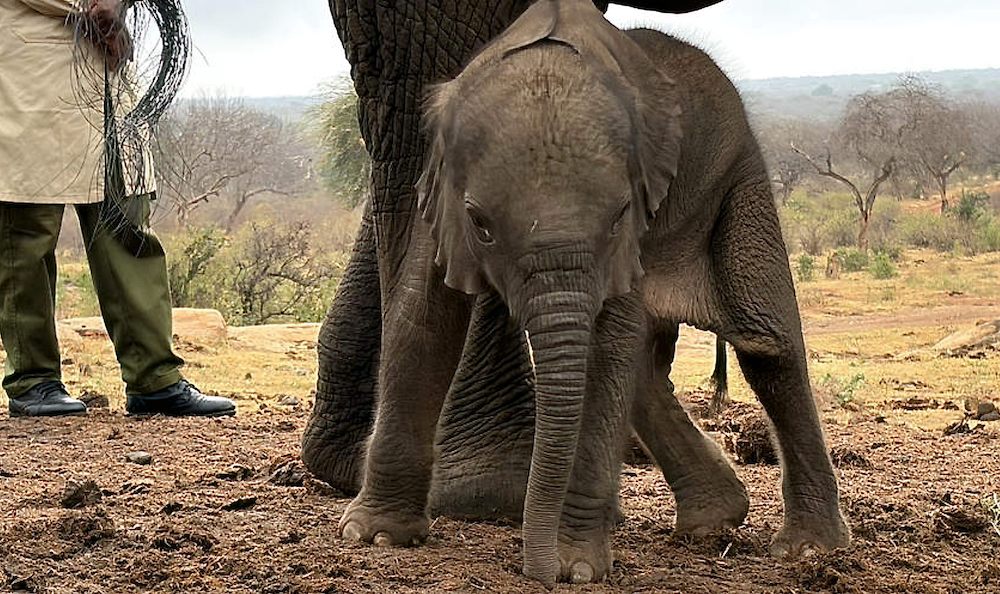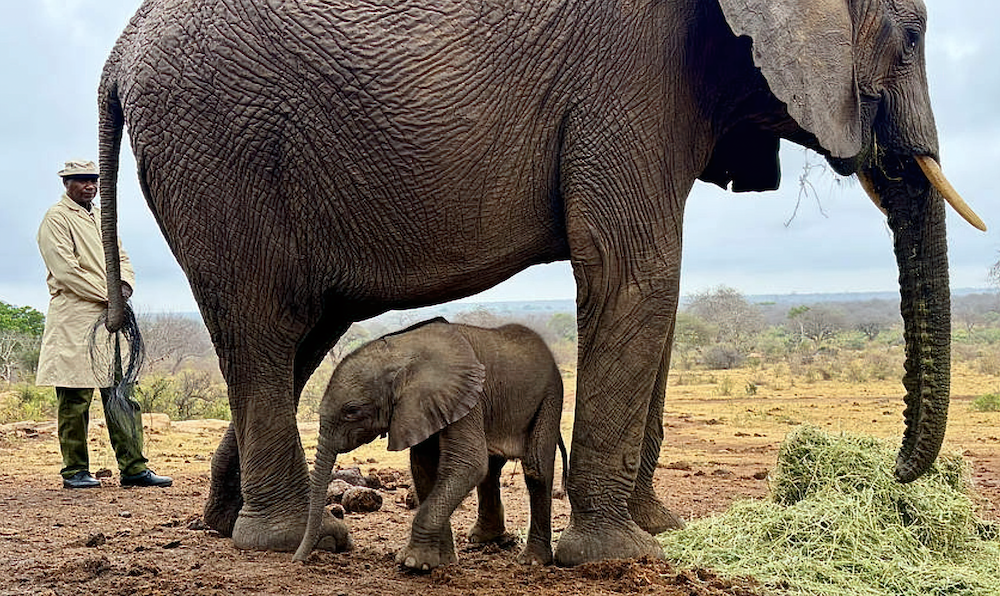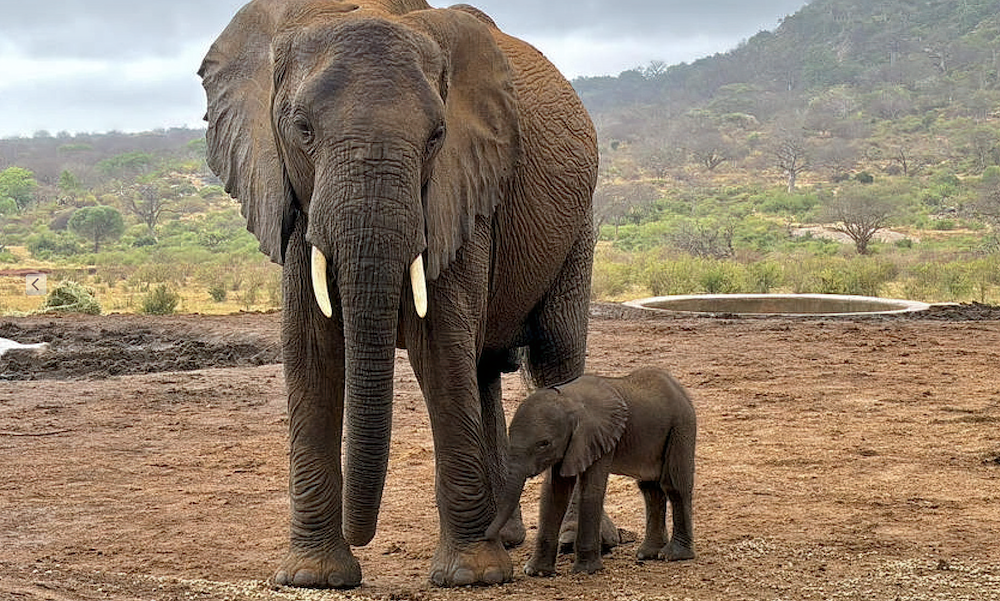
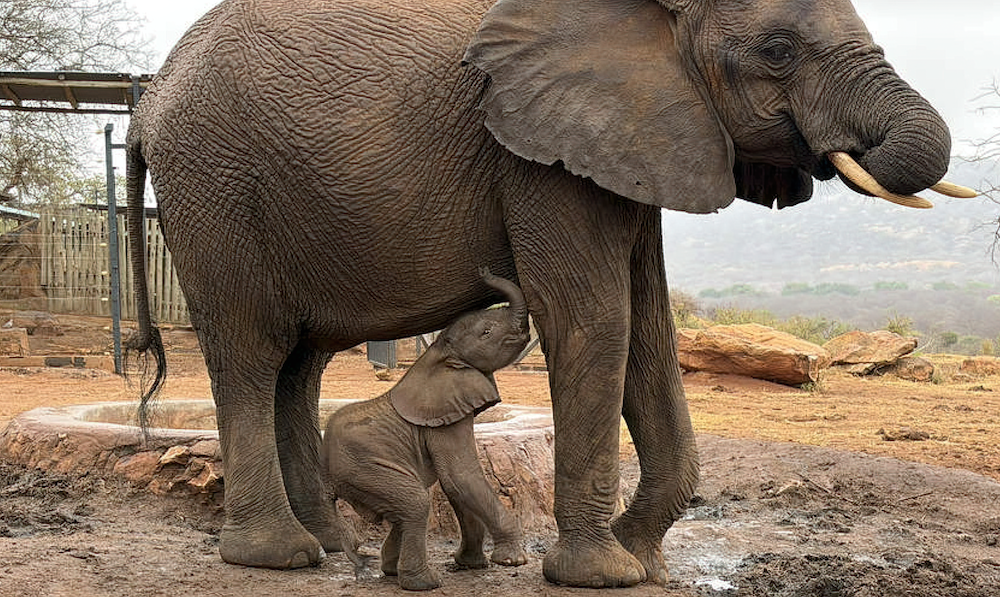
Every so often a story that comes along that inspires hope. And then takes it away. And then gives it back again. This is one such story.
This is a tale about an orphaned elephant calf, found alone and terrified in Kenya’s Tsavo West National Park.
It is a tale about fortuitous timing and a remarkable rescue, and how, just when the situation appeared at its bleakest, fortune — and park rangers with the David Sheldrick Wildlife Trust elephant orphanage in Nairobi — intervened. The date was 21 November 2010.
Hardly anyone could have known it then it there would be a happy ending — of sorts. Not entirely, but happy just the same. For a moment there, anyway.
Nairobi’s Sheldrick elephant orphanage was already on the world map, owing to a widely seen CBS 60 Minutes segment hosted by veteran war correspondent Bob Simon. The segment first aired in 2006. (A grainy, time-worn video is still up on YouTube, some 20 years later.)
I had visited the Sheldrick Trust from halfway round the world twice, in 2008 and again in 2009. At the end of 2010, I decided to co-sponsor an elephant of my own, and by timing and chance, the elephant I sponsored was that very same elephant who, having been orphaned by ivory poachers, was saved from a group of lions.
Tsavo is a vast, untrammelled region of red dust plains and doum palms that stretches an hour’s drive from the Indian Ocean one side to the Nairobi-Mombasa highway that links Kenya with Uganda and from there to Lake Victoria.
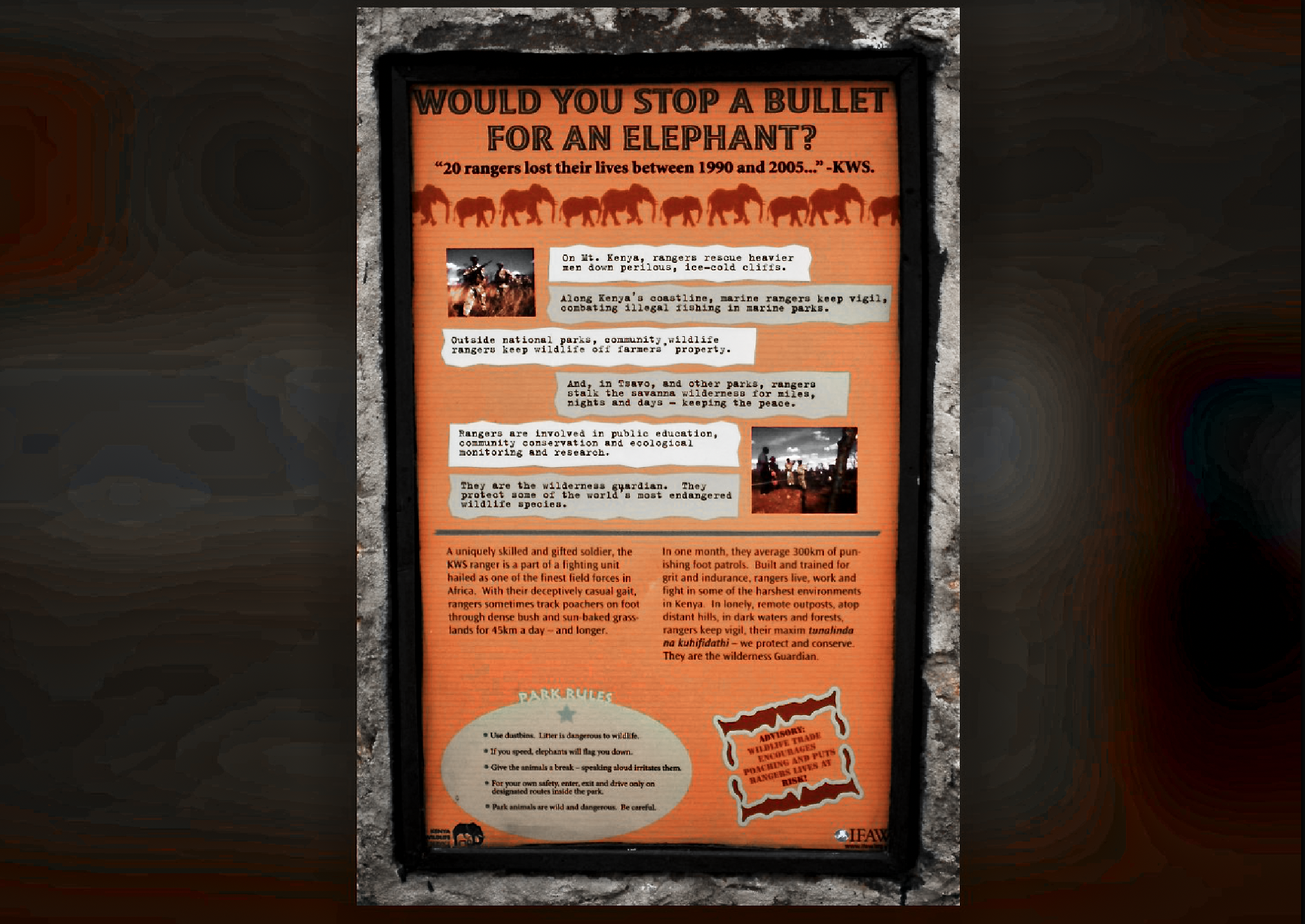
Tsavo was once home to some of the largest elephant herds in Africa and site in the late 1980s of the infamous “Ivory Wars,” a pitched years-long war between heavily armed ivory poachers, most of from neighbouring Somalia, and militarized park rangers with the Kenya Wildlife Service, then under the direction of palaeoanthropologist turned environmental crusader Richard Leakey.
Kenya’s elephant population was being wiped out to feed the illegal ivory trade across in Southeast Asia, Japan and, most notably, China.
Kenya’s then president, Daniel arap Moi, mindful that Kenya’s tourism industry hung in the balance — poachers had started killing tourists at that point, in robberies gone wrong and to silence witnesses — told Leakey to do something about it.
Leakey, for his part, told Moi that global feel-good wildlife conferences, hysterical op-ed pieces in the New York Times, and cutely designed posters at zoos around the world weren’t going to cut it.
The only thing that would work, Leakey told Moi, was to fight the poachers on their own terms — to meet gunfire with gunfire. At that point, unarmed park rangers were tired of being threatened — and killed — by armed bandits.
Moi was reluctant at first.
African politics are famously volatile, and no leader, democratically elected or not, willingly agrees to arm and equip a fighting force that could conceivably one day pose a rival to that country's actual armed forces.
Moi was taking a gamble, and he knew it. Kenya needed some positive headlines for a change. The tourism trade was hanging by a thread. You’d better not mess this up, Moi told Leakey.
We’ll do our level best, Leakey assured him, but we need the guns and support equipment — and decent salaries — to do it. (This is all detailed in Leakey’s remarkable 2001 book, Wildlife Wars: My Battle to Save Kenya’s Elephants, a harrowing read if ever there was one.)
The subsequent conflict was bloody, violent, protracted, and long. And decisive.
Kenya’s wildlife authorities and park rangers regained control of Tsavo; elephants enjoyed a brief respite from being killed for their tusks; and overseas tourists started coming back, a trickle at first and then back to their pre-‘80s levels.
Decades later, poaching is still an issue — the ivory trade in China has never really gone away — but the scale of poaching in Tsavo is nothing compared to what it was then. Today, NGOs like the Sheldrick Trust, named after David Sheldrick, Tsavo’s founding park warden, have boots on the ground, and assault rifles to match. They’re there to do what they can, and conservation organizations like the Sheldrick Trust and the community-owned and run Reteti Elephant Sanctuary in northern Kenya — Kenya’s first large-scale program founded and managed by strictly local communities — help save orphaned elephants, one elephant at a time.
Ishanga’s tale was remarkable from the outset.
The Sheldrick Trust’s Ziwani anti-poaching unit, tasked with finding and removing snares in the deep bush, happened on the stricken orphan just as lions were eyeing her up for the taking. In moments, a routine poaching patrol turned into anything but routine.
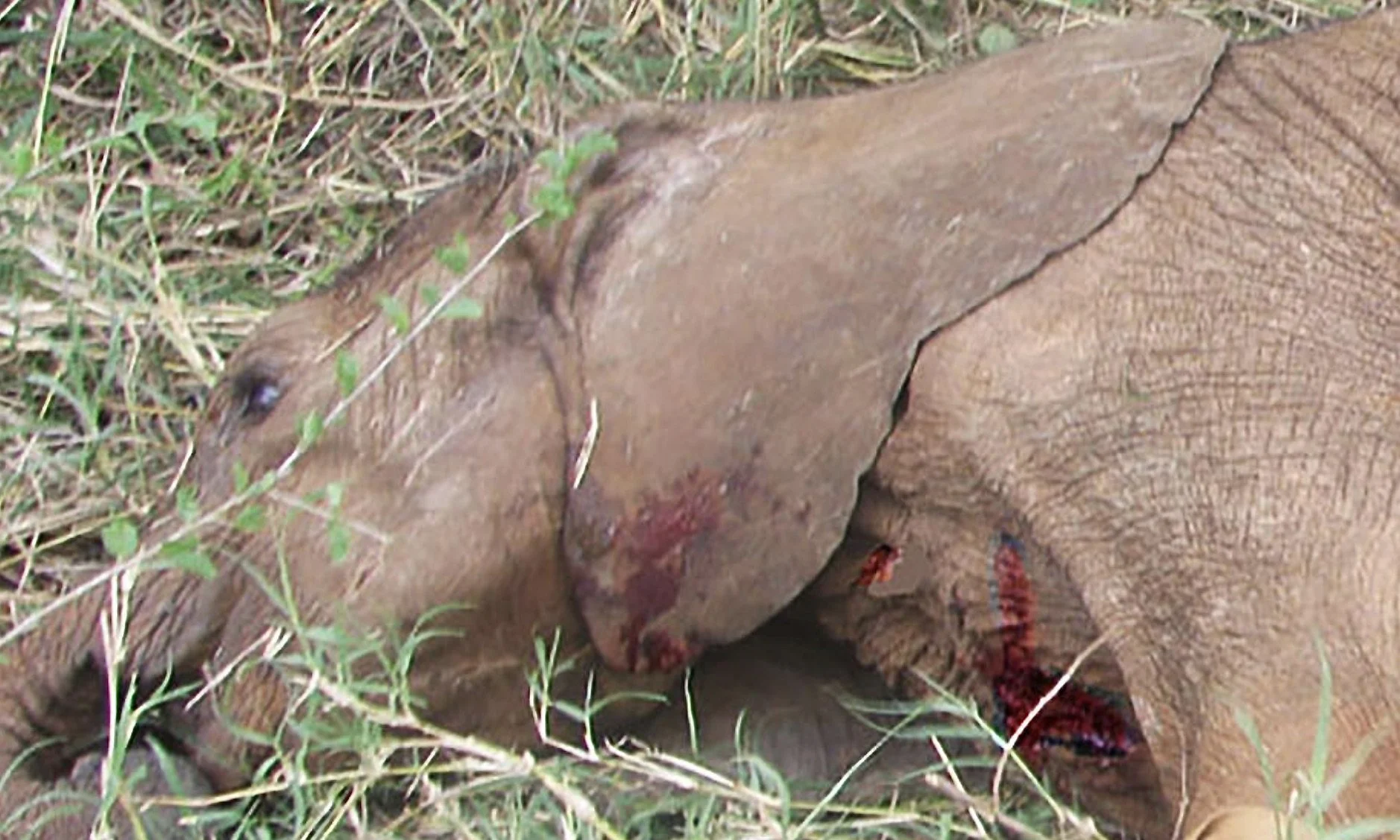
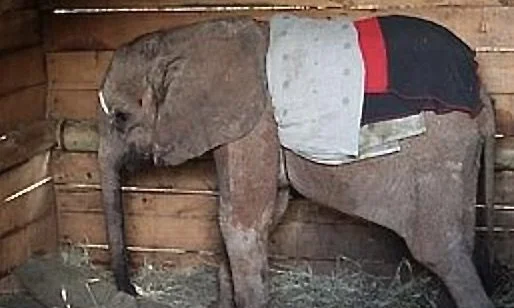
Just as the team circled her, to try and capture her, a lion raced out of the underbrush and grabbed the terrified elephant by the neck. An accompanying Kenya Wildlife Service park ranger fired gunshots into the air and the lion let go of its intended victim — fortunately for all concerned. The elephant calf was now both paralyzed by fear and injured.
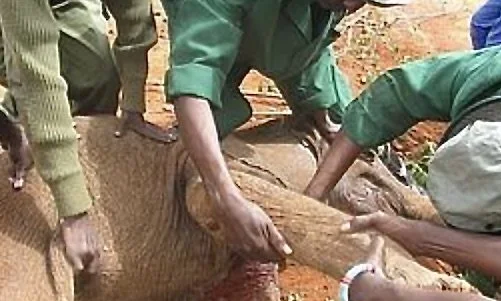
The team were able to restrain her while the lion, now joined by companions, circled a safe distance away — “safe” being a relative term.
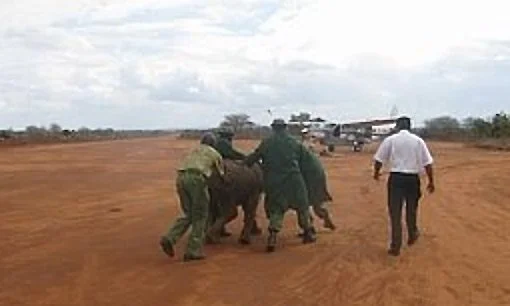
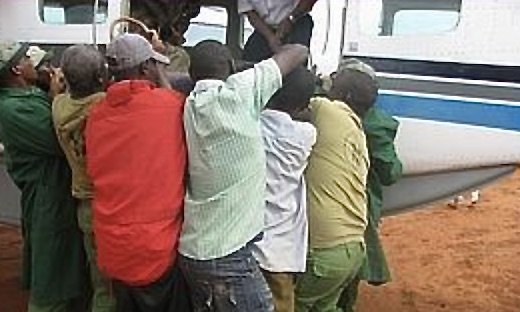
The elephant, bleeding from its injuries and terrifed by what was going on around it, was shepherded aboard a waiting rescue plane and airlifted to Nairobi, an hour away by small plane.
On arrival, she was rushed to the Sheldrick elephant nursery outside Nairobi National Park. Veterinarians gave her a 50/50 chance of surviving. They would later admit they rated her chances closer to 20/80 that she would make it through her first night, let alone beyond that.
In the tradition of the orphange, her new minders gave her a name — Ishanga: a word in Eastern philosophy used to describe that part of the larger universe that invites us to invite grace as a constant presence in our lives.
Ishanga did survive that first night as it turned out, but her early days at the nursery were fraught. She was wild, temperamental, and would not let anyone near her, not even to give her water or milk.
The keepers, for their part, were patient, quiet, and tireless. After a regimen of injections of Selenium, Vitamin B12 and the intervention of an intravenous drip, Ishanga once again found her feet.
More than a few new arrivals to the orphanage succumb from their injuries, shock, an underlyingmedical condition, or — and this is strangely human — sadness from losing their family.
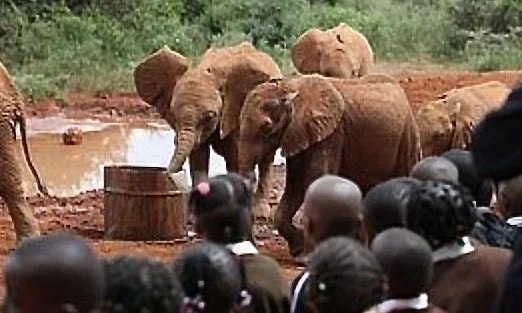
In an effort to welcome Ishanga into the fold, keepers brought the other orphans to her recovery stockade. Elephants are social, curious and welcoming by nature, even at that age, and the other orphans were eager to meet the newcomer. Ishanga would not respond to people, at least not at first, but she might respond to other elephants, especially those her own age.
She did.
In the following days, she worked up the nerve to leave the confines of her stockade and follow the other oprhans into the bush on their daily early morning walks — supervised by orphanage staff — into Nairobi National Park. (Elephants can never be released into Nairobi National Park, because it’s too small to sustain an elephant population overt the long term, not even a smal herd, but they can explore, during daylight hours and under supervision.) Nairobi National Park, unique because it’s the only real wildlife reserve in the heart of a major metropolis, is home to giraffe, rhinos, zebras, hippos, buffalo, crocodiles — and lions.
But not elephants.
It took time, but as the days turned into weeks, the weeks months, and the months a year, Ishanga filled out, regained her confidence and took on a personality of her own.Her weekly progress reports show it was a slow process, though — she was “desperately thin” in the veterinarians’ own words, during those early weeks, and suffered from nightmares. (The Sheldrick Trust assigns a specific keeper to each orphan, and the keeper is often in the srockade with the elephant as it sleeps through the night. The recovery process can take as long as two or three years; it depends on the individual. The bond between a keeper and an elephant oprhan has been shown to play a crucial role, one of many important discoveries the Shedlrick Trust has made since the nursery was first established in
1977.)
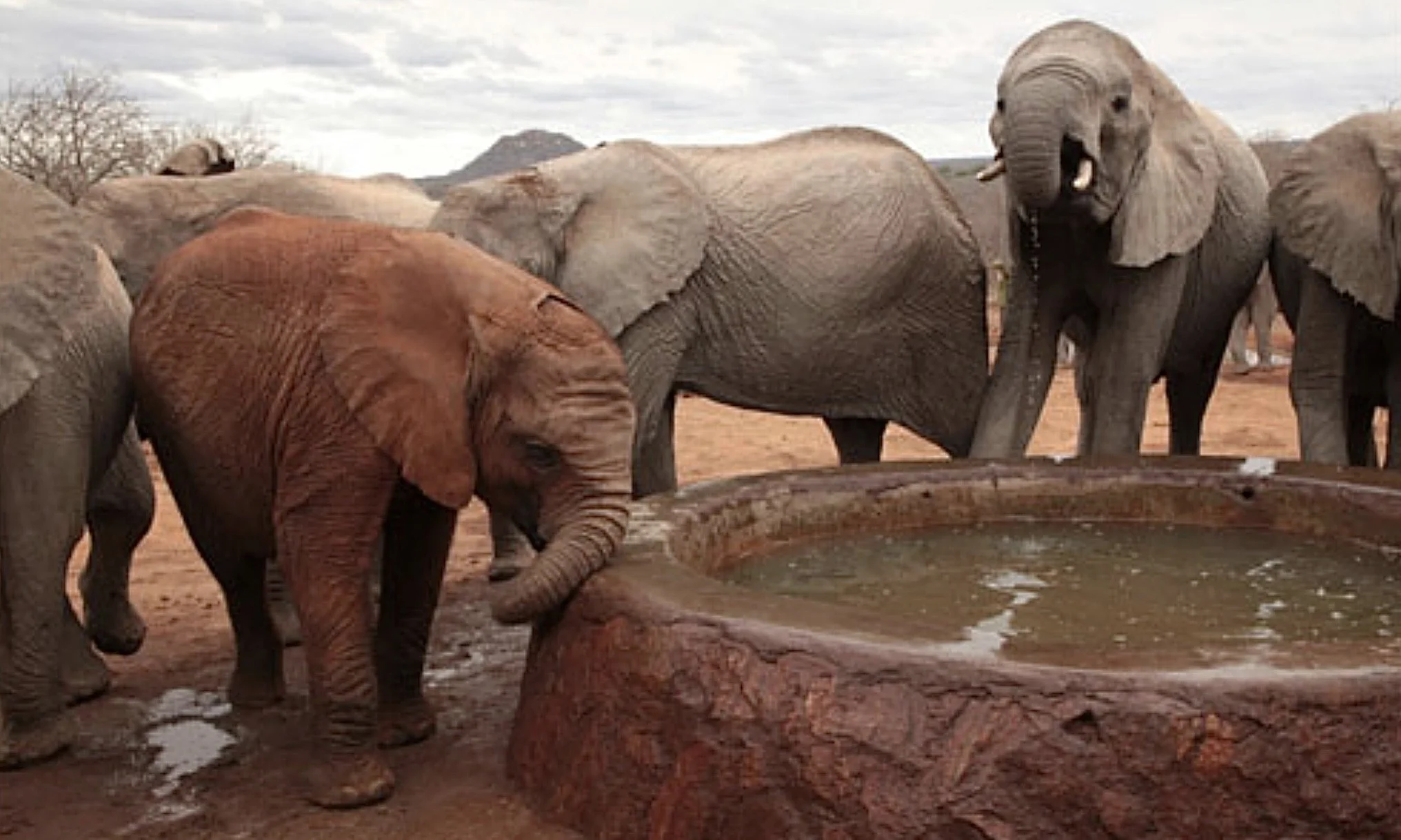
In time a baby elephant will outgrow its childhood phase, of course. With the onset of adolescence, elephant orphans are relocated to Tsavo East National Park, where they’re placed in a “half-way house” at Ithumba Camp, a reintegration centre in a remote wilderness area where newly released elephants are slowly introduced to wild herds, in the hope they will eventually be taken in.
Most are, eventually. Elephants are social animals after all.
Space for elephants is no longer an issue Nairobi National Park is 45 square miles (117 square kilometresm); Tsavo East is 5,300 sq mi (14,000 sq. km). Big difference.
Once in Tsavo, the rehabilitated orphans will — in theory — lead full, productive lives as self-sufficient adults, capable of fending for themselves and eventually raising their own families.
Some of the released elephants return to Ithumba briefly, to check up on old friends (human and elepahnt); some are never seen again.
In some cases, a returning orphan will bring its wild herd with it. This is a remarkable sight to see in person, and shows just how effective the Sheldrick program has proven to be in its near 50 years of existence.
Ishanga graduated to Tsavo’s Ithumba reintegration unit in August 2012, some 18 months after being rescued from near certain death. She would have been roughly two and a half years old at the time of her being moved to Ithumba.
It took Ishanga little more than a year to find a wild herd. Keeper reports from Ithumba — the Sheldrick Trust keeps meticulous records of which elephant goes where, and records its movements after that — show that, once she had joined a wild herd, Ishanga was a regular visitor to Ithumba, and would bring some of her wild friends with her. I’m looking at a report from October 2017 as I write this.
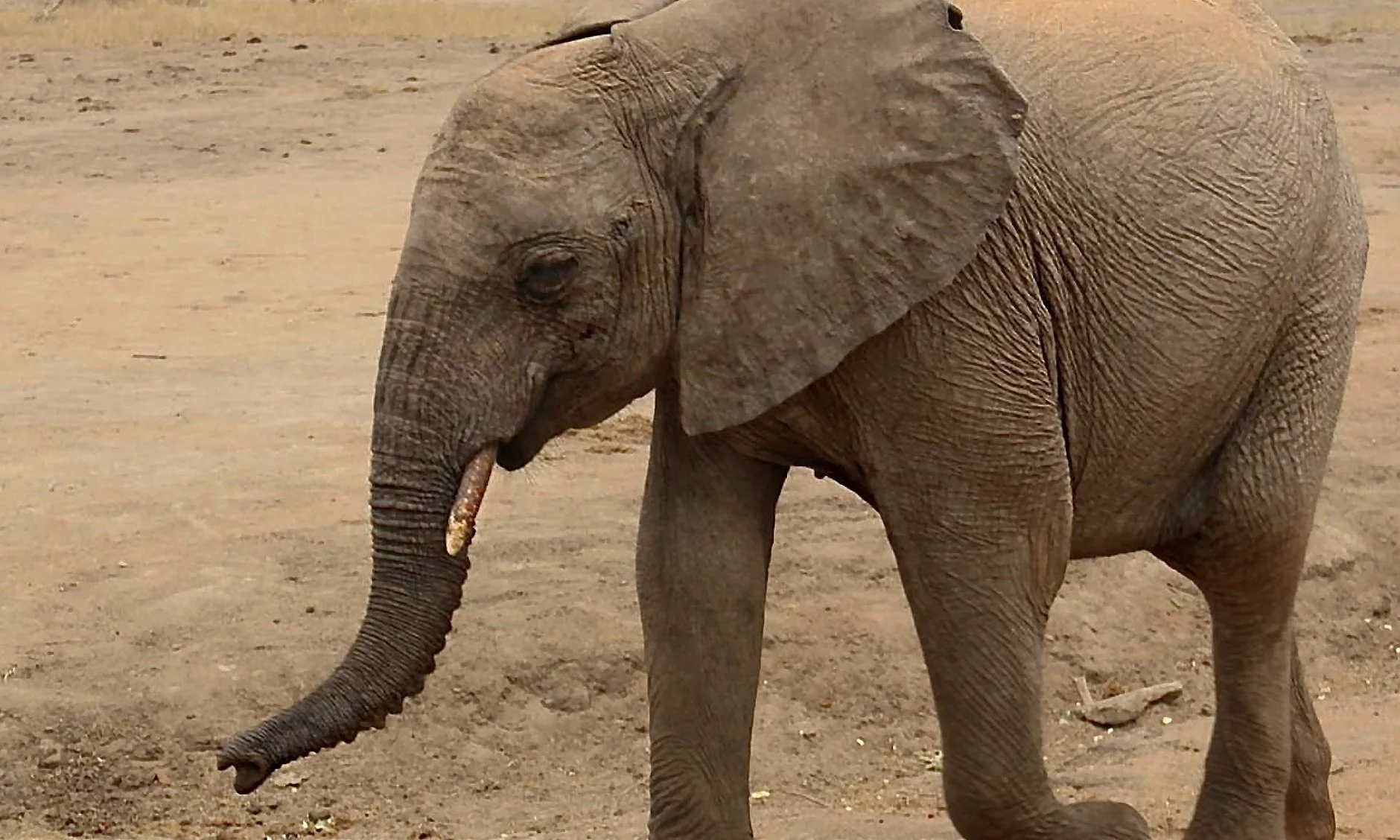
Her appearances became fewer and further between in the intervening years, a natural turn of events. It wasn’t all smooth sailing. In one visit, keepers noticed that she had somehow sheered one of her tusks in half. No one knows how or why. It couldhave been an accident, it could have been a joust with a rival elephant, it could even have been an encounter with lions once again. A report from January 2021 showed that, her tusk aside, she appeared to be in good health and now a fully grown 11-year-old.
Then she vanished entirely.
Gone.
No one knows how or why but the assumption was that, now leading the life of a wild elephant, she had simply moved on to the next phase of her time on earth.
Her Sheldrick past was now just that: the past.
And then … a miracle.
That story, told in Ishanga’s Tales: Middle Endings, is next.