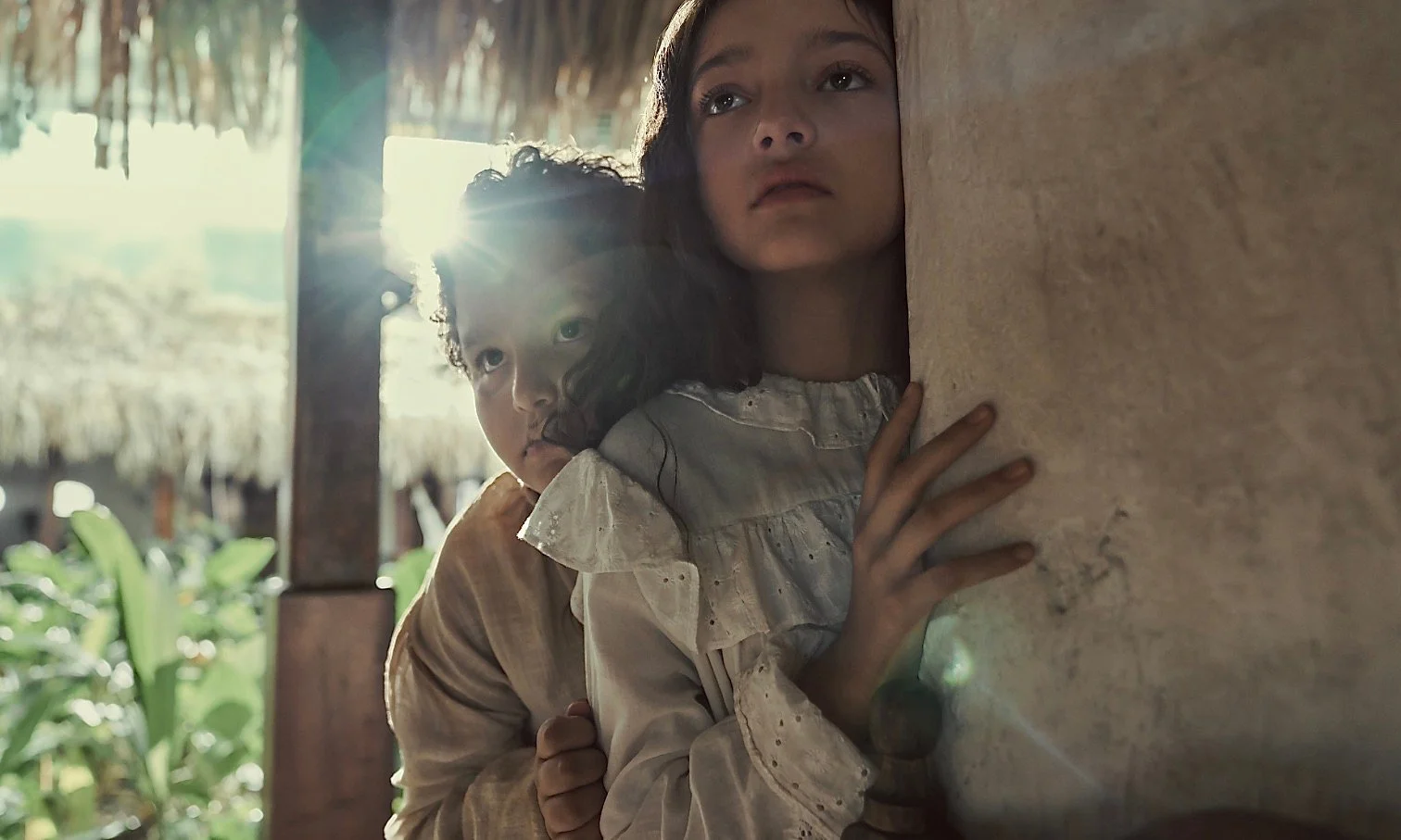
Alex Garcia López’s adaptation of Gabriel García Márquez’s ode to life returns with its second act, and seldom has nature looked so haunting — or fragile. The Netflix version of Cien Años de Soledad is a moveable feast … stunning to look at, deeply moving and, at times, unspeakably sad.
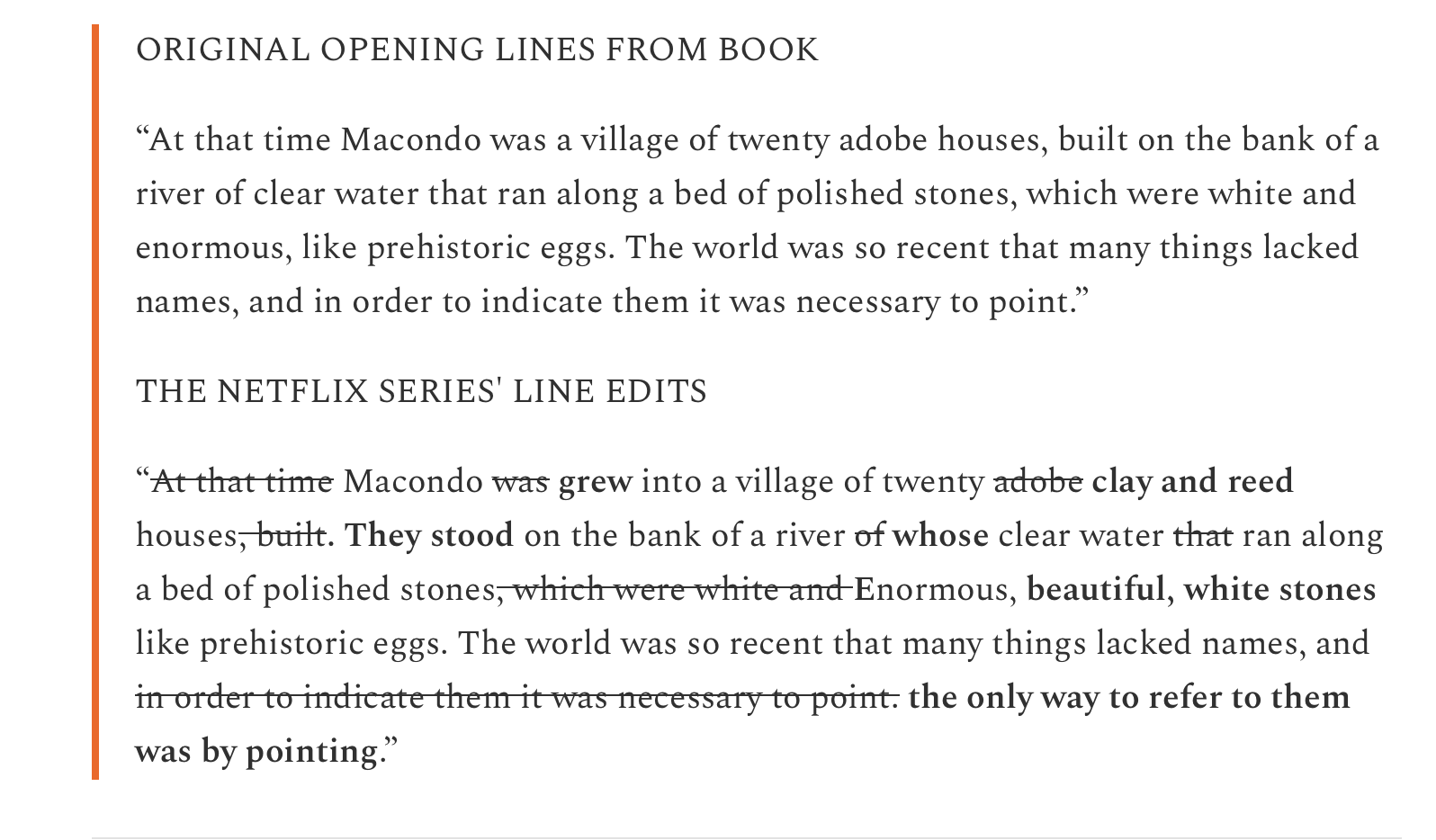
One of the many grace notes of Alex Garcia López and Laura Mora’s film adaptation of Nobel laureate Gabriel García Márquez’s literary magnum opus comes at the very beginning.
In all Márquez’s works, nature is a living presence that breathes through character, story, myth, and magic realism — a story, as Márquez might describe it, as inherited memory, told in prodigious moments.
For all the human drama, and of that there is plenty, nature — rain, droughts, storms, eocological decline and species extinction — is never far from Márquez’s mind. Toward the end of his Nobel Prize acceptance speech in 1982, Márquez warned of a stark future for the natural world. He used the word ‘nature’ to represent all organic existence on Earth; he warned that prosperous nations had assembled destructive arsenals of weapons capable of wiping out “not only all the human beings… but also the totality of all living beings that have ever drawn breath on this planet of misfortune.”
Márquez closed his speech with his hopes for the “Utopia of Life,” a new world in which the natural order of life is respected, love is true, and marginalized people are given a lasting “second opportunity on earth.”
When Cien Años de Soledad — filmed entirely in Spanish in Colombia with a largely Colombian cast and crew, as per the stipulation of Márquez’s family (Márquez’s sons Rodrigo Garcia and Gonzalo Garcia Barcha were co-executive producers on the 16-part, 18-hour Netflix drama) — first aired in 2024, a friend admitted that the opening — a desiccated corpse, burrowing ants, the rust and mould of perpetual rains, a faded print of a multilayered family tree with countless branches, all faded in time — gave her the chills.
She had read the novel at 13 and it had moved her in the way only the great novels can, but she doubted a filmed version could, or would, do it justice. She was wrong, she says now.
The series has been broken into two chapters; the second chapter, seven hour-long episodes, began streaming just days ago. A feature length, two-hour finale will stream on Netflix starting Aug. 26.
Márquez himself did not believe Cien Años was filmable. He suggested in interviews, with a touch of the wry playfulness that marked much of his writing, that he wrote Cien Años precisely to prove that the written word has a wider sweep than cinema.
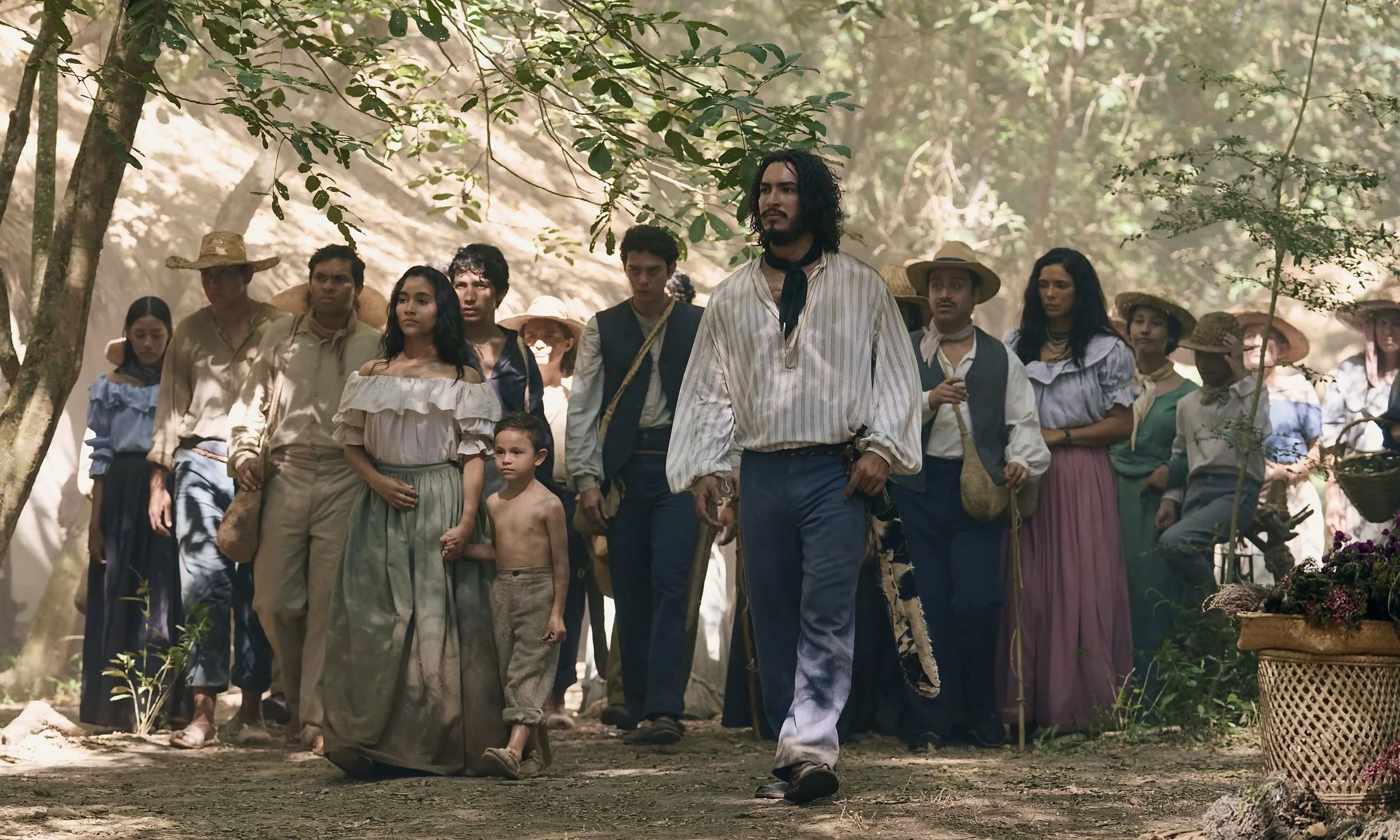
Mauro González/Netflix
Cien Años was a challenge to film snobs. A dare. Try this, amigo, and don’t come running to me when it doesn’t work out the way you expected.
Reduced to its essentials, Cien Años tells the life story of José Arcadio Buendía, his hard-pressed, long-suffering wife Úrsula, and their sprawling, wildly differing progeny and their descendants. It tells, too, the generations-spanning tale of the imagined, idealized jungle village of Macondo, not so much a town as a state of mind — temporal and magical at the same time.
The visuals are haunting, gorgeous.
Swarms of monarch butterflies flutter around one character; a travelling parade of carnival workers cavort and dance with carefree abandon through the town square, while their leader dabbles in alchemy and the weirding ways of the occult and Old World magic in the shadows.
Úrsula frets that she will give birth to iguanas or — worse — children with pigs’ tails, because she and her husband, José Arcadio, are first cousins; their families have warned them that marrying and having children will bring a terrible curse on them. Destiny has hidden surprises for them all.
The writing — in both Márquez’s original and in scriptwriters Camila Brugés, Alba González, José Rivera and Maria Camila Arias’ restless and poetic adaptation — is beautiful and witty by turns, as when José Arcadio tells Úrsula: “If you bear iguanas, we’ll raise iguanas. But there’ll be no more killings in this town because of the two of us.” (Interestingly, that line is subtly changed from Márquez’s original, “If you bear iguanas, we’ll raise iguanas. But there’ll be no more killings in this town because of you.”)
Toward the end of the first act, those bright, early chapters take a dark turn, as Macondo and the people who live there find themselves in the crosswinds of political upheaval — imposed on them from outside — civil unrest, and social upheaval.
The violence in Cien Años’ back half is often brutal and hard to watch. Utopia proves elusive, as ever.
Márquez cared deeply for the natural world; he viewed the environment not as a passive backdrop for melodrama but as a character in its own right, indelibly linked to human survival, culture, and family memory.
In One Hundred Years of Solitude, nature is wielded as a disruptive, mythical force against human arrogance, from an “insomnia plague” (just what it sounds) to a torrential downpour that lasts for four years — a direct, not-so-subtle critique of capitalism’s disregard for local ecosystems and family communities.
Yes, Márquez faced threats to his safety, life, and freedom on multiple occasions, starting with his forced exile from his native Colombia as far back as 1955, when he was a young reporter with the Colombian newspaper El Spectador and wrote a series of investigative reports exposing government corruption and military incompetence surrounding a navy shipwreck.
Just days ago, Colombia voted yet again for a hard-right ultranationalist government. Márquez had avoided that for much of his life; he passed of natural causes, age 87 in Mexico City some 12 years ago. He headlined there for the better part of three decades, preferring the cultural environment and social freedom there over what had become of his homeland.
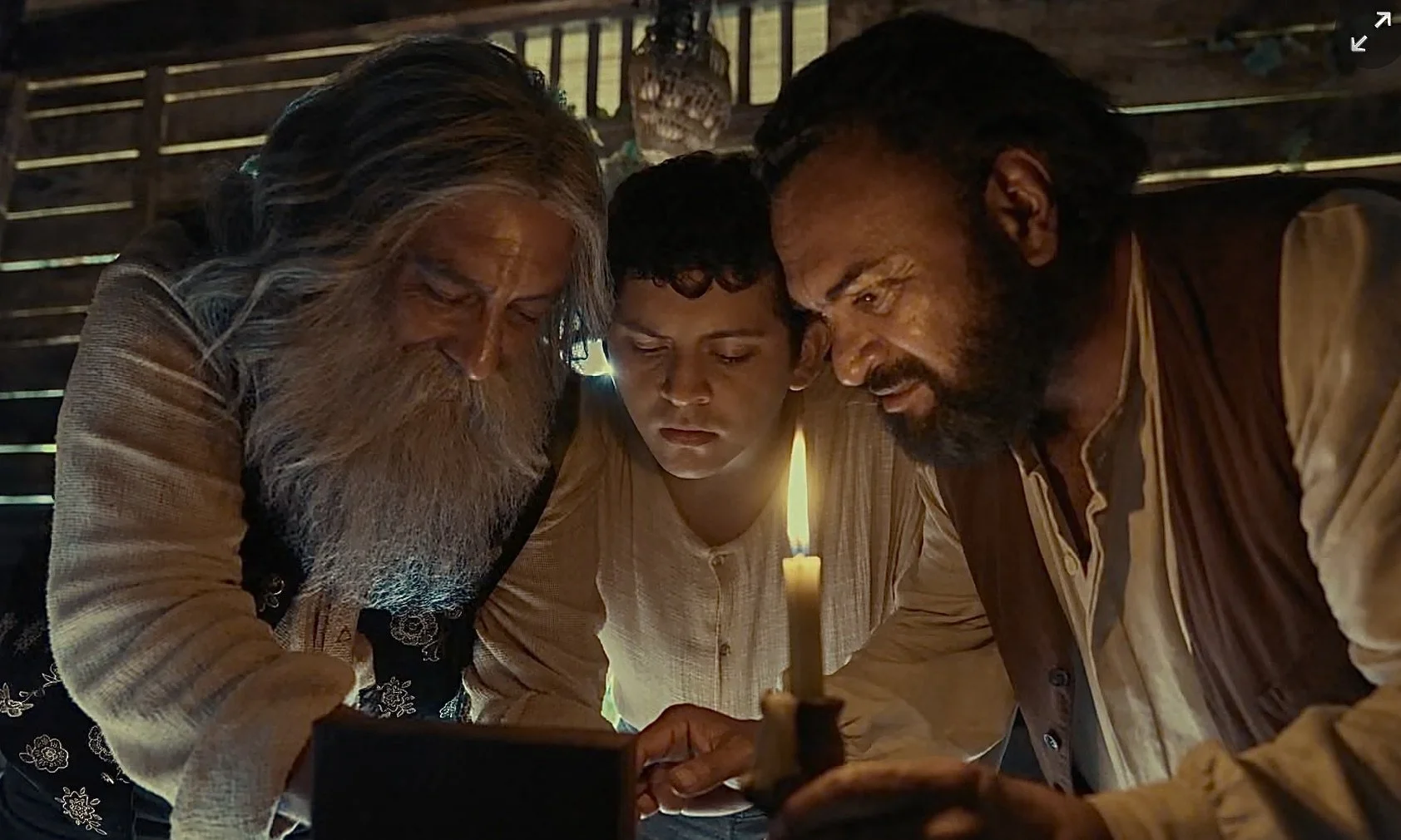
Mauro González/Nteflix
Márquez embraced Mexico City as a creative haven and a stable base for what would become one of the defining writing careers of our time.
(Márquez’s 1985 novel Love in the Time of Cholera was also adapted to the big screen, in a 2007 feature film directed by the English filmmaker Mike Newell, featuring Javier Bardem, Giovanna Mezzogiorno and Benjamin Bratt in a tale about love, obsession, and the healing power of time.)
Cine Años’s cinematography, by Paulo Pérez, Maria Sarasvati Herrera, Camilo Monsalve and James L. Brown, is full of long, languid pans, and slow, sweeping tracking shots the camera follows one character through a crowd, then follows another character without pausing, and then a third, and so on — just one long, fluid flowing moment. Like life itself.
Early photography, in the form of the daguerrotype, a shiny silver-coated copper plate process invented in 1839, makes a cameo appearance in early episodes — a reminder, perhaps, of how family memories are stored over generations.
“Wisdom comes to us when it can no longer do any good,” Márquez wrote.
“In that Macondo forgotten even by the birds, where the dust and the heat had become so strong that it was difficult to breathe, secluded by solitude and love and by the solitude of love in a house where it was almost impossible to sleep because of the noise of the red ants, Aureliano and Amaranta Úrsula were the only happy beings, and the most happy on the face of the earth.”
Márquez once said that it is not true that people stop pursuing dreams because they grow old; they grow old because they stop pursuing dreams.
What better way, then, to close than with Márquez’s own words:
“The adolescents of my generation, greedy for life, forgot in body and soul about their hopes for the future until reality taught them that tomorrow was not what they had dreamed, and they discovered nostalgia.”
Cien Años de Soledad unveils its final act on Aug. 26.
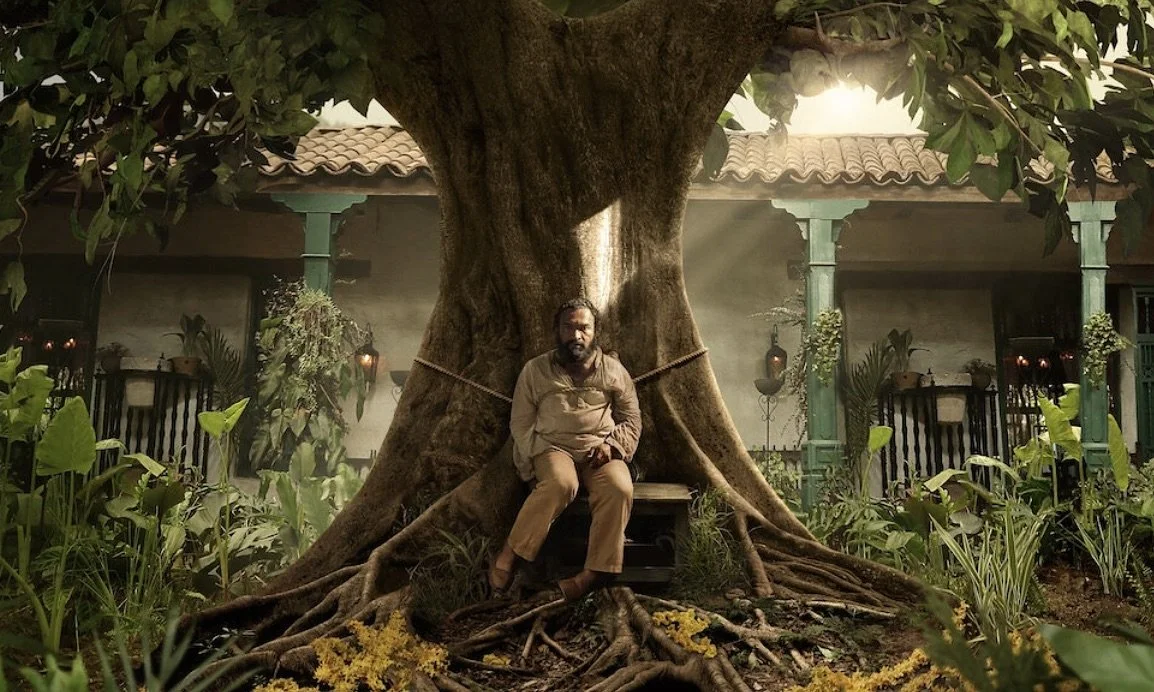
Mauro González/Netflix