
On the path of lions — and Boyd Varty’s ‘The Lion Tracker’s Guide to Life’ — in Tanzania’s Tarangire National Park
Some things in life are too complicated to explain in any language … and yet too simple to ignore.
I stumbled across Boyd Varty’s The Lion Tracker’s Guide to Life the other day, a slender volume (160 printed pages) printed in a small, handbook-sized (12 x 17cm) hardcover edition, small enough to fit inside a bush jacket. Bush jackets are handy lightweight utilitarian safari jackets originally designed for military use and expeditions in the African bush— and that makes sense in a way because The Lion Tracker’s Guide is something you want to have on you in case things get gnarly.
In moments of quiet reflection, too. It’s a handbook for all seasons.
Know how to navigate, the bumf reads on Amazon’s website, don’t worry about the destination, and stay alert. … When we join Boyd Varty and his two friends tracking lions, we are immersed in the Southern African bush, and, although we learn some of the skills required for actual tracking, the takeaways are strategies that can be applied to our everyday lives on a journey of self-discovery. Trackers learn how to use all their senses to read the environment and enter into a state of “greater aliveness.” When we learn to find and follow our inner tracks, we learn to see what is meaningful to us.
“In our encounters with the edge, we come to know ourselves more deeply.”
Yes, yes, I know. You’re thinking, I love how the universe aligns all its ancient, cosmic wisdom just to tell you that you’re a classic Scorpio who needs to drink more —and you wouldn’t be far wrong.
It takes a truly profound level of spiritual enlightenment to look at a random track in the ground and think, Yes, this will fix my credit score.
Except that, when it comes to lions, there is seldom anything random about them.
More quotes, these from the noted science journalist and nature writer David Quammen in his restless, absorbing 2003 tome Monster of God: The Man-Eating Predator in the Jungles of History and the Mind. The clue is in the name … it’s a monster of a book.
“Among the earliest forms of human self-awareness was the awareness of being meat.”
This is not about hunting, or eat-or-be-eaten, but about preservation and protection of the planet we call home. In other words, conservation.
Quammen again: “ The point I take is that this hero, and these monsters, live and die in a single universe of concrete reality. They are all memorable, and they are all mortal. Their molecules reenter the landscape. They are parts of a food chain… Kill off the sacred bear. Kill off the ancestral crocodile. Kill off the myth-wrapped tiger. Kill off the lion. You haven't conquered a people, or their place, until you've exterminated their resident monsters.”

©Alex Strachan
But wait , there’s more.
“Proximity plus vulnerability equals jeopardy.”
Quammen and Varty have something else in common: a mutual concern about the state of our world and the cultural impact of ridding man-eating predators from our ecosystem.
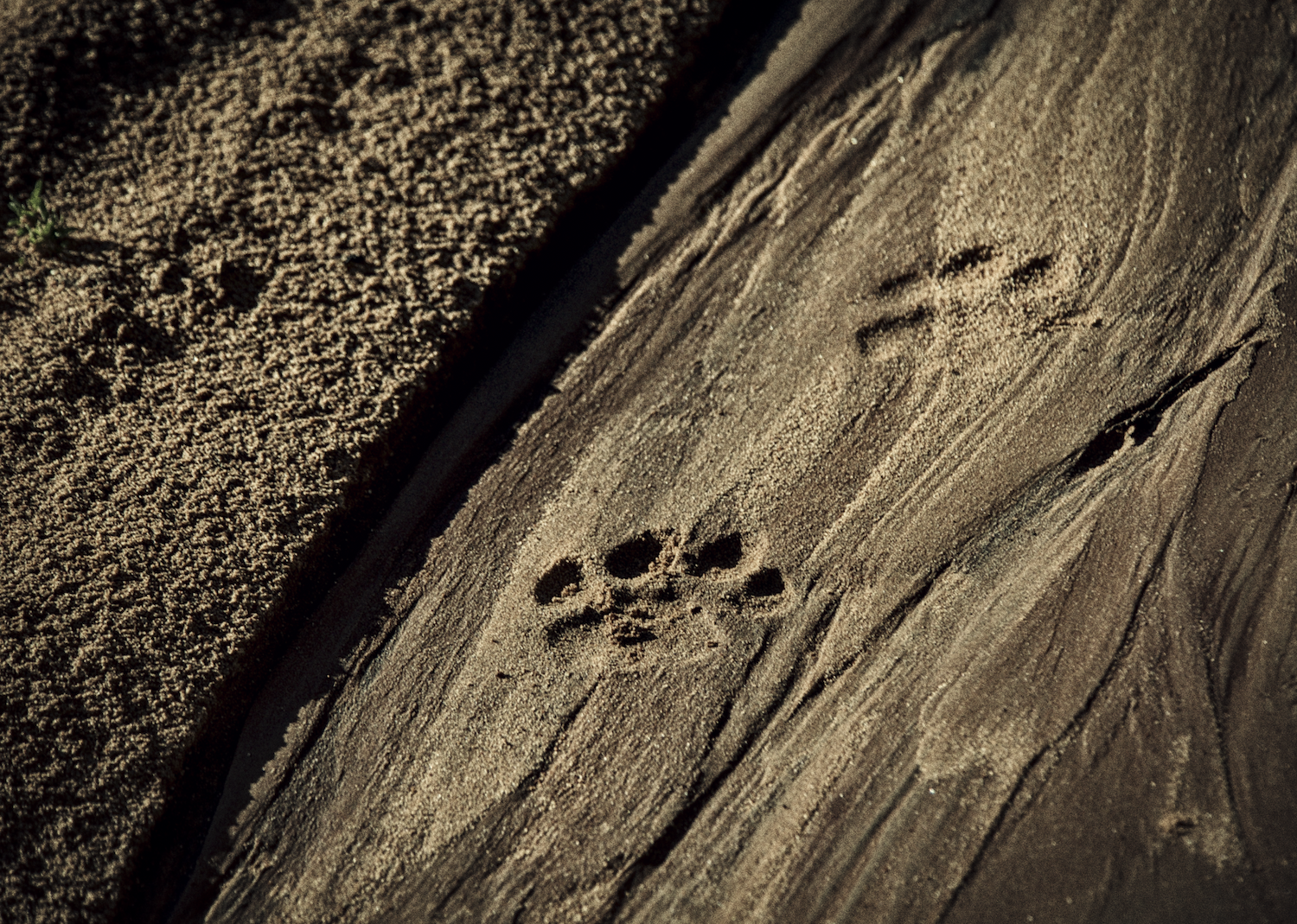
On this (very) early morning in northern Tanzania’s Tarangire National Park — in a temporary respite from the relentless assault of tsetse flies — and with no other people around for seemingly miles, Fred Mushi, my guide for the fortnight, stopped the Land Rover, shut off the engine, and peered down at the ground. The damp, slowly warming ground was still hardened from a cold, mist-laden night of darkness. He saw tracks. Distinctive. Unmistakeable. Lions.
Among their many endearing, dare I say human characteristics, lions favour dirt roads when they can because, let’s face it, someone has already done the hard work of clearing that road and prowling the smooth, hardened ruts of a long and winding road beats hacking one’s way through thick bush any day of the week. There are no thorns, for one, and fewer snakes. Lions are not fools.They are opportunists, yes, but not fools.
Fred peered down at the tracks, squinted, and then looked toward the distant trees, past the thick bush. “They are close.”
The tracks tell one story — the lions came this way, they are looking for something —but they tell another story as well. We are all part of this great unfolding. As Varty writes in The Lion Tracker, and as Quammen concurs, the restoration of the planet will come out of a profound shift in human consciousness — our eventual acceptance, if we get it right, of our place in the grand scheme.
When we search for the tracks of lions we do so in shaded clearings in the grass, because lions are social animals and they are rarely on their own. Where there is one, there is invariably another.
Nobody said it was easy, though, because one lion is never quite like the other.
Sometimes, when one is alone on the savannah, it is possible to believe that the world’s wild gardens might be brought back to something resembling their original harmony.
In Tarangire, in those moments away far from other people, it is possible to imagine the feeling of a land restored. While this can be a rewarding path, as Varty writes in The Lion Tracker’s Guide, coming face-to-face with a wild lion has a way of putting you face-to-face with your own doubts.
The morning light filtered through the thick canopy of trees and dense bush, and there they were — the lions.
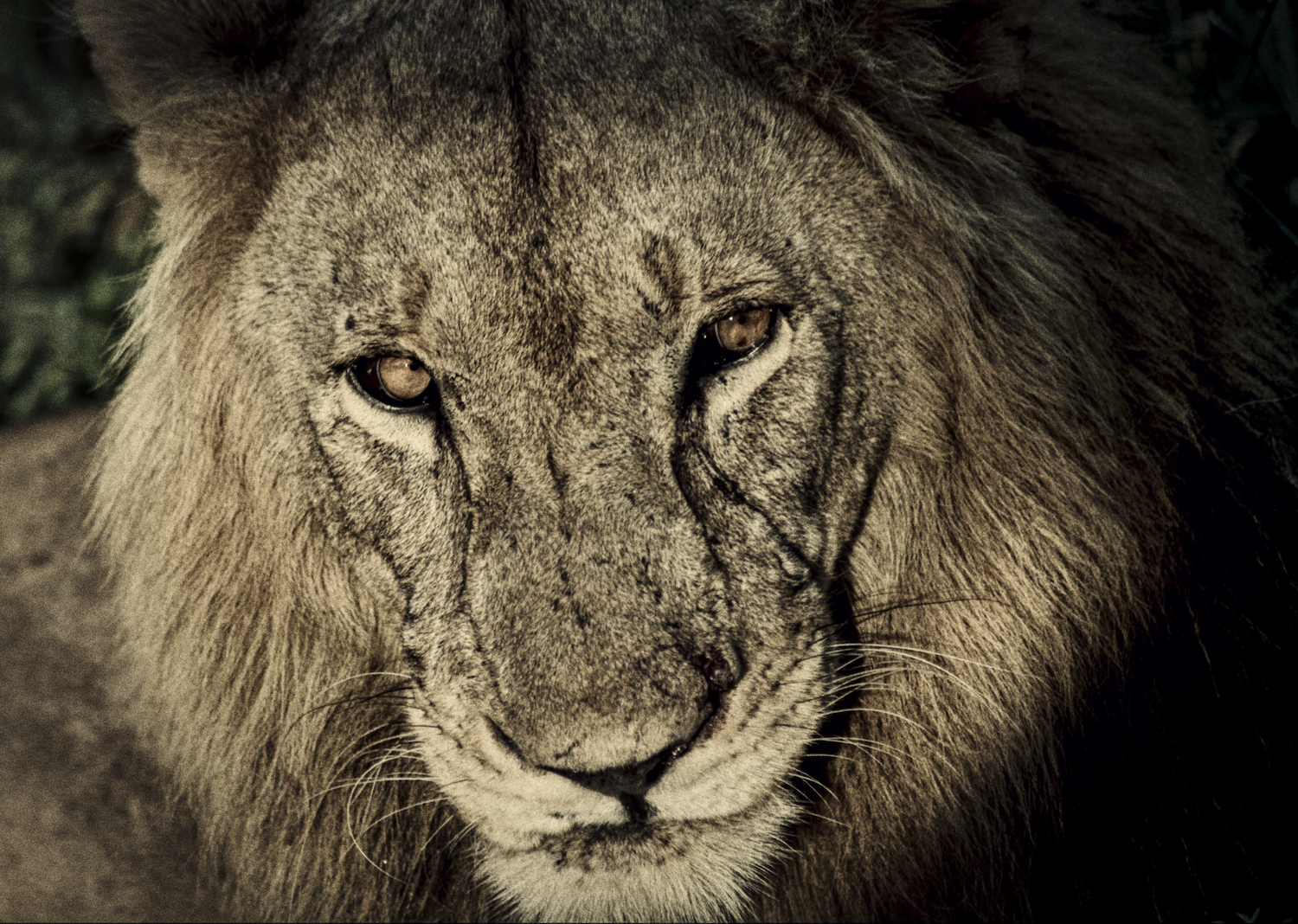
The pride male was battered and bloodied, getting on in years and recovering from a fight with a rival, seeking shelter in a clump of bushes alongside the dirt road, while a trio of lionesses, lean and supple, sprawled in the slow warming sunlight directly in our path.
Fred cut off the engine and we were immersed in an all-enveloping silence, broken only by the birds calling from nearby trees.
The fearful symmetry of the lions’ tracks as they led toward the resting group was both stirring and profound, an imprint of their essential presence in the world. The old male would die soon, “a fleeting mark of wildness made all the more beautiful by the way it will fade back into the untouched earth.”
This is wild Africa.
©Alex Strachan