
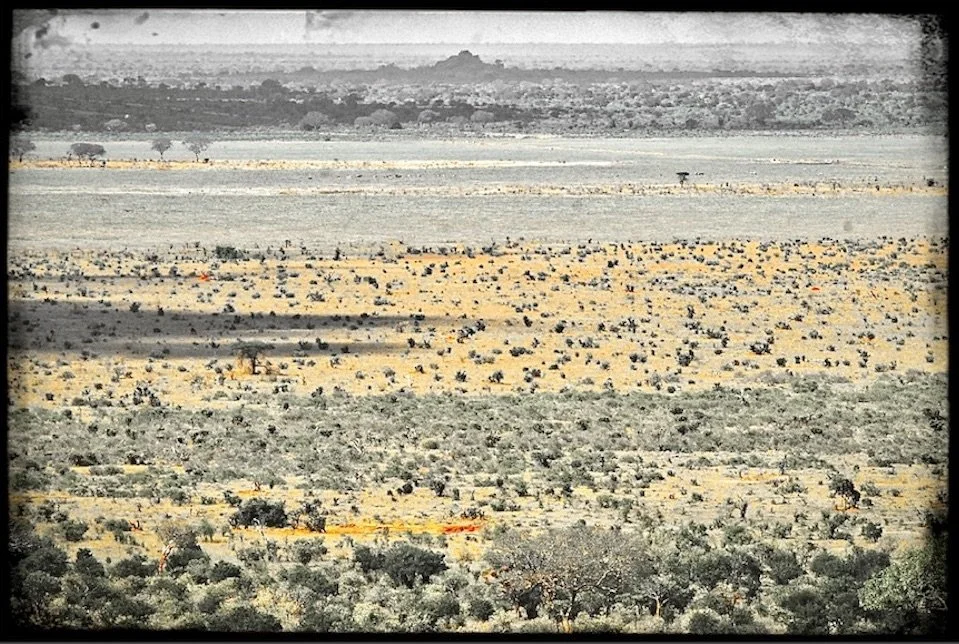
This is Tsavo, where Dame Daphne Marjorie Sheldrick lived for much of her 83 years.
Dame Daphne Marjorie Sheldrick, DBE (4 June 1934 - 12 April 2018) wrote of Tsavo National Park …
“Tsavo is a land where time doesn’t count and where everything is just as it was meant long ago. Trees and flowers are left to grow unchecked, and streams and rivers flow where they will …
“Here, all creatures live in accordance with a law that has governed nature since the world was new — the survival of the fittest. We, who lead sheltered and protected lives, might think of it as a cruel and rather frightening place, for it is a pristine world where mercy is unknown, but it is intensely fascinating with a mysterious charm of its very own that is pure and beautiful.
“Those who have once tasted its enchantment find it addictive and can never again escape its spell. They are drawn back as though by a magnet to savour the solace that it imparts to the soul. There, stepping back in time, we glimpse the world of yesterday, and we will forever be reminded that we share it with many other creatures who are also a part of creation with a specific purpose to their being, a vital ink in the chain of life.
“Thinking of the wild wonders all around us, we become mindful also of a great responsibility that has been vested in us, the responsibility to keep the chain of life intact, for to break a link is to jeopardize our own survival and that of many other creatures too.”
The solitude of a wild place often has another side, of course, that of the “notorious tsetse-infested nyika.”
This formidable and inhospitable barrier of arid scrub country was known as the Taru desert, Daphne Sheldrick goes on to write in her 2012 memoir An African Love Story: Love, Life, and Elephants.
Tsavo’s terrain was described by the 19th century Scottish explorer Joseph Thomson as ‘weird and ghastly … eerie and full of sadness, as if here all death and desolation.’
“Just one bite from an infected fly could be catastrophic,” Sheldrick continued in her memoir, “transmitting the wasting livestock disease trypanosomiasis, for which there was at the time no known cure.
“A few years earlier, most of the livestock used to transport materials to build the railway had been wiped out in this way and lessons had been learned.”
Or had they?
“It must have taken days to cut the cloth and secure it around each animal. Not an enviable job.”
Not unlike the unenviable job of today, when the Sheldrick Wildlife Trust and the Kenya Wildlife Service (KWS) among others are engaged in a pitched battle against elephant poaching in the 47,200 km² landscape. The poaching is driven by insatiable markets for ivory in the Arabian Peninsular, China, Japan, and Southeast Asia.
The Tsavo Trust, in partnership with KWS and the Sheldrick Trust, deploy ground patrols, aerial surveillance, and help from surrounding communities protect what is left of the 15,000 remaining elephants in the greater Tsavo Conservation Area.
While it is true there were roughly ten million elephants across the entire African continent in 1900 — specific numbers for Tsavo are hard to pin down, as the region was relatively unexplored at the time — the Tsavo program has had some effect. A poaching rampage in the late 1980s, coupled with a severe drought, devastated Tsavo’s elephant herds, driving the elephant population down to fewer than 6,000 animals.
In that context, today’s 15,000 elephants shows that conservation programs can work, if coordinated and well managed, and rooted in clear-eyed scientific research and rigorous numbers taking.
As always, the long rains and a sustainable supply of freshwater play their part.
The rains, Daphne Sheldrick wrote “(opened) my eyes to the spell of space and the contrasts that transformed the semi-desert of the brick red earth and grim leafless trees in the dry season to a vibrant painted paradise after the first rains. The first precious drops of rain had an intoxicating effect on us all.”
And there it is.
Daphne Sheldrick would have been 91 today, 4 June, 2026.
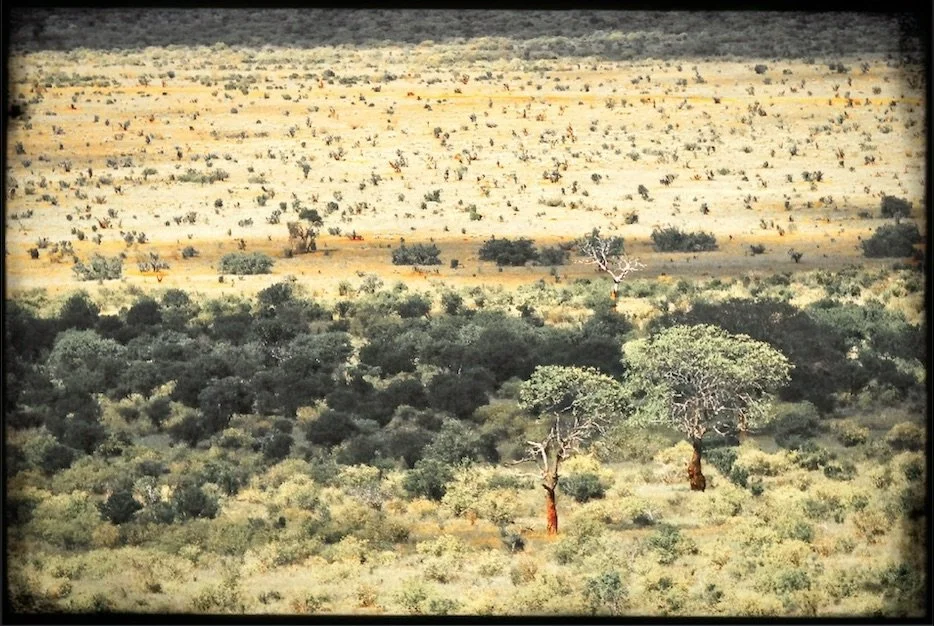
©Alex Strachan / Strachan Photography