• Camera Natura
  • Journal
  • Fotografica Africa
  • The Ghosts of Tsavo
  • Maasai Enkai
  • Menu

Strachan Photography

  • Camera Natura
  • Journal
  • Fotografica Africa
  • The Ghosts of Tsavo
  • Maasai Enkai

Serengeti Watch/Earth Island Institute

Mayhem in the Mara

June 29, 2026

Overcrowding in the Maasai Mara … of tourist vehicles, not animals. Might fewer tourists at higher prices be a fix?

Whatever you do, don't get out of the boat.

Or its African equivalent, an old saw of experienced wildlife tracker-guides throughout the African miombo:

Whatever you do, don’t run.

You would think some things would come naturally to visitors to Africa’s wilderness areas by now. Scolds like,

Don't feed the animals.

A fed baboon is a dead baboon.

To a crocodile, you're protein.

But wait, there’s more. To an elephant, you’re basically an irritant, an annoying pipsqueak who needs to be taught his place on occasion.

To a mosquito — or worse, a tsetse fly — you’re basically a blood meal. And to a snake, if you step on one, It’s going to get you back.

The controversy had been building for a while, years even.

Ever since the COVID-19 lockdowns of 2021, in fact.

But it took one especially egregious incident, a year ago almost to the day, to bring things to a head.

Reckless visitor behaviour in Kenya’s Maasai Mara National Reserve, and “over-tourism” — a new word for an old and growing problem from Venice to Shanghai — have led to severe disruptions of Africa’s annual wildebeest migration. Dozens of tourist vehicles converge on herds of wildebeest waiting to cross crocodile-infested rivers, in some cases blocking them altogether, all to get that perfect picture and have a good story to tell back home.

There have been reported incidents of safari drivers harassing diurnal predators like cheetahs — critically endangered — interfering with their hunts to the extent that the mortality rate among cheetah cubs, already high, is becoming untenable.

Videos of tourists jumping out of their vehicles and harassing animals have become a staple on YouTube, TikTok and other social media platforms.

Though I find this hard to believe, if all too easy to imagine, drivers have been witnessed herding wildebeest into harm’s way, at the beck and call of impatient tourists who want to see something more exciting than a lion or wildebeest simply standing there.

In the incident in question, last August, video emerged on Instagram and YouTube, of just that. It was alleged — though not proven, insofar as I’m aware — that a park attendant allowed it … provided he was handed a USD  $20 backhander to look the other way.

If true, and it’s a big if, add ranger complicity to the lexicon of the day.

In my own experience, incidents of 4x4s actively chasing after cheetah kills or stirring sleeping lions from their slumber — lions sleep up to 18 hours a day after all — are not unheard of, though, thankfully, not common.

Yet.

In recent years, overseas visitors have flocked to the Mara River every July and August to witness the stirring sight of half a million wildebeest on their annual Great Migration, as popularized — and promoted — in countless wildlife programs, on TV, at wildlife film festivals like the annual Jackson Wild festival in Jackson, Wyoming and the International Wildlife Film Festival (IWFF ) in Missoula, Montana, and on streamers like Disney+ and National Geographic. It’s one of the most stirring, spectacular wildlife sights remaining on the planet.

Pent-up energy after the COVID lockdowns and a growing sense that there’s less and less of the wild world to see with each passing hour has prompted a virtual stampede of overseas visitors.

And therein lies the problem.

Enter the advocacy group Serengeti Watch, a project of the Earth Island Institute, a credible, well-known 501(sc)(3) environmental organization based in Berkeley, Calif.

Kenya’s Maasai Mara National Reserve and Tanzania’s (much) larger Serengeti National Park are part of the same ecosystem, and share a common border, the Mara to the north and Serengeti to the south. The wildebeest cross the border en masse at will twice a year.

They graze July-October each year on their annual migration, before following the rains — and the sweeter grass — to their breeding grounds on the short-grass plains in Tanzania’s Ngorongoro Conservation Area.

The wildebeest herds settle around the Lake Ndutu region in December and January, and from there venture into Serengeti proper, where they stay from January until June.

©Alex Strachan/Strachan Photography

In one of nature’s great mysteries — and one of the reasons wildebeest are studied so intensively by field biologists — wildebeest give birth to their calves over a 15-day period, usually in February, and at no other time of the year. No one knows why, but biologists and behavioural scientists have speculated that it’s nature’s way of ensuring survival of the species. When so many wildebeest give birth at the same time it’s virtually impossible for predators — lions, hyenas, leopards, cheetahs, even jackals — to keep up.

Serengeti Watch shared a fascinating — and somewhat hopeful — report earlier this month to readers who follow the group’s work through its regular postings.

Numbers don’t lie, and these numbers tell a particularly revealing story.

Serengeti Watch:

“Wildlife numbers in the Mara have fallen dramatically, with declines of 60–80 % in many non-migratory large mammal populations since the late 1970s. For instance, impala declined by about 80%, giraffes by 75%. A wildebeest migration of half a million animals used to enter the Mara from Tanzania each year. That has dropped by 73%, and the Mara’s resident wildebeest population has plummeted by 81%.

“Part of the reason for these declines has been human population growth accompanied by an increase in livestock. In some areas, it resulted in fencing that fragmented the ecosystem and prevented wildlife from moving freely. In other cases, dispersal areas outside the Reserve have been turned into agriculture.

“But another reason is over-tourism. Too many lodges and camps taking up space, and too many tourists causing disruption of wildlife hunting behaviour and reproductive success.”

And now for the good news.

Or, if not good exactly, certainly better.

“We're seeing a dramatic shift — a 50% decline in tourism in the Mara, from about 420,000 in 2023 to 213,000 in 2025. 

“Those in the safari business attribute this to higher fees for travellers, making it less competitive with other areas within and outside Kenya.

“Marley Saitoti, assistant director of Tourism and Wildlife in Narok County, says it represents a deliberate shift towards a low-volume, high-value tourism model to reduce pressure on the ecosystem. ‘The Maasai Mara is a relatively small and fragile ecosystem compared to the larger Serengeti-Ngorongoro ecosystem,’ he explains. ‘It cannot sustainably operate as a mass tourism destination.’”

The change in thinking marks a dramatic shift in emphasis.

Low-impact = high-value tourism.

Fewer visitors, paying more for a low-impact, high-value experience is the way of the future, the thinking goes.

It’s a practice that was originally established in Botswana and has served Botswana conservation efforts well — — if we leave out the part about Botswana’s recent allowing of trophy hunting.

Botswana is an expensive safari destination, and has been since its inception. Not for them the overland trucks which tear up roads and can carry between 16 and 24 passengers between them, all of them looking to snap that perfect picture, on a budget.

South Africa, a (much) larger country with a (much) larger population and with more natural resources, has struck a healthy balance between the two models, as embodied by South Africa’s Kruger National Park. The Greater Kruger ecosystem spans some 2 million hectares (5 million acres) across South Africa's Limpopo and Mpumalanga provinces, and lies at the heart of an extensive network of unfenced private and community-owned game reserves that allow wildlife to roam freely. The idea is by keeping animal movements open, routes that inthe past were blocked by fences and colonial borders, nature’s bal;ance is restored.

It can be done, in other words.

All it takes is the will and determination to do it

©Alex Strachan/Strachan Photography


Tags: Maasai Mara, over tourism, Maasai Mara National Reserve, Kenya, Mara, Mara-Serengeti ecosystem, Serengeti Watch, Earth Island Institute, Narok County, Marley Saitoti, Tourism and Wildlife, department, Tanzania, Lake Ndutu, Ngorongoro Conservation Area, wildebeest migration, wildebeest, Kruger National Park, South Africa, Botswana, low impact, high value tourism, COVID-19, Covid lockdowns, Jackson Wild, IWFF, social media, TikTok, YouTube

©Alex Strachan / Strachan Photography

Tarangire Tracks

June 18, 2026

One morning in the life of a Tarangire lion, where life is an evolving process rather than a fixed destination.

The distinctive track of a lion — possibly lions, plural — is plain to see on the dirt road in the half-light of early dawn in the mopane forest. The moon is low in the dawn sky and commiphora woodlands are only now recovering from a night of hunters and hunted. The long grass is a place of secrets.

This is Tarangire, pronounced tair-an-geer-ee in the local lingo, from the Wambugwe word Tara, meaning ‘river,’ and the Hdazabe word Ngire, meaning ‘warthog.’

Tarangire translates literally as “River of Warthogs,” though no self-respecting warthog would be caught dead out in the open, not here, and not at the crack of dawn. Not until mid-morning, anyway. There are too many lions.

Not that they’re easy to see.

At this hour, moments after sunrise and with a shroud of early morning mist slowly dissipating above the grass, lions are likely staking out a spot to evade the heat of midday. The golden light of dawn accentuates  the contrast of tracks in the still damp night’s earth. The moment won’t last. Tracks with no shadow are hard to see.

Tarangire, in Tanzania’s tsetse-ridden northlands, lies just south of the equator.

In December, the African sun at these latitudes can be cruel and unrelenting on fools. Call them what you will, lions are not fools. Lions — savannah lions and forest lions alike — have 300,000 years of evolution behind them.

Frederick Mbise, my companion and tracker on a solo, month-long expedition from the mopane forest of Tarangire to the Ngorongoro highlands and Serengeti, is pensive as he studies the track.

We have ventured out at first light, to see what we can find in the early dawn. Because of the early hour and the remoteness of the location, we have this part of Tarangire to ourselves. No other vehicles. No other people.

Every track tells a story.

This lion is moving at a slow, leisurely pace, but with purpose. He was here just moments ago.

Freddy can tell, just from studying the track, that this lion is probably a male. A male leaves a deeper, heavier imprint from that of a female. The lion’s forepaws have sunk deep into the dark, damp earth, weighted down by a heavy, preternaturally large head and broad, muscled shoulders.

A pride male possibly, with a large mane. The Tarangire lions, as is true of their Serengeti kin, are known for their large, dark manes.

Nature is alive here, and speaks a language all its own.

“Did you hear the lions roaring in the night?" Freddy asks.

It was hard not to.

I have Boyd Varty’s pocketbook with me, The Lion Tracker’s Guide to Life, which I have been reading by kerosene lamp at night.

©Alex Strachan / Strachan Photography

Varty, a former safari guide and TED speaker born-and-raised in South Africa’s Londolozi Game Reserve, learned the art of listening in the wilderness as a young child. Varty grew up a self-described “flawed mirror” in the Cathedral of the Wild, the title of his first book.

Lion Tracker’s Guide, published a few years ago, was no bestseller — at last count, it ranks a mere 8,642nd on Amazon’s list of best-selling books, albeit in the Top 10 in the wildlife category, and in the Top 20 in environmental conservation and science.

It speaks to me, though, especially out here.

At a mere 150 pages — and small pages at that — The Lion Tracker’s Guide was never going to rival  Death in the Long Grass in terms of sheer weight and heft, but it more than compensates for that its insights into how life is on the ground, on “the path of not here.”

The lion’s tracks are part of a larger story. Lions prefer to walk on open thornless ground; for all their. strength and might, their paw pads are surprisingly soft and sensitive, the better to feel the ground with.

We’re surrounded in the miombo by a dawn chorus of wood doves, buffalo weaver birds, Scops owls, yellow-billed hornbills, broken by the occasional shrill call of the aptly named go-away bird … go-waaay, kwa-aaay, kwa-aaay).

It’s all-enveloping sound that reaches within the soul of anyone who has the felt the strange allure of wild Africa.

And then we see them, sprawled out on the road ahead.

Half a dozen or so lionesses, of various ages, lying out in the open. And … just beyond them, half in shadow and half out in the open, another lion … the male.

The male, the one Freddy has been following, has tucked himself deep into the bush by the side of the road, looking the worse for wear.

He has been in a fight.

Judging from the superficial evidence of first glance, a bad fight.

His gaze is dull and glazed; his eye is afflicted with an age spot, or perhaps an indication of something else. There is a trail of blood at the edge of his jaw, and his nose appears torn open in part, with healed scratches just above. He has seen a lot of battles. His mane is dishevelled, unkempt. He has the posture and demeanour of a lion who has lost this last fight — except — he is alive, and the lionesses are still with him.

The other lion, if there still is another lion, is nowhere to be seen.

The lionesses, lying on the ground, regard us with a mixture of indifference and contempt. The male ignores us. Even in his present condition, he exudes a certain regal charm and power. The bush is harsh, and life in the wild is harder yet. It does not suffer fools, but this lion is no fool to have lasted this long.

The bush has been the teacher here and there is no more to say.

©Alex Strachan / Strachan Photography


Tags: lion, lions, tracks, Tarangire National Park, Tarangire, Tanzania, Ngorongoro, Serengeti, Frederick Mbise, Londolozi Game Reserve, South Africa, survival, "survival of the fittest", Boyd Varty, The Lion Tracker's Guide to Life, Cathedral of the Wild, TED talks, tsetse, baobab, mopane, wildlife, wildlife photography, animal behavior, life

Photo: David Scott Holloway/CNN

Remembering Bourdain

June 08, 2026

“What a shit-hole,” Bourdain said with a rueful laugh and no small amount of sarcasm, alluding to a certain US president, as he took in the stirring, spectacular sight of Kenyas’s Lewa-Boran wilderness, alongside his friend and travel companion W. Kamau Bell.

What he said next would reveal Bourdain at his most pensive, reflective self.

I never cared much for the words ‘funeral’ or ‘wake.’ A friend prefers the more poetic “celebration of life,” and on this anniversary of a life passed,

I prefer to take this moment to remember Anthony Bourdain in life, and remember what made him a voice of the world … for the world.

Bourdain himself would have been appalled by such maudlin and gauche sentiment. Sentimentality was not for him, though he could cry privately over injustice and cruelty to good, decent people with the best of them. Making a spectacle of himself in public after his passing would be anathema to him. It would have left him feeling embarrassed and irritable. Caustic, even. And witty.

For Bourdain was at his best — and most real — when he was leaning  against the tide of popular convention. ‘Get a grip, people,’ I can picture him saying. ‘I mean, for f**k’s sake, it’s not like I’m important or anything.’

From Anderson Cooper to Christiane Amanpour to Barack Obama to the folks who follow him to this day on Tony Donato’s Anthony Bourdain Facebook page, everyone was the same in his eyes, celebrity and non-celebrity alike.

And equal.

For that was one of his unique gifts. He always saw the best in people, regardless of who they were.

For that is who he was, deep down. He lived his life in the moment, by moment,

And when someone stepped out of line, whether that person was merely a lost soul living on the margins or a head of state found to be profoundly lacking in integrity, dignity, humanity, judgment or even an ability to just do the job you’ve been elected to do, Bourdain would call him on his s**t, as he might say — and often did.

Everyone who discovered Bourdain can recall that moment with a unique clarity, as though it were yesterday.

For me, it was Africa.

I was on one of those 12-hour night flights, flying high above over the Democratic Republic of the Congo (DRC), where all one could see from the window of a Lufthansa Airbus was darkness and bursts of sheet lightning momentarily lighting up the clouds below, sheet after sheet after sheet of lightning in the darkness, mile after mile after mile, as far as the eye could see. And below the clouds, one of the world’s last surviving, primeval rainforests. This is Africa, and for me it was out of this world.

During his lifetime, Bourdain took in Madagascar and Senegal in his own unique way, alongside companions like the filmmaker Darren Aronofsky (you may know him from films like Requiem for a Dream and The Fountain, and then again, maybe not) and the poet-philosopher and musician Youssou N’Dour; Ethiopia, with the chef Marcus Samuelsson; and so on.

Nigeria. Libya. Maroc. Rwanda. Ghana, for No Reservations, along with Liberia, Mozambique, and Namibia, a country I know well.

Parts Unknown’s Kenya, the premiere episode of the show’s 12th — and final, as it would turn out — season, is distinct on so many levels, not least because it was the first season-premiere episode to air after Bourdain died by his own hand on 8 June 2018, in the town of Kaysersberg Vignoble, France, at age 61.

Bourdain was filming an episode for Parts Unknown at the time, ironically enough, alongside his close friend and occasional Parts Unknown sidekick Éric Ripert.

(Parts Unknown Kenya was the first season premiere to air after Bourdain’s passing, but not the first standalone episode. Berlin, Cajun Mardi Gras and Parts Unknown’s 11th-season finale Bhutan, with its rumination on Old World wisdom and coming to peace with the afterlife, all aired in the weeks following. The episode Hong Kong, with its not inconsiderable emotional baggage — and I’ll leave it at that — aired just five days before Bourdain’s suicide.)

Kenya was distinctive, too, because unlike many episodes in which Bourdain was the sole focus, Kenya was driven by Bourdain’s companion W. Kamau Bell, raconteur-philosopher and stand-up comedian with his own CNN show at the time, United Shades of America, as he experienced his first visit to Africa and explored his emotional connections to the continent of his ancestors as an African-American.

Together, the two would tackle the “White Saviour” complex, engaging in candid, often uncomfortable conversation about socio-political dynamics and economic colonialism — the second-hand clothing industry, to cite just one example — and take a close, unflinching look at Nairobi’s vibrant urban culture as embodied by the township of Kibera.’

It’s the ending, though, that final poignant soliloquy toward the episode’s close that had viewers, as one viewer sop aptly put it at the on Reddit,  “in bits.”

That soliloquy, first in quiet conversation as Bourdain and Kamau Bell sit alone atop a vast escarpment overlooking the silence of the African wilderness, and later in voiceover, would be Bourdain’s final witness statement.

From Kenya’s Lewa Wildlife Conservancy in the heart of northern Kenya’s Lewa-Boran wilderness region, to the hardscrabble back lanes of Nairobi’s Kibera township, this was Bourdain at his most reflective.

What better way, then, to close than with Bourdain’s own words:

“I will tell you,” he told Kamau Bell, “I got 17 years (of this). As soon as the cameras turn off … and the crew, we’ll be sitting around … having a cocktail … I’ll f**king pinch myself. I cannot f**king believe that I get to do this. Or see see this. Ever. That I ever would.

“Because, at 44 years old, dunking fries, I knew, with absolute certainty, that I would never, ever, ever see Rome, much less this.”

And then, minutes later, at the close, with Kamau Bell in Kibera…

“All of us, when we travel, look at the places we go, the things we see, through different eyes. And how we see them is shaped by our previous lives, the books we’ve read, the films we’ve seen, the baggage we carry…

“Who gets to tell the stories? This is a question asked often. The answer in this case, for better or worse, is, ‘I do.’ At least, this time out.

“I do my best. I look. I listen. But in the end, I know … it’s my story, not Kamau’s, not Kenya’s, or Kenyans’ … “those stories are yet to be heard.”

Anthony Michael Bourdain.

25 June 1956 to 8 June 2018.

Gone but never forgotten.

Photo: Morgan Fallon/CNN


Tags: Anthony Bourdain, Bourdain, Tony Bourdain, Parts Unknown, CNN, W. Kamau Bell, United Shades of America, Darren Aronofsky, Eric Ripert, Nelson Mandela, Kenya, Lewa Wildlife Conservancy, Lewa-Boran, Youssou N'Dour, No Reservations

©Alex Strachan / Strachan Photography

Letter from Tsavo

June 03, 2026

This is Tsavo, where Dame Daphne Marjorie Sheldrick lived for much of her 83 years.

Dame Daphne Marjorie Sheldrick, DBE (4 June 1934 - 12 April 2018) wrote of Tsavo National Park …

“Tsavo is a land where time doesn’t count and where everything is just as it was meant long ago. Trees and flowers are left to grow unchecked, and streams and rivers flow where they will …

“Here, all creatures live in accordance with a law that has governed nature since the world was new — the survival of the fittest. We, who lead sheltered and protected lives, might think of it as a cruel and rather frightening place, for it is a pristine world where mercy is unknown, but it is intensely fascinating with a mysterious charm of its very own that is pure and beautiful.

“Those who have once tasted its enchantment find it addictive and can never again escape its spell. They are drawn back as though by a magnet to savour the solace that it imparts to the soul. There, stepping back in time, we glimpse the world of yesterday, and we will forever be reminded that we share it with many other creatures who are also a part of creation with a specific purpose to their being, a vital ink in the chain of life.

“Thinking of the wild wonders all around us, we become mindful also of a great responsibility that has been vested in us, the responsibility to keep the chain of life intact, for to break a link is to jeopardize our own survival and that of many other creatures too.”

The solitude of a wild place often has another side, of course, that of the “notorious tsetse-infested nyika.”

This formidable and inhospitable barrier of arid scrub country was known as the Taru desert, Daphne Sheldrick goes on to write in her 2012 memoir An African Love Story: Love, Life, and Elephants.

Tsavo’s terrain was described by the 19th century Scottish explorer Joseph Thomson as ‘weird and ghastly … eerie and full of sadness, as if here all death and desolation.’

“Just one bite from an infected fly could be catastrophic,” Sheldrick continued in her memoir, “transmitting the wasting livestock disease trypanosomiasis, for which there was at the time no known cure.

“A few years earlier, most of the livestock used to transport materials to build the railway had been wiped out in this way and lessons had been learned.”

Or had they?

“It must have taken days to cut the cloth and secure it around each animal. Not an enviable job.”

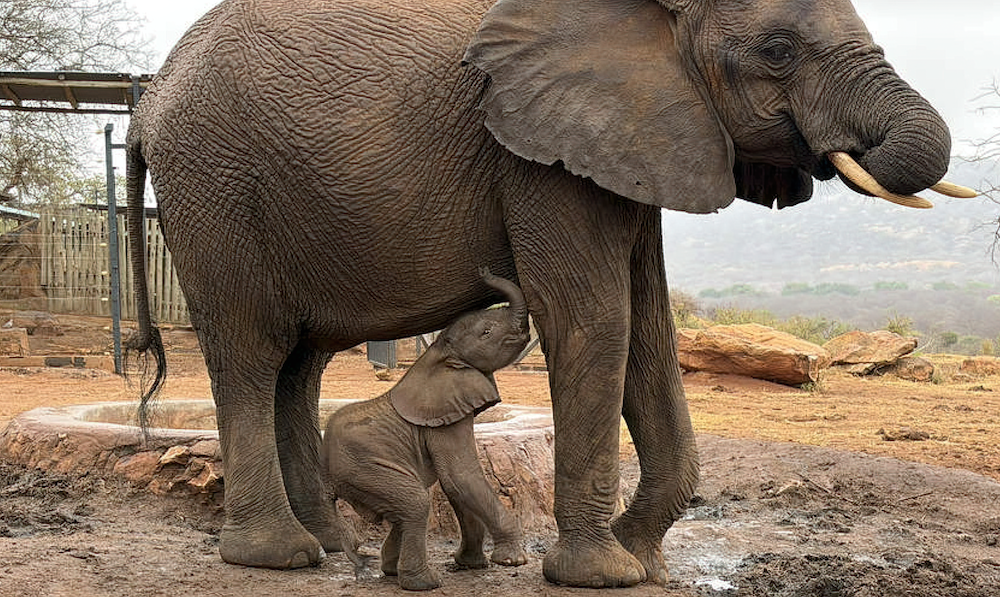
Not unlike the unenviable job of today, when the Sheldrick Wildlife Trust and the Kenya Wildlife Service (KWS) among others are engaged in a pitched battle against elephant poaching in the 47,200 km² landscape. The poaching is driven by insatiable markets for ivory in the Arabian Peninsular, China, Japan, and Southeast Asia.

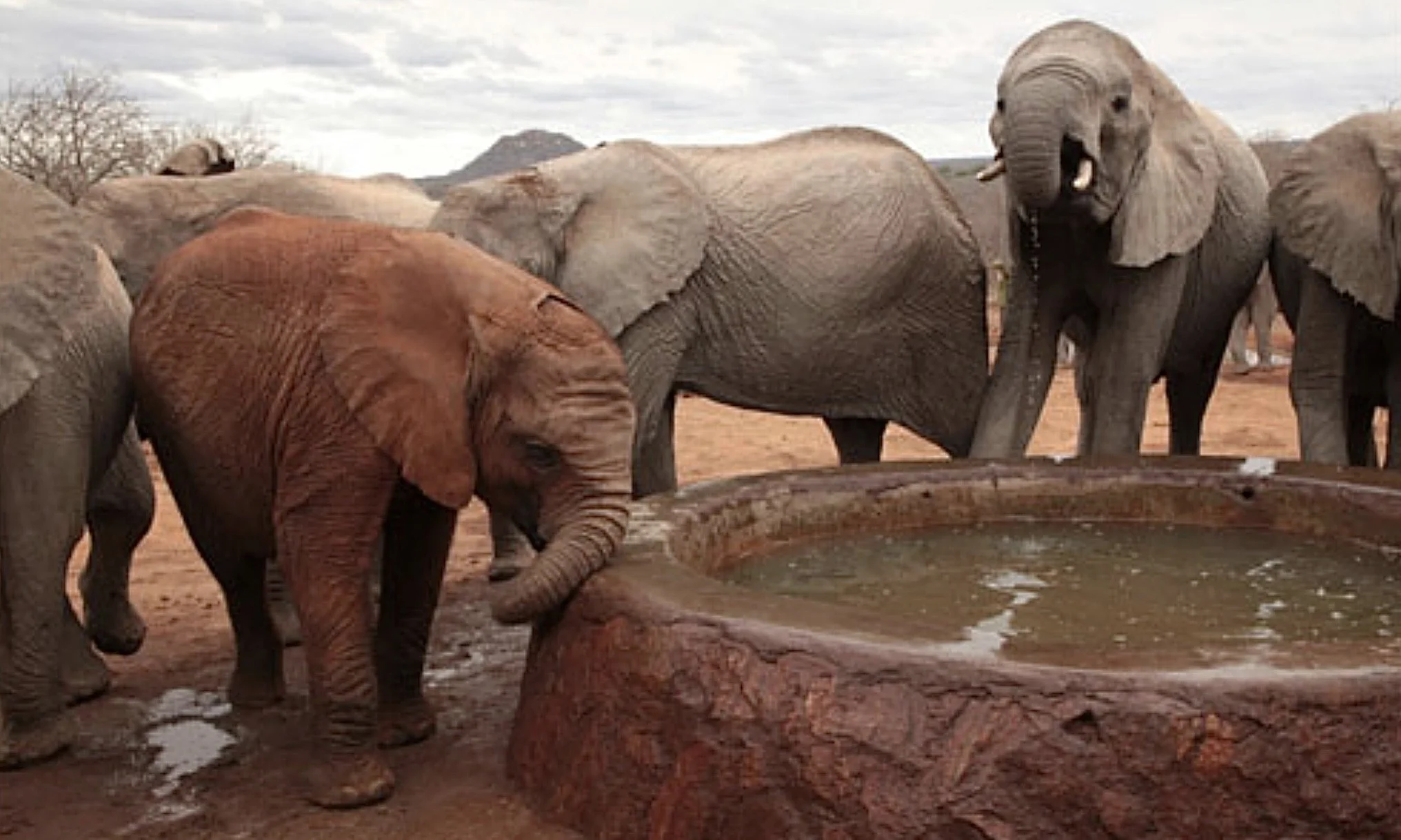
The Tsavo Trust, in partnership with KWS and the Sheldrick Trust, deploy ground patrols, aerial surveillance, and help from surrounding communities protect what is left of the 15,000 remaining elephants in the greater Tsavo Conservation Area.

While it is true there were roughly ten million elephants across the entire African continent in 1900 — specific numbers for Tsavo are hard to pin down, as the region was relatively unexplored at the time —  the Tsavo program has had some effect. A poaching rampage in the late 1980s, coupled with a severe drought, devastated Tsavo’s elephant herds, driving the elephant population down to fewer than 6,000 animals.

In that context, today’s 15,000  elephants shows that conservation programs can work, if coordinated and well managed, and rooted in clear-eyed scientific research and rigorous numbers taking.

As always, the long rains and a sustainable supply of freshwater play their part.

The rains, Daphne Sheldrick wrote “(opened) my eyes to the spell of space and the contrasts that transformed the semi-desert of the brick red earth and grim leafless trees in the dry season to a vibrant painted paradise after the first rains. The first precious drops of rain had an intoxicating effect on us all.”

And there it is.

Daphne Sheldrick would have been 91 today, 4 June, 2026.

©Alex Strachan / Strachan Photography


Tags: Daphne Sheldrick, Tsavo, Tsavo East National Park, Tsavo Conservation Area, Taru desert, elephants, elephant conservation, Joseph Thomson, trypanosomiasis, Tsavo Trust, Sheldrick Wildlife Trust, Kenya Wildlife Service, KWS, Kenya, An African Love Story, ivory poaching, species extinction, ivory, Ivory Wars, scientific research, elephant counts

©Alex Strachan / Strachan Photography

“It’s Like Killing Culture"

May 21, 2026

Indigenous Maasai face forced relocation from their ancestral lands in Tanzania’s Ngorongoro Conservation Area

It’s a story that has been quietly unfolding in Tanzania’s Ngorongoro Conservation Area since 2021, the year the UN Climate Working Group officially concluded that many of climate change’s impacts are now irreversible.

Given everything else going on in the world at the moment, it won’t surprise anyone — except those directly affected — that the story of indigenous pastoralists being forced off their ancestral lands in one of the world’s most pristine biodiversity hotspots has rated barely a mention in the world’s media. But there it is.

It’s a story worth following, though, a story that tell us who we are as a society, and a worrying sign of where humanity may be headed in the not too distant future.

Five years ago, Tanzania’s government initiated a large-scale tourism development project, in the name of conservation, in the Maasai’s traditional homelands surrounding Ngorongoro Crater, “the Eighth Wonder of the Natural World.”

Ngorongoro has been nicknamed “Africa’s Eden” — and rightly so — owing to its breathtaking views and year-round concentration of wildlife living in the sunken volcanic caldera.

Ngorongoro’s forest walls rise some more than 600 metres (2,000 feet) from the crater floor; the rim stands at an elevation of 1,800 m (7,500 ft) above sea level. The crater is the world’s largest inactive, unbroken, and unfilled caldera.

The crater floor spans some 260 km² (100 sq. mi). The crater walls, with their imposing 15°-17° vertical drop, act as a natural enclosure.

The crater floor is both home and refuge to a host of some of Africa’s most symbolic, enduring wild animals, from elephants, rhinos, lions, leopards and buffalo to wildebeest, zebras, hippos, giraffes and even the occasional cheetah.

The surrounding Ngorongoro Conservation Area (NCA) is a panoply of sloping hills and vales, surrounded by a wide expanse of highland plains, savannah, savannah woodlands, and forests that, during the rainy, green season, have been likened more to  Ireland’s emerald green hills and vales than equatorial Africa.

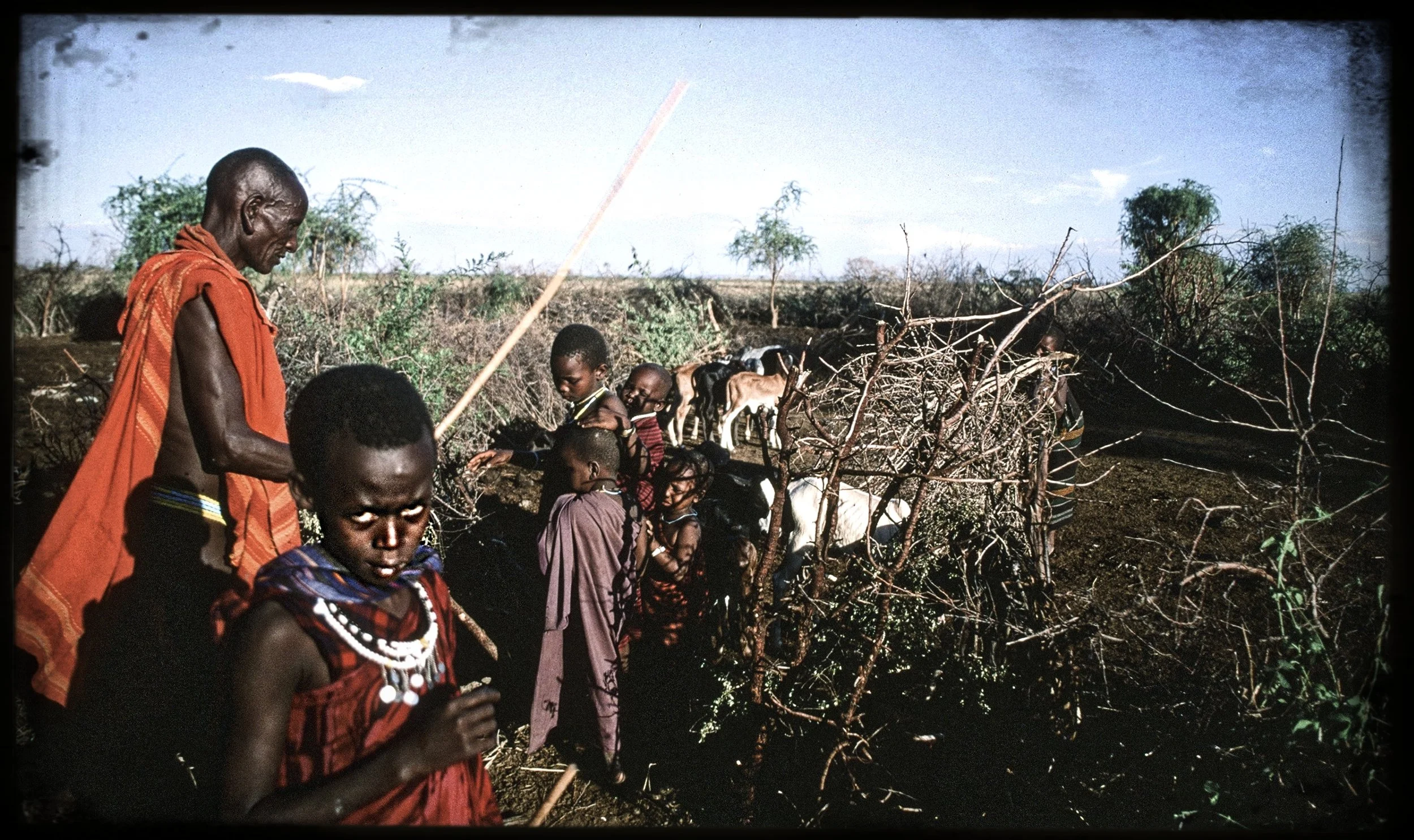
The Conservation Area is home, too, to some 20,000 Maasai at last count, though the exact number is hard to pin down.

Maasai have been barred from grazing their cattle inside the crater itself since colonial times in the late 1950s; Maasai still living in the crater were moved out by force in the mid 1970s by Tanzanian paramilitary units, and again in 2018, to preserve the crater’s wildlife and natural ecology.

A recent UNESCO report noted that Maasai have since been restricted from allowing their livestock to enter surrounding craters in the area, such as Olmoti, Empakaai and Lake Ndutu basin, which borders Serengeti National Park to the west.

©Alex Strachan / Strachan Photography

Ngorongoro was established by British colonial authorities in 1959 as “a multiple land use area,” according to UNESCO, with wildlife “coexisting with semi-nomadic Maasai pastoralists practicing traditional livestock grazing.” (Ironically, Tanzania itself gained independence from Britain just two years later, in 1961.)

Ngorongoro Crater itself is of growing importance to global biodiversity, especially now,  during these times of climate change and the growing threat of habitat loss and species extinction.

Humans have long lived in the area, early hominid footprints dating back 3.6 million years. The Maasai themselves are relatively new to the area, and have inhabited the Ngorongoro region for roughly the past 200 years.

Maasai villages, called bomas, crisscross the highlands surrounding the crater, but no longer in the crater itself, as we have seen.

To the Maasai, a boma or enkang is a social concept, not just a physical village, that helps unite families, homes, religious beliefs, and traditions. Without a written history, Maasai view bomas as part of their being and a symbolic record of their historical  past, and not just a place to live.

The uneasy coexistence of cattle herds alongside wild predators, though, and the inevitable human-wildlife conflict that inevitably follows, has been a bone of contention for years.

With so many of Africa’s apex predators in the IUCN’s Red List of threatened and endangered species, the situation has never so fraught than it is right now.

Factor in the transmission of diseases from domestic animals, including dogs, to surrounding wild populations, and the challenge of maintaining an already fragile ecological balance is increasingly volatile.

Over the past two months, the Tanzanian government has ramped up plans to move Ngorongoro’s Maasai pastoralists to a planned village, Msomera, in the Tanga region,  600 km (370 m.) away.

The relocation programme has been described as voluntary, and includes a promise to provide housing, land and access to services, the environmental news site Down to Earth noted this past month.

“On paper, the offer appears substantia,” researchers wrote. “In practice, (however), it has faced significant criticism.”

The Tanzanian government said the move is necessary for conservation.

Naysayers say it has more to do with tourism, however, and the much needed foreign exchange tourism raises.

A substantial development project, designed to cater to the fast growing China-based tourism market, is the main driver behind the government’s decision, detractors say.

Tanzania’s government insists the move is needed to protect fragile ecosystems and reduce pressure on a globally significant landscape.

The Maasai see it as a loss of land rights and identity, part of a larger plan to move them off their ancestral lands once and for all.

©Alex Strachan / Strachan Photography

Government officials point out in turn that, in 2026, the world is a different place, and a young, independent African nation state like Tanzania faces an increasingly uncertain future, environmentally and economically.

They need to tackle increasingly complex economic and environmental problems with a sober, clear-headed point of view, based on science, reason, and technology, not creation myths.

Critics argue that, in the end — as with most things — it comes down to money. Tourism has only scratched the surface in Africa’s wilderness areas, its boosters argue, and the fast-growing Chinese market — and fast-growing Chinese middle class — represent too good an opportunity to pass up.

Conservationists — some, but not all — counter that replacing the Maasai with mass tourism developments is hardly conducive to maintaining a stable environment and ecosystem. The Maasai, they say, have a point when they point out that they have coexisted with wildlife relatively peacefully for 200 years, having migrated into the area around the early 19th century.

Others note however — with no small amount of irony — that the Maasai themselves displaced prior pastoral groups like the Datoga.

“We are used to living with wild animals,” Maasai pastoralist Valerian Esuvat told Down to Earth last month.

“They want to take away our land as if we were never part of it.”

“A Maasai man is not meant to live in such a confined space, cut off from his cattle and his way of life,” a village elder told fellow villagers in Msomera, before leaving.

What comes next?

The future is cloudy. The Maasai point out that they have coexisted peacefully with wild animals since Enkai, the god of rain and thunder, created the universe, the earth, the sky, and all living creatures.

The Tanzanian government is insisting on moving ahead, however, citing good intentions and trusting in science and economics over tribal beliefs and religious traditions.

Detractors are dug in,. History has shown that indigenous people can be effective stewards of wildlife, academics at Yale University’s School of the Environment noted in the journal YaleEnvironment360, this past March.

“In Tanzania alone,” they wrote, “an area equal to seven Yellowstones (has been)  managed for wildlife (for generations) by herders, farmers, and hunter-gatherers.”

It’s a new age, though, and the jury is out on whether mass tourism and conservation can co-exist in a world increasingly besieged by climate change and human population growth.

“We do not inherit the Earth from our ancestors,” goes an old Maasai saying. “We borrow it from our children.”


https://whc.unesco.org/en/list/39/

https://www.downtoearth.org.in/africa/maasai-displacement-fears-grow-as-tanzania-moves-to-reshape-ngorongoro

https://e360.yale.edu/digest/tanzania-maasai-evictions

https://ccs-ng.org/breathing-new-life-into-tanzanias-ngorongoro-lengai-geopark/

©Alex Strachan / Strachan Photography


Tags: Maasai, enkai, enkang, Datoga, Dorobo, Ngorongoro, Ngorogoro Conservation Area, indigenous, forced re, forced relocation, Ngorongoro Crater, Tanzania, UNESCO, Serengeti, Serengeti National Park, colonialism, IUCN, boma, Red List, threatened species, endangered species, human-wildlife conflict, Msomera, biodiversity, biodiversity hotspot, China, tourism, Yale University, YaleEnvironment360, Yale University School of the Environment, Lengai Geopark, Lake Ndutu
Prev / Next

Journal

"Forget whatever should be forgotten, so that you can remember what should be remembered."


Featured Posts

Featured
©  serengeti watch.jpg
June 29, 2026
Mayhem in the Mara
June 29, 2026
June 29, 2026
DSC_1667.png
June 18, 2026
Tarangire Tracks
June 18, 2026
June 18, 2026
1.bourdain.png
June 8, 2026
Remembering Bourdain
June 8, 2026
June 8, 2026
DSC_0269 7.28.18 AM.JPEG
June 3, 2026
Letter from Tsavo
June 3, 2026
June 3, 2026
maasai1 2.jpeg
May 21, 2026
“It’s Like Killing Culture"
May 21, 2026
May 21, 2026
1.Screenshot 2026-05-07 at 2.44.32 AM.png
May 7, 2026
A Centenary for the Ages
May 7, 2026
May 7, 2026
Screenshot 2026-05-07 at 4.29.13 PM 2.jpeg
May 7, 2026
David Attenborough Curiosities
May 7, 2026
May 7, 2026
Screenshot 2026-05-02 at 3.51.35 PM.png
May 2, 2026
The Silent Giants of Tsavo
May 2, 2026
May 2, 2026
vintage lion1.jpg
May 2, 2026
The Lions of 'Starv-o'
May 2, 2026
May 2, 2026
b.art1.png
April 17, 2025
Bourdain in Nigeria
April 17, 2025
April 17, 2025