
One morning in the life of a Tarangire lion, where life is an evolving process rather than a fixed destination.
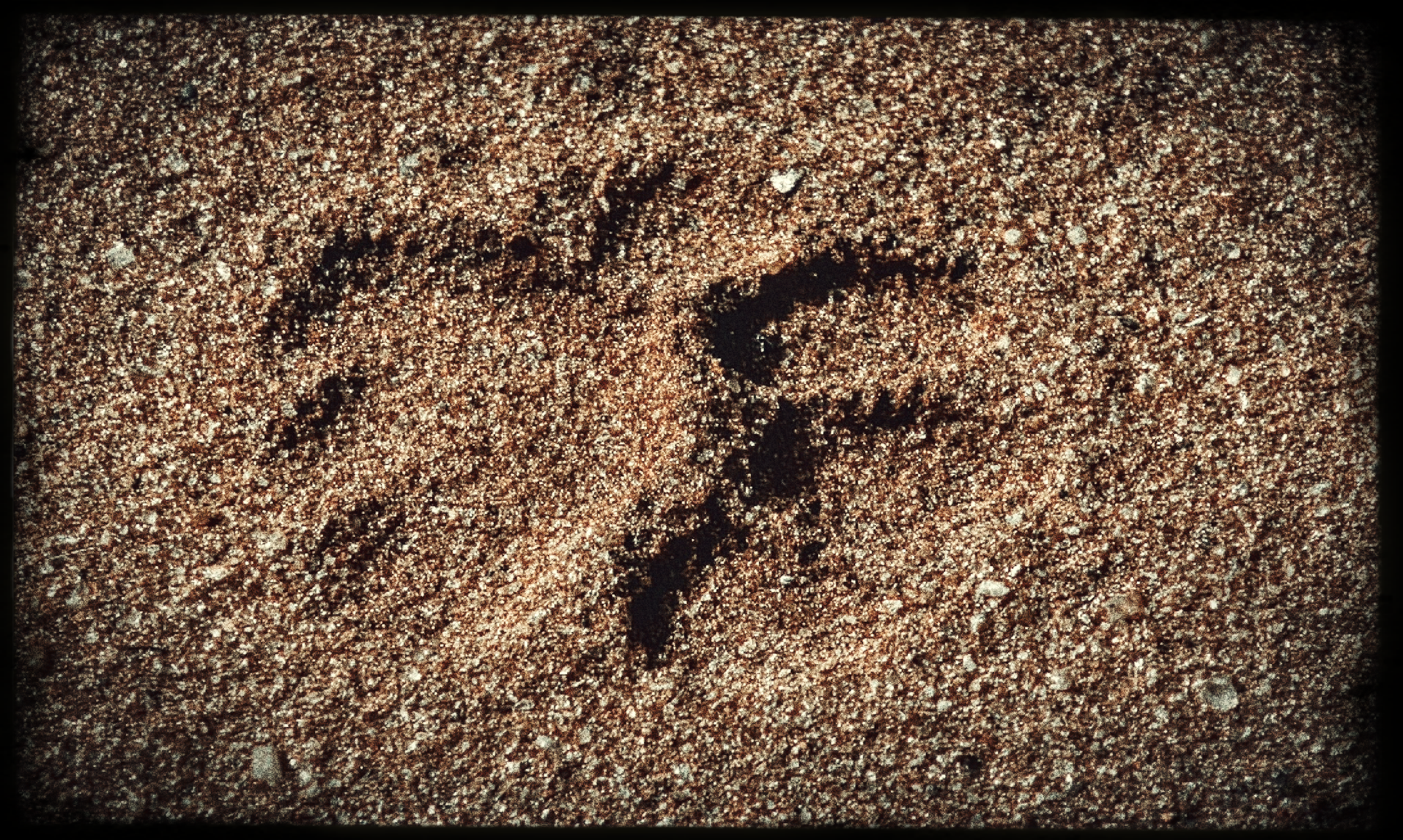
The distinctive track of a lion — possibly lions, plural — is plain to see on the dirt road in the half-light of early dawn in the mopane forest. The moon is low in the dawn sky and commiphora woodlands are only now recovering from a night of hunters and hunted. The long grass is a place of secrets.
This is Tarangire, pronounced tair-an-geer-ee in the local lingo, from the Wambugwe word Tara, meaning ‘river,’ and the Hdazabe word Ngire, meaning ‘warthog.’
Tarangire translates literally as “River of Warthogs,” though no self-respecting warthog would be caught dead out in the open, not here, and not at the crack of dawn. Not until mid-morning, anyway. There are too many lions.
Not that they’re easy to see.
At this hour, moments after sunrise and with a shroud of early morning mist slowly dissipating above the grass, lions are likely staking out a spot to evade the heat of midday. The golden light of dawn accentuates the contrast of tracks in the still damp night’s earth. The moment won’t last. Tracks with no shadow are hard to see.
Tarangire, in Tanzania’s tsetse-ridden northlands, lies just south of the equator.
In December, the African sun at these latitudes can be cruel and unrelenting on fools. Call them what you will, lions are not fools. Lions — savannah lions and forest lions alike — have 300,000 years of evolution behind them.
Frederick Mbise, my companion and tracker on a solo, month-long expedition from the mopane forest of Tarangire to the Ngorongoro highlands and Serengeti, is pensive as he studies the track.
We have ventured out at first light, to see what we can find in the early dawn. Because of the early hour and the remoteness of the location, we have this part of Tarangire to ourselves. No other vehicles. No other people.
Every track tells a story.
This lion is moving at a slow, leisurely pace, but with purpose. He was here just moments ago.
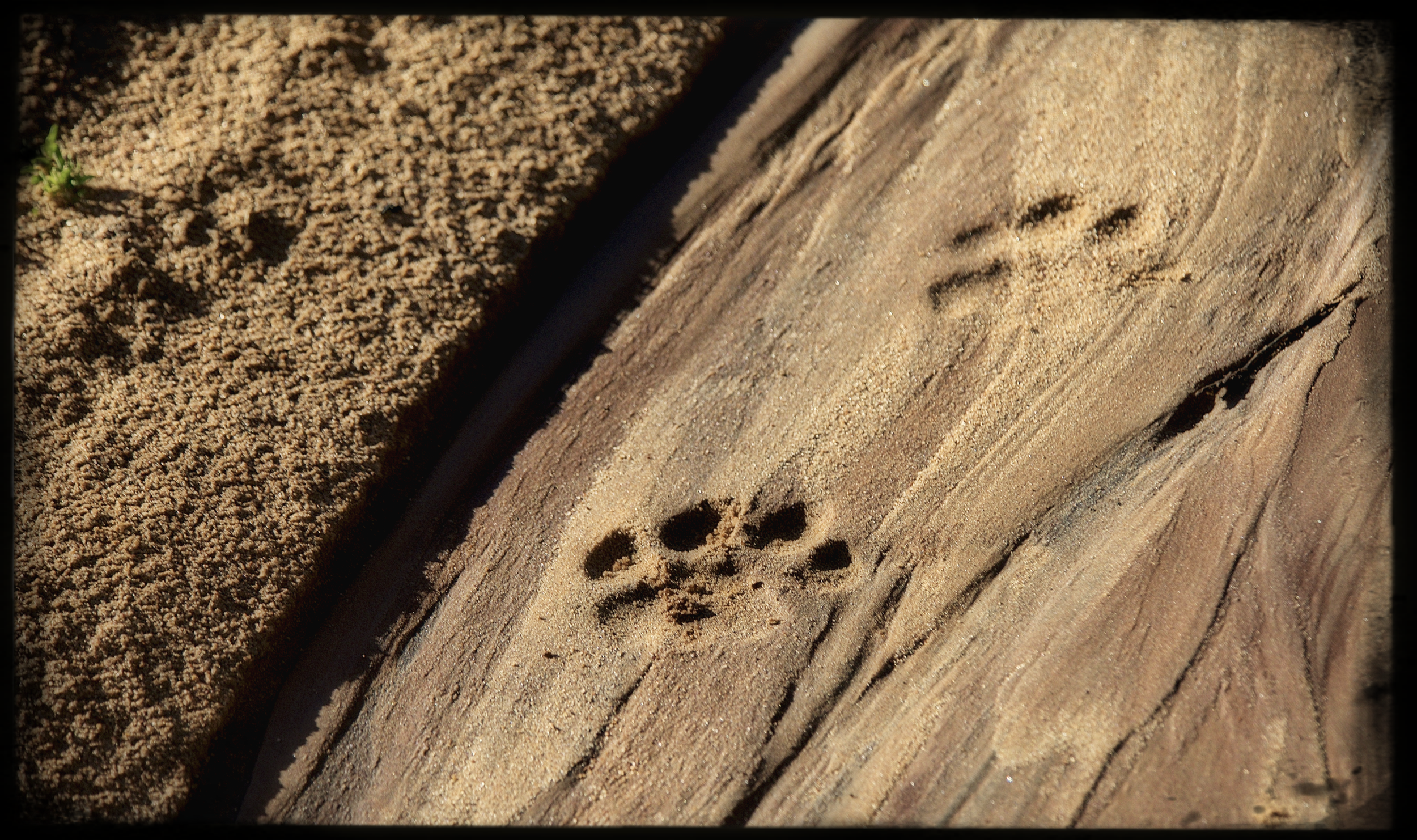
Freddy can tell, just from studying the track, that this lion is probably a male. A male leaves a deeper, heavier imprint from that of a female. The lion’s forepaws have sunk deep into the dark, damp earth, weighted down by a heavy, preternaturally large head and broad, muscled shoulders.
A pride male possibly, with a large mane. The Tarangire lions, as is true of their Serengeti kin, are known for their large, dark manes.
Nature is alive here, and speaks a language all its own.
“Did you hear the lions roaring in the night?" Freddy asks.
It was hard not to.
I have Boyd Varty’s pocketbook with me, The Lion Tracker’s Guide to Life, which I have been reading by kerosene lamp at night.
©Alex Strachan / Strachan Photography
Varty, a former safari guide and TED speaker born-and-raised in South Africa’s Londolozi Game Reserve, learned the art of listening in the wilderness as a young child. Varty grew up a self-described “flawed mirror” in the Cathedral of the Wild, the title of his first book.
Lion Tracker’s Guide, published a few years ago, was no bestseller — at last count, it ranks a mere 8,642nd on Amazon’s list of best-selling books, albeit in the Top 10 in the wildlife category, and in the Top 20 in environmental conservation and science.
It speaks to me, though, especially out here.
At a mere 150 pages — and small pages at that — The Lion Tracker’s Guide was never going to rival Death in the Long Grass in terms of sheer weight and heft, but it more than compensates for that its insights into how life is on the ground, on “the path of not here.”
The lion’s tracks are part of a larger story. Lions prefer to walk on open thornless ground; for all their. strength and might, their paw pads are surprisingly soft and sensitive, the better to feel the ground with.
We’re surrounded in the miombo by a dawn chorus of wood doves, buffalo weaver birds, Scops owls, yellow-billed hornbills, broken by the occasional shrill call of the aptly named go-away bird … go-waaay, kwa-aaay, kwa-aaay).
It’s all-enveloping sound that reaches within the soul of anyone who has the felt the strange allure of wild Africa.
And then we see them, sprawled out on the road ahead.
Half a dozen or so lionesses, of various ages, lying out in the open. And … just beyond them, half in shadow and half out in the open, another lion … the male.
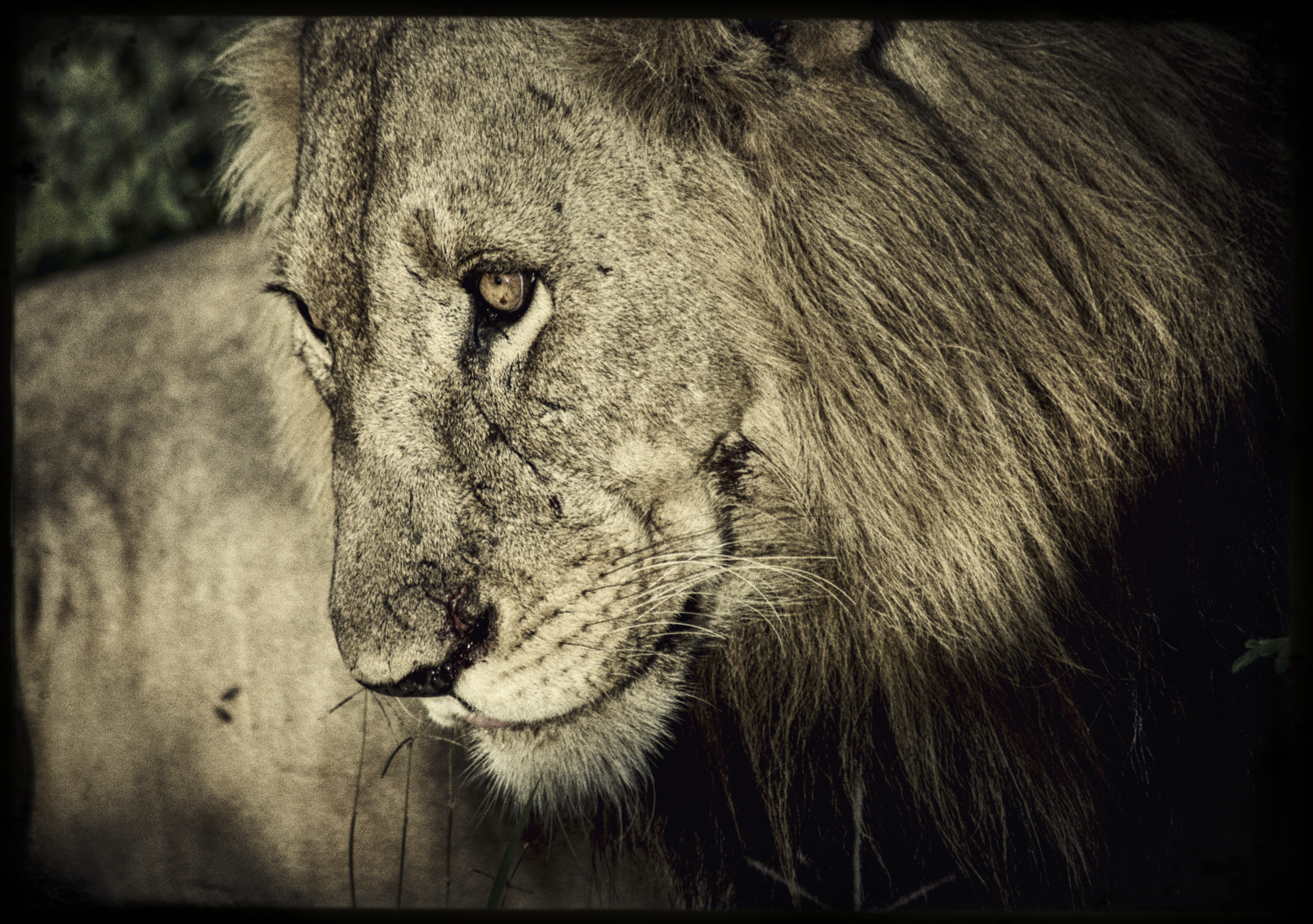
The male, the one Freddy has been following, has tucked himself deep into the bush by the side of the road, looking the worse for wear.
He has been in a fight.
Judging from the superficial evidence of first glance, a bad fight.
His gaze is dull and glazed; his eye is afflicted with an age spot, or perhaps an indication of something else. There is a trail of blood at the edge of his jaw, and his nose appears torn open in part, with healed scratches just above. He has seen a lot of battles. His mane is dishevelled, unkempt. He has the posture and demeanour of a lion who has lost this last fight — except — he is alive, and the lionesses are still with him.
The other lion, if there still is another lion, is nowhere to be seen.
The lionesses, lying on the ground, regard us with a mixture of indifference and contempt. The male ignores us. Even in his present condition, he exudes a certain regal charm and power. The bush is harsh, and life in the wild is harder yet. It does not suffer fools, but this lion is no fool to have lasted this long.
The bush has been the teacher here and there is no more to say.
©Alex Strachan / Strachan Photography