
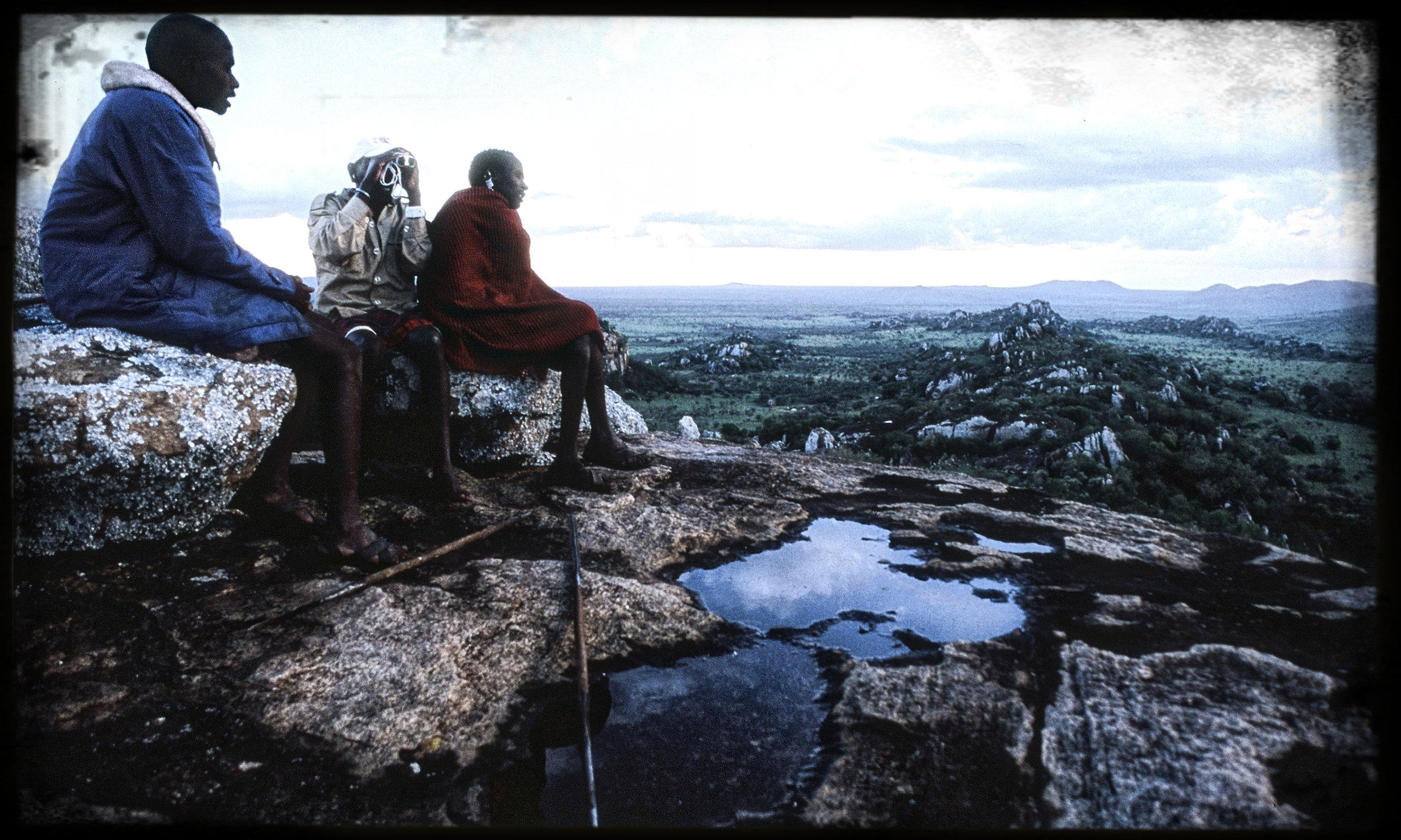
One from back in the day.
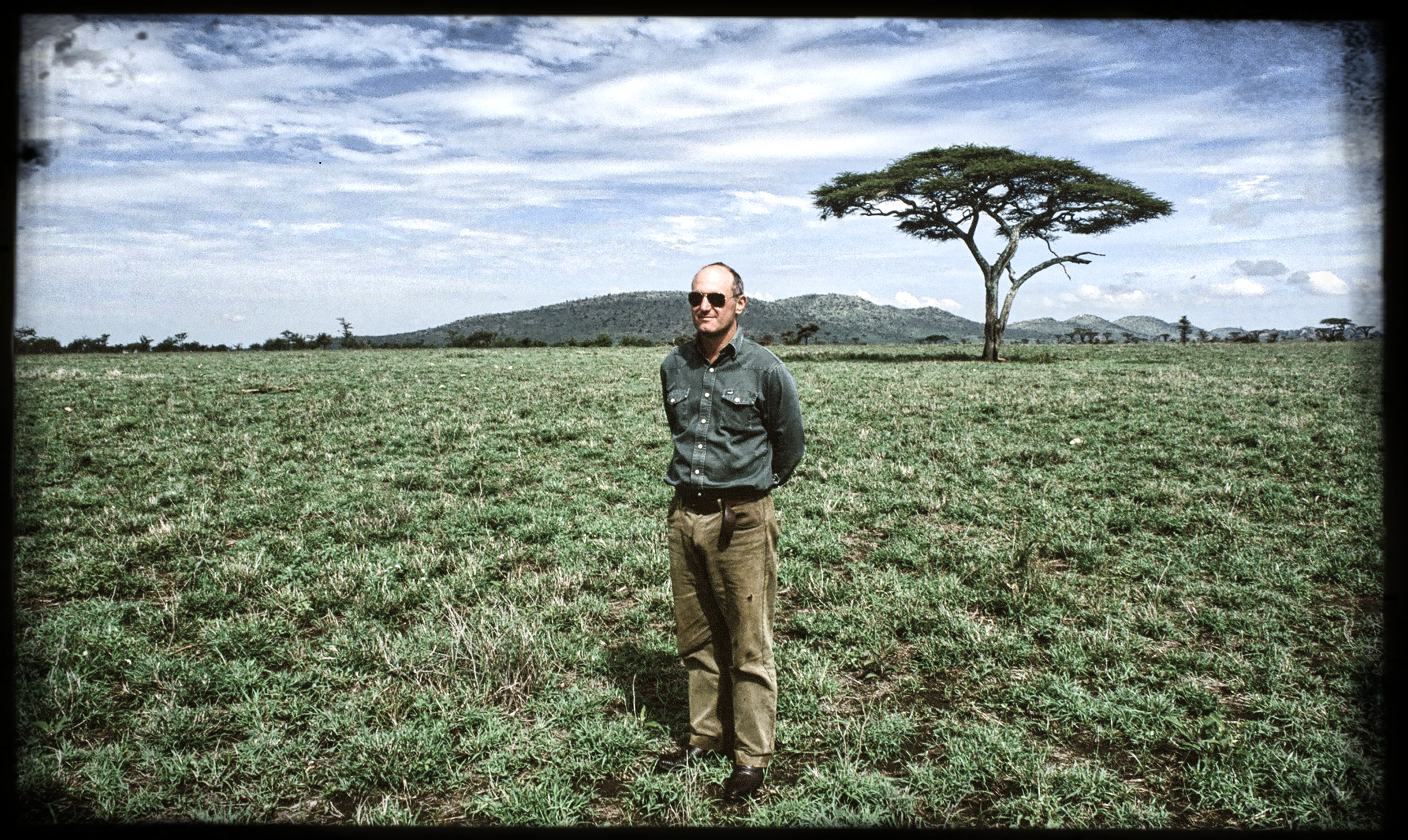
Corbett was not well known, not a household name, but he was a friend, and for a brief time there we had Loliondo all to ourselves.
The Loliondo Game Control Area was established in 1951 as one of Tanzania’s numerous wildlife protected areas, and covers an area of some 4,000 square kilometres.
It was one of the original keystone heritage sites, set aside for sustainable conservation and tourism development in the Greater Serengeti-Mara corridor that links northern Tanzania with southern Kenya.
We made our way there after an early morning trek through Ngorongoro Crater, several hours’ drive north against the wildebeest migration. Pouring rain all the way — no one else there around but hundreds upon thousands of wildebeest.
Visiting Ngorongoro was always a stressful experience for Corbett, despite his frequent guiding expeditions up Mt. Kilimanjaro. He no longer took clients into Ngorongoro, he admitted, favouring a few extra days in Serengeti instead. Ngorongoro had a reputation for being overcrowded with tourists and notorious for its bad drivers. Bad drivers behaving badly, especially around lions.
I had been to Ngorongoro years earlier, and had found it — provided one was willing to overlook the occasional sight of dozens of 4x4s converging on a single browsing rhino.
From a photographer’s point of view, and this is my own perspective, Ngorongoro is the one of the few wild places in Africa — offhand I can’t think of another — where crater walls rise sheer in the background, providing the perfect backdrop for perspective and depth-of-field. Those green-limned cliffs create an almost three-dimensional effect.
The animals themselves — lions, elephants, rhinos, buffalo and countless others — are habituated to people, and their bad habits.
One early morning — we made a point of being up and about, and in the crater at first light, before the post-breakfast crush of tourists from the luxury lodges that line the crater rim — Corbett stopped and began waving frantically out the window.
Far away, at the foot of a rock face, a lion researcher he knew, a young woman from California, had a puncture in her Land Rover Defender and was change a tire … and struggling with it. Far above, atop of the rock — unseen by her, but clearly visible to us, — a lioness was looking on, lying flat on her stomach, watching the lion researcher, unperturbed.
Corbett tried raising his friend on the radio — no doubt headlines like, ‘Lion Kills Lion Researcher in Africa’ flashing through his mind … but she wasn’t answering.
No matter.
The lioness didn’t seem to care one way or the other, but that didn’t stop Corbett from fretting.
“I get stressed!” he shouted, at no one in particular — though I was sitting right beside him.
Then there was the time he berated the driver of a tourist-filled 4x4 for nearly running over a lion’s tail. Ngorongoro lions, to get out of the way of the blistering at midday, often crawl under the floor of a stopped 4x4 for shade.
This driver had suddenly gunned his engine and was about to crunch the cat’s tail in the grass. “Hey!” Corbett shouted. “Wake up! There’s a lion under your car!”
“I hate coming into Ngorongoro,” Corbett admitted, moments later. “My blood pressure pops every time …”
©Alex Strachan/Strachan Photography
And so … onto the relative peace and quiet of Loliondo, a day’s drive to the north, where the only other person we saw, coming the other way on the muddy, rain-soaked track, was an older man with a full white beard and the battered, weather-beaten mien of an old Africa hand.
They stopped and talked out the driver’s window, then continued on our separate ways.
”That was Richard Estes,” Corbett explained.
Estes, writer of The Safari Companion: A Guide to Watching African Mammals, considered by many to be the indispensable guide to viewing wildlife in East Africa. “The best behavioural field guide ever,” said Sy Montgomery, author of Tamed and Untamed: Close Encounters of the Animal Kind. But don’t just take Montgomery’s word for it. “This book is more than a field guide; it is a valuable tool for conservation,” Kathryn Fuller, then president of the World Wildlife Fund (USA) said.
Running into Estes himself on the vast African plain, with nobody else around for miles … what were the odds?
Corbett was like that. He was a magnet for unusual encounters. Close encounters of the wild kind.
He was the location coordinator for the 2002 IMAX film Kilimanjaro: To the Roof of Africa — he had a falling out with the producer (“Everyone did,” he said cheerfully, “she was … different”) and guided the Wall Street Journal journalist Daniel Pearl to the summit of Kilimanjaro — just months before Pearl was kidnapped and executed by Islamist extremists in Pakistan, an international incident later depicted in the 2007 Cannes Chopard Trophy-winning film A Mighty Heart, featuring Angelina Jolie.
What Corbett recalled most about his time on Kilimanjaro with Pearl, was the way the journalist, an obsessive golfer in his spare time, packed a golf club in his mountain gear, together with a handful of garishly coloured pink golf balls to Kili’s summit, then took a couple of swings from the summit for posterity.
The pink, so bright it made the balls look practically radioactive, Corbett recalled, was so that Pearl could retrieve the balls from the snow afterwards and take them back with him down the mountain. Leave only footprints.
Compared with Ngorongoro, Loliondo was peaceful, a paradise even. Few animals — the migration had passed through weeks earlier — but vast, wide landscapes, wild Africa as it always was.
We pitched pup tents and sleeping bags atop a flat kopjie overlooking the Loliondo plain as storm clouds gathered on the horizon, and for a moment all seemed right with the world.
Corbett Bishop passed away unexpectedly in the early morning of 1 May 2009 at his home in Arusha, Tanzania. Born and raised in Austin, Texas, he became enthralled with Africa on a family trip while he was in junior high school. He returned the following summer on his own, where he learned to speak Swahili. While in high school, he spent two summers in Latin America as a volunteer with Amigos de las Americas and became fluent in Spanish. On graduating from college he began a career as a climbing guide with Scott Fischer’s Mountain Madness in Seattle. Together with New Zealand guide Rob Hall, Fischer would become famous — though perhaps not the way he intended — as one of the climbers who perished in the infamous Into Thin Air expedition on Mount Everest in May, 1996.
©Alex Strachan/Strachan Photography
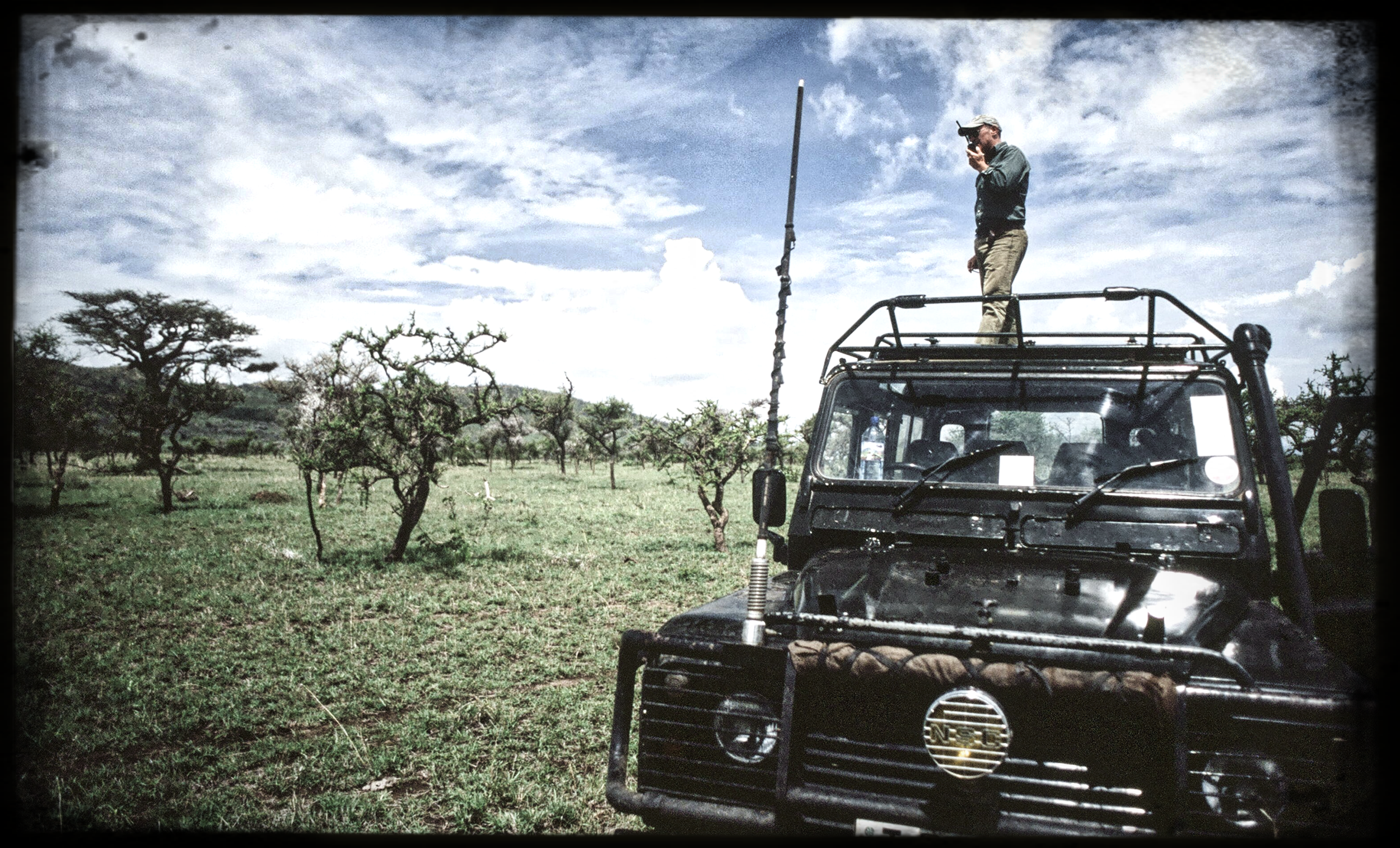
Corbett eventually settled in East Africa, where he became a local fixture as a climbing guide, thanks in no small part to his facility in speaking Swahili. By his own estimate, Corbett climbed Kili more than 100 times, clients in tow.
He established his own guiding company in the late 1990s, and founded a wildlife conservancy dedicated to helping Maasai villagers stem a tide of poaching in the wildlife corridor that links Lake Manyara with Tarangire National Park. Manyara and Tarangire are two of the most high-profile elephant sanctuaries on the entire continent.
And then there were the stories, such as the time he was denied entry into the bar at the stuffy post-colonial Mount Kenya Safari Club — founded by the late William Holden in 1959 — in Nanyuki, unless he was dressed in evening wear. Appropriate evening wear.
He borrowed a complimentary tuxedo from the room next to the bar that provided “gentlemen” who arrived without appropriate evening wear so they could join their upper-crust companions for a single malt — of the Scottish persuasion, please, none of that Loch Dhu 10-Year-Old Black Whisky muck from the remainder bin.
Corbett summarily picked out the ugliest, most garish tux he could find.
It was so ugly, Corbett recalled, it looked as if it had been made from black velvet, though in fact it was purple. And not just any purple, either, but a horrific purple that looked like something Barney the Dinosaur would wear on an off day.
As he wandered through the grand old pub, a throwback to the days of Lord Delamere, he distinctly heard gasps, accompanied by upper-crust English-accented voices gasping, ‘Who is that awful man?’
He’s An American. A Yank. Worse, he’s from Texas.
‘Oh.’
And then there was the story about the hunting party of Arab sheiks from the Arabian peninsular, who landed a Boeing jet on a tarmac airstrip somewhere near Loliondo and immediately went on a killing spree.
They had with them an unlimited supply of hunting permits — “bought and paid for in full,” as the saying goes — and enough hunting rifles to start a small war.
They were accompanied, in Corbett’s own words, “a planeload of hookers and booze.” Johnnie Walker Blue Label, The Macallan No. 6, Glenfiddich. Nothing but the best for the blue-bloods of Arabia.
“Islam, my ass,” Corbett said.
One late afternoon, scouring the temporarily empty plains for signs of life, we stumbled across a wire snare in a tree alongside the river course, placed there no doubt to catch a leopard unawares. Leopards make sought-after trophies for grown men with small dic energy.
Corbett cursed.
Tanzania has strict laws banning snares within a certain distance of a watercourse. The snare was clearly illegally placed. He blamed the Emiratis.
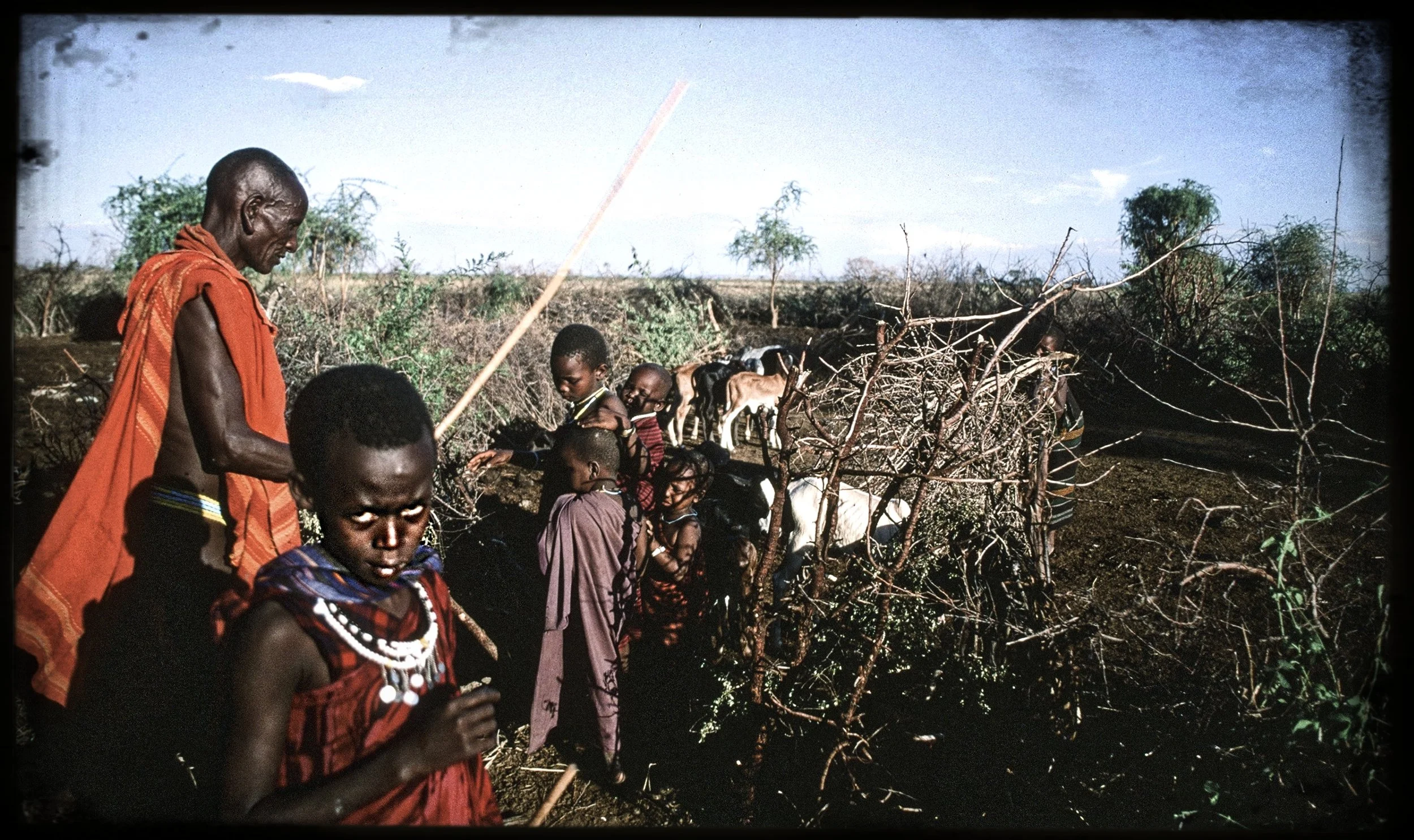
He asked the local Maasai how much the Emiratis had taken on their most recent hunting party.
“They said ‘a lot,’ Corbett recalled ruefully. “That worries me. Because when the Maasai say ‘a lot,’ it means they went crazy.”
Corbett lived a life in full, survived by his young children, Luca and Ella.
Take only memories, leave only footprints.
In the end, Corbett may not have been that well known to the outside world but he left an indelible impression on the land and those he loved.
On word of his passing, many of the Maasai he had met and made friends with made the long walk from Ol Tukai conservancy at Manyara, some 70 miles in all, to Corbett’s home in Arusha to pay their respects.
I will always remember him as a man of letters, a raconteur, a born storyteller, birder, conservationist and mountain guide. A truth seeker.
And a friend.
©Alex Strachan/Strachan Photography