
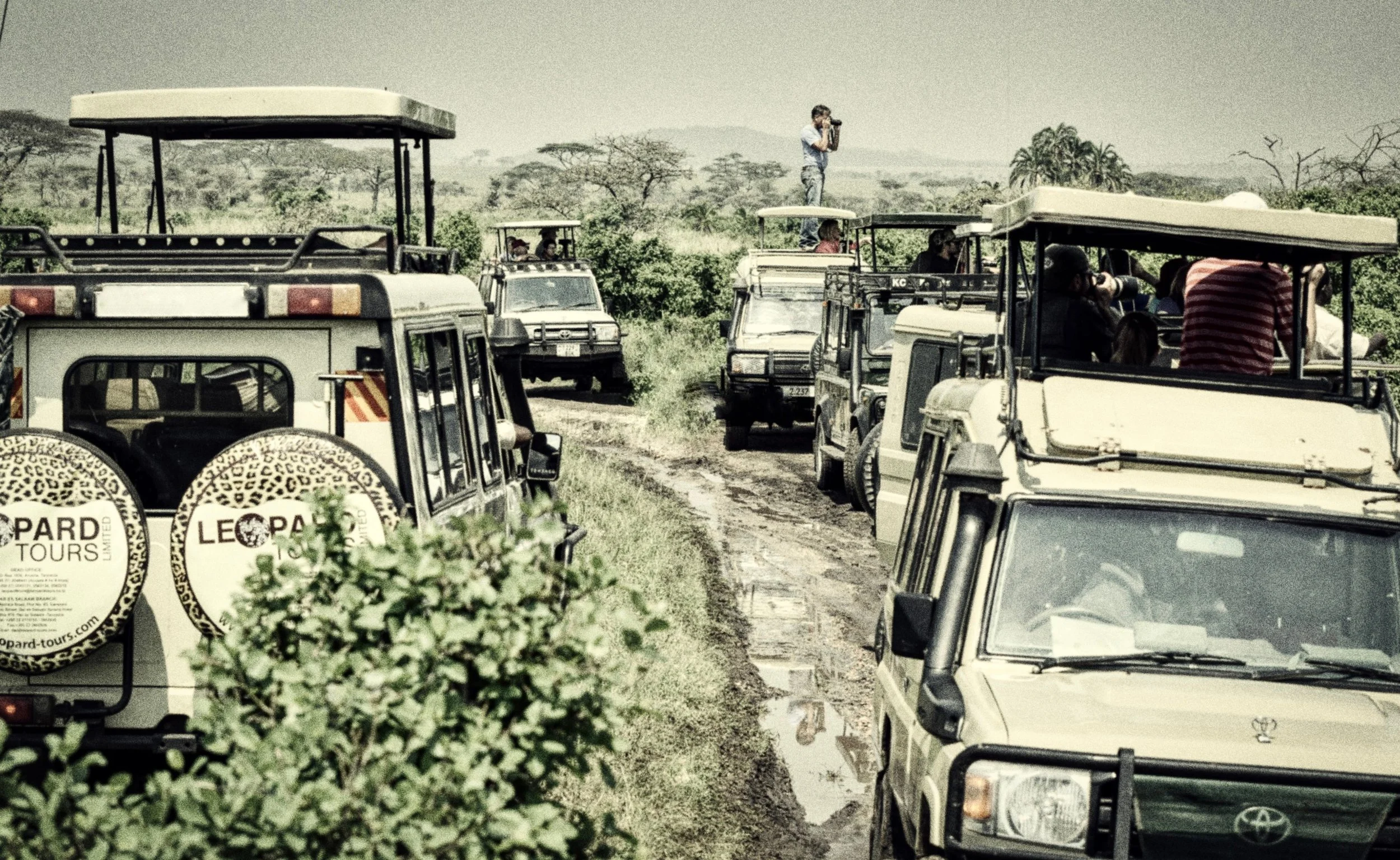
Overcrowding in the Maasai Mara … of tourist vehicles, not animals. Might fewer tourists at higher prices be a fix?
Whatever you do, don't get out of the boat.
Or its African equivalent, an old saw of experienced wildlife tracker-guides throughout the African miombo:
Whatever you do, don’t run.
You would think some things would come naturally to visitors to Africa’s wilderness areas by now. Scolds like,
Don't feed the animals.
A fed baboon is a dead baboon.
To a crocodile, you're protein.
But wait, there’s more. To an elephant, you’re basically an irritant, an annoying pipsqueak who needs to be taught his place on occasion.
To a mosquito — or worse, a tsetse fly — you’re basically a blood meal. And to a snake, if you step on one, It’s going to get you back.
The controversy had been building for a while, years even.
Ever since the COVID-19 lockdowns of 2021, in fact.
But it took one especially egregious incident, a year ago almost to the day, to bring things to a head.
Reckless visitor behaviour in Kenya’s Maasai Mara National Reserve, and “over-tourism” — a new word for an old and growing problem from Venice to Shanghai — have led to severe disruptions of Africa’s annual wildebeest migration. Dozens of tourist vehicles converge on herds of wildebeest waiting to cross crocodile-infested rivers, in some cases blocking them altogether, all to get that perfect picture and have a good story to tell back home.
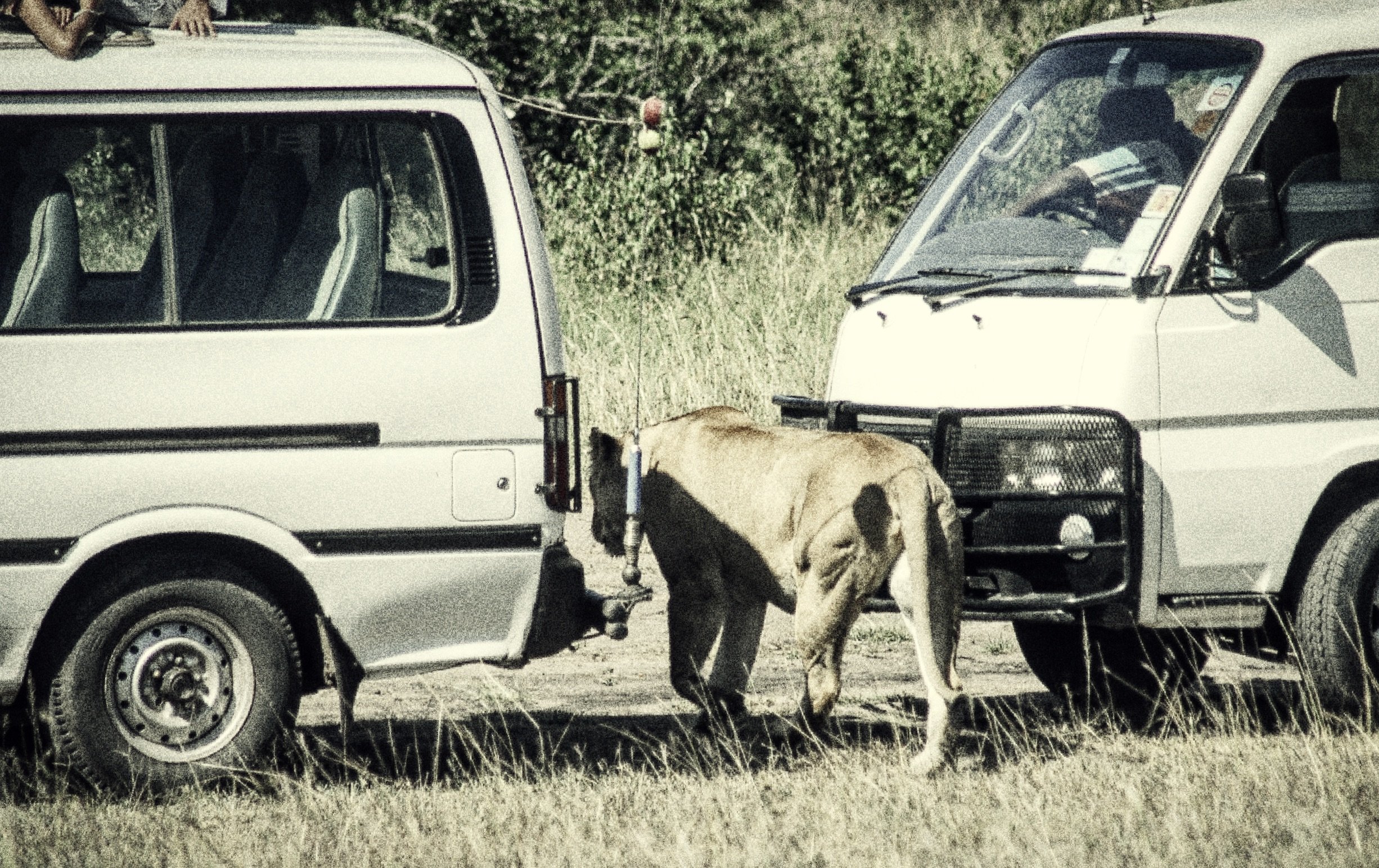
There have been reported incidents of safari drivers harassing diurnal predators like cheetahs — critically endangered — interfering with their hunts to the extent that the mortality rate among cheetah cubs, already high, is becoming untenable.
Videos of tourists jumping out of their vehicles and harassing animals have become a staple on YouTube, TikTok and other social media platforms.
Though I find this hard to believe, if all too easy to imagine, drivers have been witnessed herding wildebeest into harm’s way, at the beck and call of impatient tourists who want to see something more exciting than a lion or wildebeest simply standing there.
In the incident in question, last August, video emerged on Instagram and YouTube, of just that. It was alleged — though not proven, insofar as I’m aware — that a park attendant allowed it … provided he was handed a USD $20 backhander to look the other way.
If true, and it’s a big if, add ranger complicity to the lexicon of the day.
In my own experience, incidents of 4x4s actively chasing after cheetah kills or stirring sleeping lions from their slumber — lions sleep up to 18 hours a day after all — are not unheard of, though, thankfully, not common.
Yet.
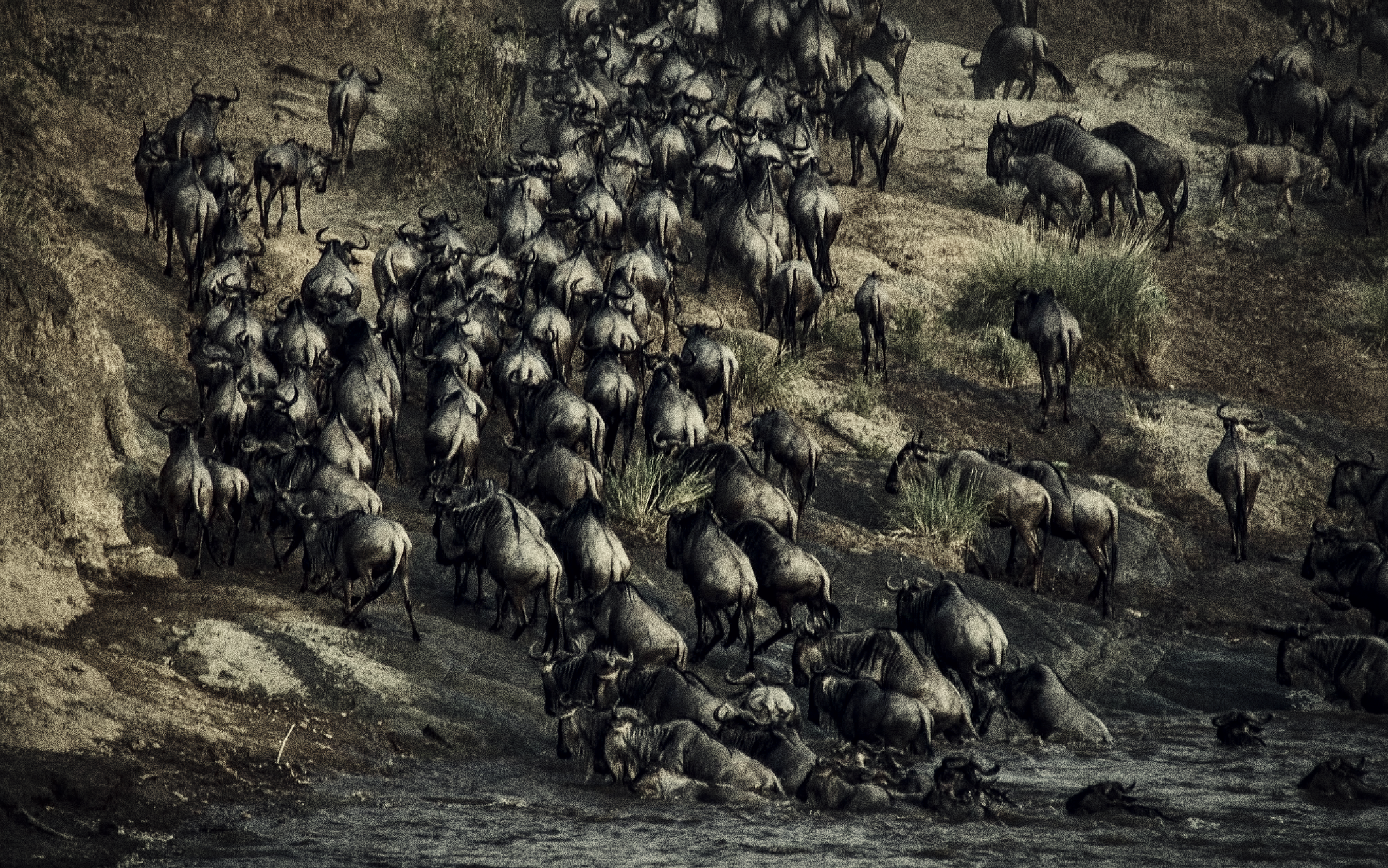
In recent years, overseas visitors have flocked to the Mara River every July and August to witness the stirring sight of half a million wildebeest on their annual Great Migration, as popularized — and promoted — in countless wildlife programs, on TV, at wildlife film festivals like the annual Jackson Wild festival in Jackson, Wyoming and the International Wildlife Film Festival (IWFF ) in Missoula, Montana, and on streamers like Disney+ and National Geographic. It’s one of the most stirring, spectacular wildlife sights remaining on the planet.
Pent-up energy after the COVID lockdowns and a growing sense that there’s less and less of the wild world to see with each passing hour has prompted a virtual stampede of overseas visitors.
And therein lies the problem.
Enter the advocacy group Serengeti Watch, a project of the Earth Island Institute, a credible, well-known 501(sc)(3) environmental organization based in Berkeley, Calif.
Kenya’s Maasai Mara National Reserve and Tanzania’s (much) larger Serengeti National Park are part of the same ecosystem, and share a common border, the Mara to the north and Serengeti to the south. The wildebeest cross the border en masse at will twice a year.
They graze July-October each year on their annual migration, before following the rains — and the sweeter grass — to their breeding grounds on the short-grass plains in Tanzania’s Ngorongoro Conservation Area.
The wildebeest herds settle around the Lake Ndutu region in December and January, and from there venture into Serengeti proper, where they stay from January until June.
©Alex Strachan/Strachan Photography
In one of nature’s great mysteries — and one of the reasons wildebeest are studied so intensively by field biologists — wildebeest give birth to their calves over a 15-day period, usually in February, and at no other time of the year. No one knows why, but biologists and behavioural scientists have speculated that it’s nature’s way of ensuring survival of the species. When so many wildebeest give birth at the same time it’s virtually impossible for predators — lions, hyenas, leopards, cheetahs, even jackals — to keep up.
Serengeti Watch shared a fascinating — and somewhat hopeful — report earlier this month to readers who follow the group’s work through its regular postings.
Numbers don’t lie, and these numbers tell a particularly revealing story.
Serengeti Watch:
“Wildlife numbers in the Mara have fallen dramatically, with declines of 60–80 % in many non-migratory large mammal populations since the late 1970s. For instance, impala declined by about 80%, giraffes by 75%. A wildebeest migration of half a million animals used to enter the Mara from Tanzania each year. That has dropped by 73%, and the Mara’s resident wildebeest population has plummeted by 81%.
“Part of the reason for these declines has been human population growth accompanied by an increase in livestock. In some areas, it resulted in fencing that fragmented the ecosystem and prevented wildlife from moving freely. In other cases, dispersal areas outside the Reserve have been turned into agriculture.
“But another reason is over-tourism. Too many lodges and camps taking up space, and too many tourists causing disruption of wildlife hunting behaviour and reproductive success.”
And now for the good news.
Or, if not good exactly, certainly better.
“We're seeing a dramatic shift — a 50% decline in tourism in the Mara, from about 420,000 in 2023 to 213,000 in 2025.
“Those in the safari business attribute this to higher fees for travellers, making it less competitive with other areas within and outside Kenya.
“Marley Saitoti, assistant director of Tourism and Wildlife in Narok County, says it represents a deliberate shift towards a low-volume, high-value tourism model to reduce pressure on the ecosystem. ‘The Maasai Mara is a relatively small and fragile ecosystem compared to the larger Serengeti-Ngorongoro ecosystem,’ he explains. ‘It cannot sustainably operate as a mass tourism destination.’”
The change in thinking marks a dramatic shift in emphasis.
Low-impact = high-value tourism.
Fewer visitors, paying more for a low-impact, high-value experience is the way of the future, the thinking goes.
It’s a practice that was originally established in Botswana and has served Botswana conservation efforts well — — if we leave out the part about Botswana’s recent allowing of trophy hunting.
Botswana is an expensive safari destination, and has been since its inception. Not for them the overland trucks which tear up roads and can carry between 16 and 24 passengers between them, all of them looking to snap that perfect picture, on a budget.
South Africa, a (much) larger country with a (much) larger population and with more natural resources, has struck a healthy balance between the two models, as embodied by South Africa’s Kruger National Park. The Greater Kruger ecosystem spans some 2 million hectares (5 million acres) across South Africa's Limpopo and Mpumalanga provinces, and lies at the heart of an extensive network of unfenced private and community-owned game reserves that allow wildlife to roam freely. The idea is by keeping animal movements open, routes that inthe past were blocked by fences and colonial borders, nature’s bal;ance is restored.
It can be done, in other words.
All it takes is the will and determination to do it
©Alex Strachan/Strachan Photography