

“If you’re younger than 60, you have a good chance of witnessing the radical destabilization of life on Earth — massive crop failures, apocalyptic fires, imploding economies, epic flooding, hundreds of millions of refugees fleeing regions made uninhabitable by extreme heat or permanent drought.”
Wake up and smell the forest burning.
Author Jonathan Franzen’s recent scorched-earth essay in the New Yorker, titled “What if we stopped pretending?”, ruffled more than a few feathers for being overly defeatist about the climate emergency, but in a follow-up for Medium.com Medium, the noted conservationist and ecologist Carl Safina asks: What’s the big deal?
From the counter-view, published Sept. 11 in Scientific American by Columbia University climate scientist Dr. Kate Marvel headed, “Shut up, Franzen,” to the nagging feeling that growing alarmism over the climate crisis is unhelpful — Franzen’s argument is that it’s already too late; there’s almost no chance enough will be done to avert massive climate change and its attendant calamities in the months and years ahead — the experts are divided. Polemics have a way of doing that.
“Thing is,” Safina, author of A Natural Year in the Unnatural World and host of the self-explanatory PBS nature series Saving the Ocean wrote in Medium, “Franzen’s piece was the best thing I’ve ever read about climate change.”
Thing is, Safina may have a point.
Trouble is, people are so emotionally invested in the battle to reverse the effects of climate change that they can’t — or won’t — entertain the possibility of failure. The response to the climate crisis, where there has been any response, has been reactive than proactive.
Geo-engineering, cloud seeding, flood gates, redesigning homes to be more carbon neutral and building those homes away from the coasts — so-called “climate adaptation” — is more about retreat than advancement. The fight is lost. Now the only question is how we deal with it from here.
Certainly the rise of climate-denying populists in leadership positions throughout the world suggests that voters in liberal democracies around the world are good at talking about climate change — and watching David Attenborough documentaries — but are reluctant to actually do anything about it, if it means personal inconvenience. The populists promise that everything can stay the same, on the pretext that planet Earth, evolution and the human brain have been able to handle crises for the past 3 million years, so why not this crisis? In their vision of the world, invasive species are simply a sign of evolutionary adaptation — survival of the fittest in an ever-changing ecological environment.
Drill, baby, drill.
Except that if the dinosaurs died out after 180 million years of living on Earth, during the Mesozoic Era, aka “the Age of the Reptiles,” why should we humans think we can outlive them? After all, look at the mess we find ourselves in — that we’ve made for ourselves — after just 200,000 years.
“A top-down intervention needs to happen not only in every country but throughout every country,” Franzen argues. “Making New York City a green utopia will not avail if Texans keep pumping oil.”
That’s the essential message the teenage climate activist Greta Thunberg brings to the UN General Assembly and the Intergovernmental Panel on Climate Change later this week.
Safina, echoing Franzen, says, “I don’t see human nature fundamentally changing anytime soon. Do you?”
What we do in our personal lives won’t stave off climate change by itself, Safina says, but that doesn’t mean we shouldn’t try to be part of the possible solution, no matter how seemingly hopeless, rather than adding to the problem.
“We don’t have to like everything in every well-intended mix that comes our way,” Safina wrote in Medium. “That doesn’t mean we send the whole thing back and yell at the chef.”
There may come a time, sooner than any of us likes to think, Franzen writes, when the systems of industrial agriculture and global trade break down and homeless people outnumber people with homes.
“At that point, traditional local farming and strong communities will no longer just be liberal buzzwords. Kindness to neighbours and respect for the land—nurturing healthy soil, wisely managing water, caring for pollinators—will be essential in a crisis and in whatever society survives it. A project like the Homeless Garden offers me the hope that the future, while undoubtedly worse than the present, might also, in some ways, be better. Most of all, though, it gives me hope for today.”
https://www.newyorker.com/culture/cultural-comment/what-if-we-stopped-pretending
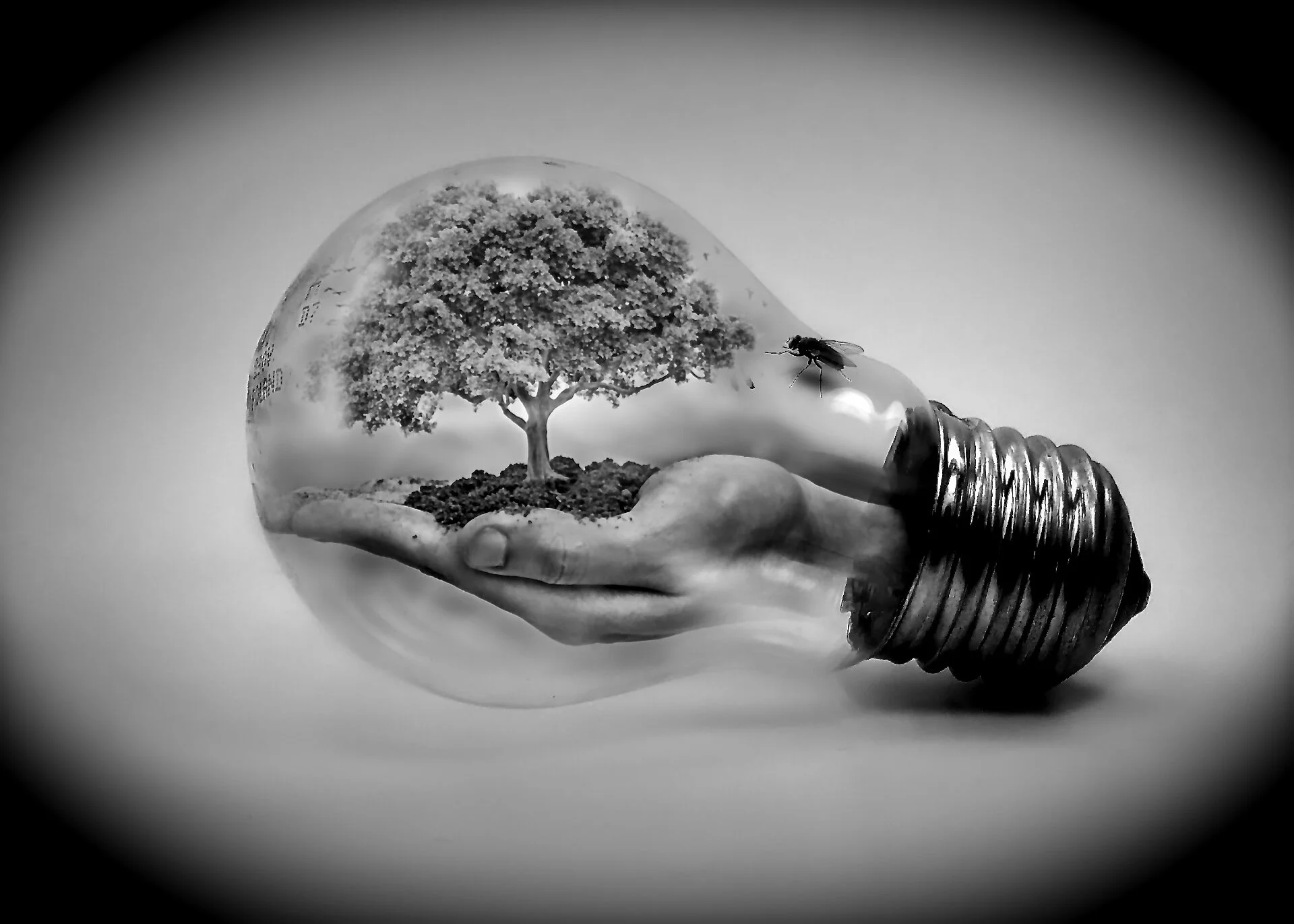
©Iván Tamás/Pixabay