• Camera Natura
  • Journal
  • Fotografica Africa
  • The Ghosts of Tsavo
  • Maasai Enkai
  • Menu

Strachan Photography

  • Camera Natura
  • Journal
  • Fotografica Africa
  • The Ghosts of Tsavo
  • Maasai Enkai

©Alex Strachan / Strachan Photography

The Lions of 'Starv-o'

May 02, 2026

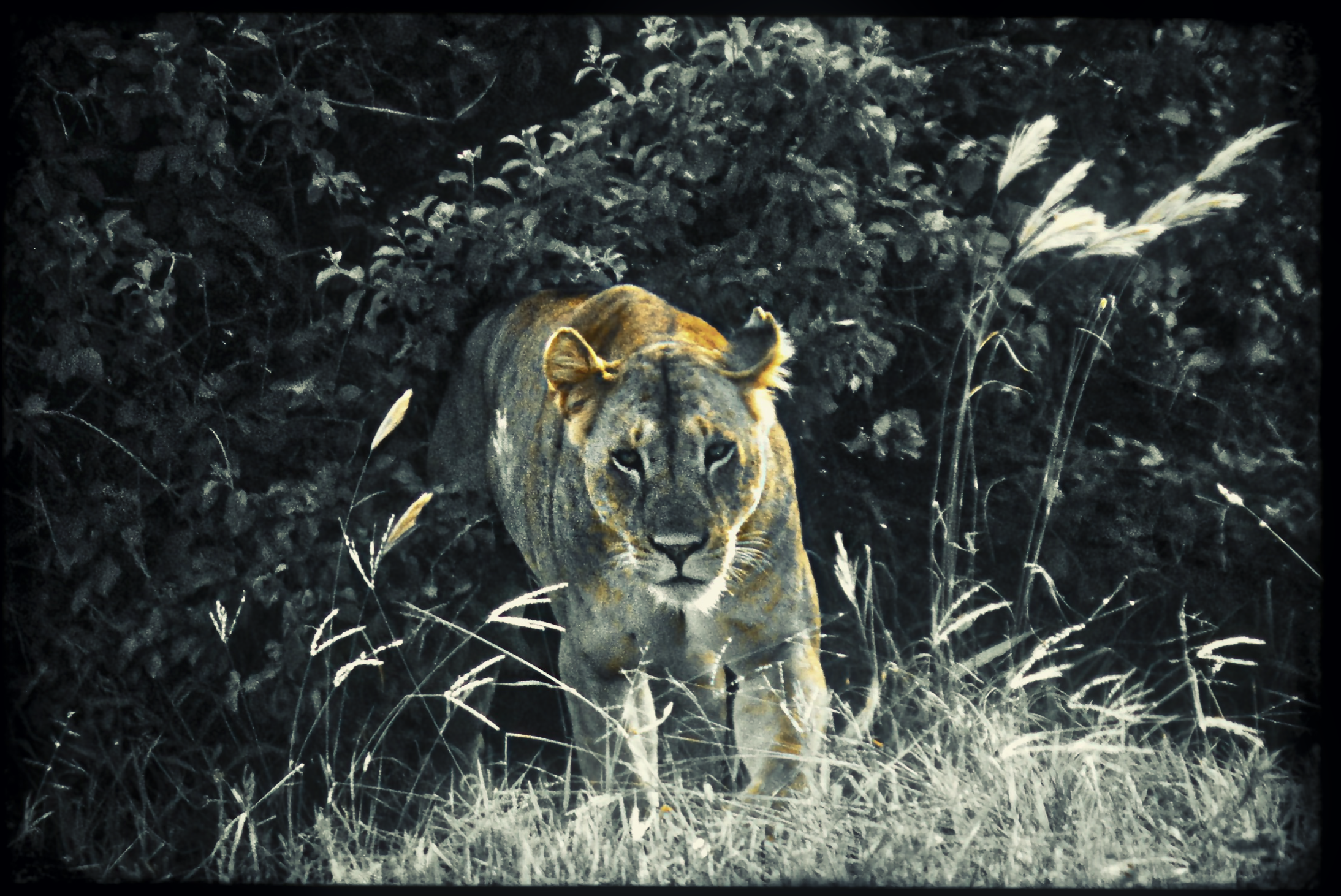
Tsavo’s lions have a formidable reputation to this day, more than 125 years after a pair of man-eating lions stalled construction of Tsavo’s aptly named “Lunatic Express” rail line.

Therein lies a tale.

Picking up where we left off … for here lies a tale of sleepless nights and the stuff nightmares are made of. They mostly come at night … mostly, goes the old line.

In the dry text of academic accounts of the not-so-recent past, the Tsavo Man-Eaters were a pair of preternaturally large, maneless lions, nicknamed “Ghost” and “Darkness” by their victims, as the lions took on a reputation of almost mythical proportion. For nothing seemed to stop them, neither man nor other beasts, as they raided labourers in their tents at night and carried them off into the dark and … well, you know.The ill-fated rail line would go on to be dubbed “the Lunatic Line,” for the sheer lunacy of building a rail line through some of the most wild, untamed terrain in colonial Africa. Never mind untamed, these lions were untameable.

Not only that, but they seemed to have an uncanny sense for the uncanny, not just evading pursuit and capture but seeming to revel in the sheer stupidity and incompetence of humans — including, but not limited to, the so-called “Great White Hunters” sent in to deal with them.

The Lunatic Line was intended to link the Indian Ocean port city of Mombasa with Lake Victoria, deep in the heart of Central Africa, through the railhead of Nairobi, some 925 km (575 miles) inland from the sea as the vulture flies. The vultures did a lot of flying between March 1898 and December 1899.

The British colonial administrator of the time, Sir Frederick Lugard DSCO, had established the headquarters of the Imperial British Africa Company deep inside Uganda in Central Africa’s Great Lakes region.

The seat of British power and influence was established at Akasozi K’empala, “Hill of the Impala” in the local Luganda language. K’empala was later shortened to simply “Kampala,” as it is known today.

K’empala was traditionally a hunting reserve for the Kabaka king of Buganda, dating back well before Pre-Contact times. Under the auspices of British colonial administration, Kampala would go one to become the locus of European trade for the whole of Central Africa. The Lunatic Line would, in theory, provide a vital trade link to the Indian Ocean, and from there across the sea to Arabia, Asia, and China. And to Europe itself, by following the sea route south using the sea route around the Cape of Good Hope, 12,500 km (roughly 7,700 miles) to the south, on the 34th parallel.

K’empala may have founded as a traditional hunting reserve for Kabaka blue-bloods but just 10 years after Sir Frederick, holder of the Most Distinguished Order of Saint Michael and Saint George (GCMG), it was a pair of marauding maneless lions that did most of the hunting — of humans brazen and rude enough to intrude on their own traditional hunting grounds. And, as anyone who knows Tsavo knows all to well, food is not easily found in such arid, unfriendly  terrain — hence the nickname Starv-o. The lions, twice the size of “regular lions,” could scarcely have believed their luck. Nighttime and the livin' is easy.

More used to tangling with buffalo, anywhere from 400kg (930 lbs) to 900kg (2,000 lbs) of sheer anger, not to mention the thickest hide this side of a 3.5 ton rhino (3,200kg in English money), the Tsavo lions regarded construction on the rail line, to borrow a line from Hemingway, a moveable feast. Far better, and easier, to drag luckless workers from their tents in the dead of the night and devour them within earshot of their colleagues.

Early efforts to rein in the lions proved in vain — to put it mildly — and the situation soon deteriorated to the point where outside help was called in, as the late photographer-adventurer  Peter Beard recounted in his book Zara’s Tales.

By this point, the lions — not just content with the offerings at hand — expanded their appetite to include not just railroad workers but passengers as well.

The lions evolved to become what Anthony Bourdain would describe as “culinary pirates” —diners with a fearless, open-minded attitude toward food, dedicated, like-minded and “slightly reckless” (Bourdain’s words) in the rough. Bourdain often urged travellers to be intrepid and apply the “Grandma rule” of, “Just shut up and eat it,” when offered local food.

The Tsavo lions took this to a whole other level, though. “They were known to snatch (passengers) from their costly Pullman berths in the dead of night,” Beard wrote in Zara’s Tales, “and make a disgusting meal of them.”

Disgusting!

In the end, estimates of the man-eaters’ toll range from 28 — the Uganda Railway Company had a vested interest in keeping the real count as low as possible, so their workers would not revolt … which they did anyway — to more than a hundred, which may be an overestimate but seems more reasonable given that “official: headcounts at the time tended to be haphazard and done on the fly. Daily attendance checks and carefully compiled staffing reports were not as fastidious as they might have been under normal circumstances, “normal” being a malleable concept in Tsavo at the best of times. And these were not the best of times.

As it was, the British colonial administration bid for the services of “an enthusiastic sportsman” to deal with the unruly interlopers for once and for all. That sportsman, Lt. Col. John Henry Patterson, a British Army officer, structural engineer, and recreational hunter during his days in colonial India with wide experience of hunting tigers — surely lions would prove easier — vowed to solve the problem in a “cool, calm, and collected” manner, a matter of days, surely, a week at most.

In the event, it took 10 months.

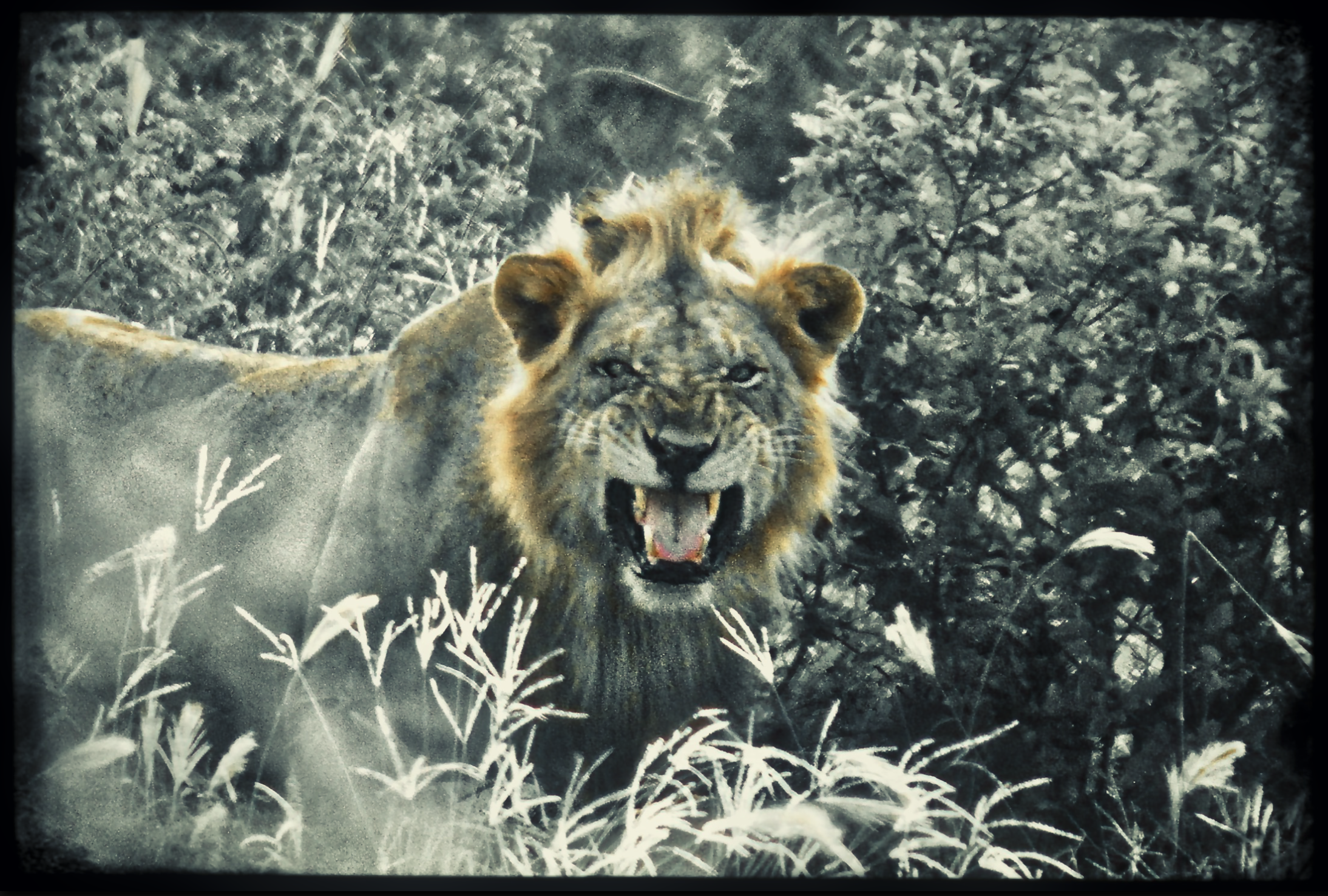
The lions proved to be moody, unpredictable, irascible, and frighteningly intelligent, with a sixth sense for sensing where there might be trouble, and avoiding it — instead striking where least expected, up and down the rail line, time and time again, at all hours of the night and early morn ing — and, in time, in broad daylight as well.
©Alex Strachan / Strachan Photography

Sometimes they acted alone, sometimes as a pair. They would attack at one point one night, then attack miles away the next night. At one point, they even attacked a field hospital. They evaded lures, broke out of a box trap — reinforced with iron bars — and on the one occasion they fell for a ruse, they broke their way out of their cage and the Great White Hunter sent to shoot them had his gun jam at a most inopportune moment.

These lions were becoming mythical beasts, the stuff of legend, and their uncanny pursuit of humans did not endear them to local villagers, or do much for morale among the rail workers. All-out rebellion ensued, and Lt. Col. John Henry Patterson found himself with a right old mess on his hands.

The “enthusiastic sportsman” was losing his enthusiasm for the chase; perhaps it was time to retire to the comforts of damp, boring Merry Olde England and the leisurely life of a country gentleman in the Cotswolds — not … this. This nightmare of biting flies, a furnace sun, unruly locals on the verge of insurrection, and marauding lions that, as we’ve established, mostly come at night … mostly.

According to the Uganda Railway Company’s official records of the time, the final toll of “deaths by misadventure” clocked in at 28, but as Lt. Col. Patterson himself recounted in his book The Man-eaters of Tsavo (Macmillan, 1907, an instant besteller!), the unofficial number may have been closer to 135, give or take.

Social media not being then what it is today, the real number is anyone's guess.

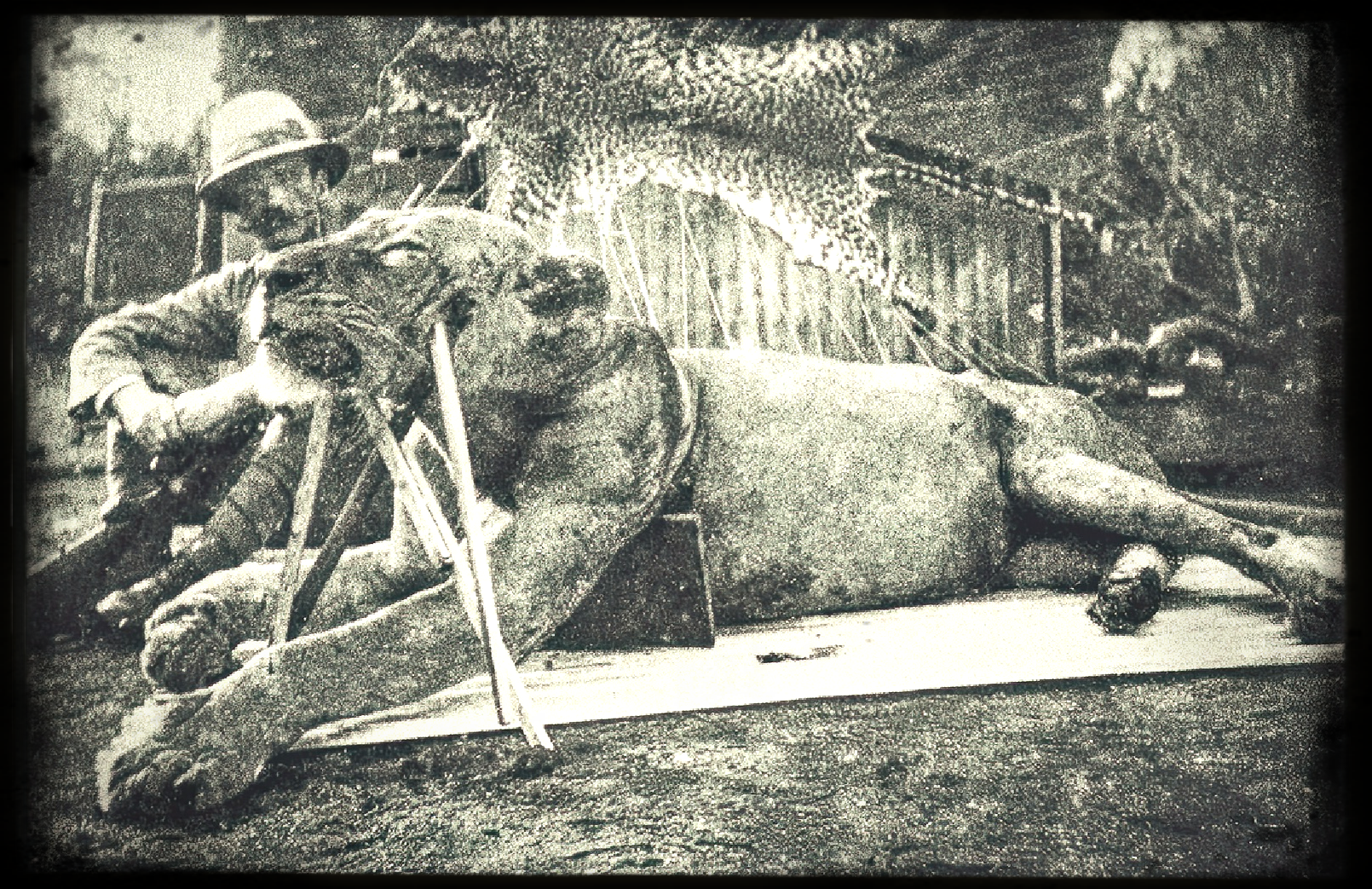
As it happened, Patterson did eventually bag his lions — though one of them almost bagged him in the process. This time, his gun did not jam. It did, however, require nine of 10 shots, all of them direct hits, to bring the second, larger lion to heel. It just would not die. The stuff of myth and legend.

Patterson had started spending nights alone on one-man stakeouts —not a good idea — using himself as bait, often hiding — not entirely successfully — atop a ramshackle machan, a raised hunting platform made from loose bits and pieces of acacia, commiphora africana and corkwood.

The machan was so rickety it tended to bend and sway in a high wind — a lean-to … literally.

The lions took the bait, but even the it was evident from the first night that things had a way of going wrong, as they tend to do when Wild Africa holds all the cards and Murphy, of Murphy’s Law fame and (mis)fortune, is alive and well.

After several fruitless nights spent perched above his shaky, wobbly perch, Patterson got the distinct feeling he himself was being stalked in the dark. The hunter was being hunted.

In at least one sense, though, the plan was working — the part about holding himself out as bait.

When Patterson finally managed to shoot the first lion — which had indeed been stalking him in the dark — through the chest with a .303 rifle from little more than three metres (10 feet) away … the lion, simply ran off into the night, as if nothing had happened.

On one level, though, the plan was working — the part about holding himself out as bait. When he finally managed to shoot the first lion — which had indeed been stalking him in the dark — through the chest with a .303 rifle from little more than three metres (10 feet) away … the lion, and this is by-all-accounts true, simply ran off into the night, into the underbrush.

Patterson followed up at daybreak — tracking a wounded lion in dense cover being one of the more unenviable challenges a hunter can face, and not one likely to be repeated today by a fat dentist from Minnesota (Cecil the Lion’s killer) — and for a second time in less than 24 hours, Patterson’s ruse of holding himself out as bait worked. This was not quite the way he intended it to happen, however.

The lion, fed up by the Patterson’s impertinence and determined to even the score, charged him from the underbrush.

This time, though, luck was — finally, finally, finally — on Patterson’s side. He managed to shoot the lion in the shoulder — not what he was aiming for — but the bullet ricocheted off heavy bone and penetrated past chordae tendineae into the lion’s heart.

The second lion proved harder to kill, not that the first lion had been easy.

In the end, it took 19 days — 19 days — of tracking the lion in the dense cover and when Patterson finally caught up the lion — or, rather, the lion caught up to him — it took anywhere from six to nine shots to subdue the man-eater. According to Patterson’s diary account, even that was apparently not enough to finish the job: the lion died gnawing furiously on a tree branch lying loose on the ground.

More than century later, Tsavo lions still have a reputation.

Tsavo lions are not like Serengeti lions, the late conservationist Daphne Sheldrick once said. They don’t stretch out under a tree, “waiting for their stomachs to be rubbed.”

Perhaps it is the place itself. Tsavo is the Kamba word for slaughter, Tsavo as “the Place of Slaughter,” invoking the region's historic, often violent past involving community conflicts, the slave trade route, the Ivory Wars … and those infamous man-eating lions..
The last word, as seems only appropriate in an ode to Peter Beard, belongs to Beard himself, who like so many before him, from Karen Blixen and Denys Finch Hatton to Bill Woodley, David Sheldrick and Daphne Sheldrick, grew to regard Tsavo as a second home.

“That’s the way it was … night and day, a child’s dream, an archetypal memory that can only be conjured up on old forgotten films,” Beard wrote in Zara’s Tales. “I can still see and feel my broken-down 1960 Land Rover on river runs, driving down the prehistoric riverbed through assemblies of quietly rumbling elephants going about their eternal business, unaware of their imminent appointment with destiny.”

Beard passed on 19 April, 2020, at age 82.

The elephants’ appointment with destiny has yet to be written.
©Getty Images


Tags: Tsavo, Kenya, Tsavo East, Tsavo National Park, Peter Beard, Zara's Tales, lions, man-eating lions, Lt. Col. John Henry Patterson, Sir Frederick Lugard, Uganda Railway Company, Lunatic Line, Lunatic Express, Kampala, Buganda, Uganda, The Ghost and the Darknessss, Kabaka, Starv-o, Bill Woodley, Daphne Sheldrick, David Sheldrick, Karen Blixen, Denys Finch Hatton

CNN

Bourdain in Nigeria

April 17, 2025

“Nigeria is a difficult place to shoot and an even more difficult place to live. But it is also an incredibly inspiring place, with perhaps the hardest-working, most enterprising, most optimistic population I’ve ever encountered.” — Tony Bourdain in Lagos, Nigeria in Parts Unknown, in October 2016.

Tony Bourdain’s Parts Unknown episode on Lagos, Nigeria — Africa’s largest city, with 15.9 million people (as of 2023) — premiered just one week after his light-hearted sojourn with Eric Ripert in the French Alps, and it’s hard to imagine a sharper, more stark contrast. Lagos was frenzied and frenetic where French Alps was quiet and cheerful, the difference between relaxation in the fresh, rarified air of high mountain scenery and the smog-choked desperation of an overcrowded big city, where side hustles are the only way to make a living for most, and the economic disparity between rich and poor is a conversation talking point in its own right.

The food is different, too — but that didn’t stop Bourdain from crafting a compelling, surprisingly upbeat hour of TV, fuelled by his sheer force of personality whenever the overcrowding and desperation around him threatened to overwhelm.

Nigeria is Africa’s most populous country, with a population of 230 million, and Lagos is practically a country in its own right, the most populated urban region in Africa and one of the fastest-growing megacities in the world.

In keeping with much of Africa — and the emerging world, for that matter — the demographic breakdown leans toward the young side: nearly a third of those people, 32.4 percent by one survey, are under the age of 18. What about their future? What kind of a life awaits them? Lagos may be the financial heartbeat of West Africa, but what does that mean when the financial disparity between rich and poor, old and young, is so great? It’s a question that confronts many of the world’s democracies today, and a question Bourdain wrestled with daily. (Thorny issues like that don’t matter so much in autocratic dictatorships where simply asking that question will get you disappeared.)

It’s hard to watch Lagos and remain in a sunny mood, no matter how much energy Bourdain puts into it — and if you know anything about Bourdain, that’s a hell of a lot. Bourdain is the indigenous film-making capital of the entire African continent, nicknamed Nollywood, and its music scene is the most vibrant in West Africa, which, if you know music, is saying something. The food is more tailored to street food, in keeping with a lifestyle that means eating while on the run, grabbing what one can from sidewalk street stalls, and Bourdain is the ideal companion for that. He’s a connoisseur but no snob when it comes to food.

A quick side note: Lagos was directed and produced by longtime Bourdain cameraman Morgan Fallon in grainy 16mm stock with a deliberately jittery, handheld look and a nervous, almost frantic style, in keeping with Bourdain’s lean toward a more experimental type of filmmaking in his later Parts Unknown episodes: God only knows how it must have appeared to CNN corporate bean counters on first viewing.

Lagos catches Bourdain in neither a soulful, reflective mood nor his angry, testy social commentator mode; things are happening around him too quickly for that. Watching Lagos just the other night, I couldn’t help wondering how Fallon and his camera crew kept up; this is one outing where it’s hard enough to follow Bourdain on the screen, let alone the guys dragging heavy camera equipment behind him; Fallon is the rock star of the piece, if behind the scenes.

This is not one of Bourdainophiles’ favourite episodes — a quick scan of Reddit reviews from the time lean more toward the What the hell? end of the reaction scale than the light-hearted joy and comfort of companionship that fans responded with to the Eric Ripert episodes, keeping in mind — again — that Lagos aired just seven days after French Alps.

One thing one can say about Lagos is, that in Bourdain’s hands, it’s never boring.

“It’s mad, it’s bad, it’s delicious, it’s confusing, and I’ve never seen anything like it,” Bourdain said in his voiceover … and he was just getting started. Them’s fightin’ words coming from a dude who, as Eater assistant editor and culture writer Chris Fuhrmeister posted at the time on Eater's webpage, had been around the world, there and back, many times, who made nearly 300 hours of travel television in 15 years.

Lagos is also the only episode, that I’m aware of anyway, where Bourdain says, on-camera: “I’m lazy.” (Context: he was called out at the time for pouring beer without tipping his glass.)

Ah yes, the food. Lagosian cuisine, as it’s known, revolves around fresh fish, beef, spicy soups, and pounded yams. Lots and lots of pounded yams.

The particulars range from traditional Hausa dishes like masa griddlecakes to spicy (aka hot) pepper soups and home-cooked stews (think Jollof rice stewed with goat meat, fish stock, melon seeds and many, many chilis; “It burns,” Bourdain says, “It burns real good!”) with musician activists companions like Femi Kuti and Yeni Kuti, Edoato Agbeniyi and Yomi Messou, food blogger Iquo Ukoh, and journalist Kadaria Ahmed.

The music backbeat is hip, local and authentic — none of this lazy, AI-generated garbage you hear in so many Netflix docuseries. The original soundtrack recording, real music and not regurgitated pop. ranges from Afrobeat to psychedlic rock, in keeping with the episode’s jittery, nervous acid burn, from The Funkees (Point of No Return) and Bio (Chant to Mother Earth) to Fela Kuti (Zombie) and Ofo and the Black Company (Egwu Aja, Allah Wakbarr).

“Nigeria is a difficult place to shoot and an even more difficult place to live,” Bourdain wrote in his Field Notes for CNN. “But it is also an incredibly inspiring place, with perhaps the hardest-working, most enterprising, most optimistic population I’ve ever encountered.”

And there it is — as good a reason as any to revisit Lagos. Or watch for the first time, as the case may be.

Supplementary reading:

https://explorepartsunknown.com/lagos/bourdains-field-notes-lagos/

https://eatlikebourdain.com/?s=Lagos

https://www.hollywoodreporter.com/movies/movie-news/parts-unknown-cinematographer-reflects-exploring-bourdain-1134475/

Supplementary viewing:

https://www.youtube.com/watch?v=gDWp695LzTU

https://www.youtube.com/watch?v=tZSOUX6s3nI

CNN


Tags: Anthony Boudain, Morgan Fallon, Lagos, Nigeria, West Africa, Bourdain, tao of Bourdain, Parts Uknown, Eric Ripert, Tony Bourdain, Bourdainophiles, Eat Like Bourdain, Reddit, Eater, Chris Fuhrmeisterr, Hausa, jollof rice, Femi Kuti, Yeni Kuti, Edoato Agbeniyi, Yomi Messou, Iquo Ukoh, Kadaria Ahmed, Nollywood, Afrobeat, psychedelic rock, The Funkees, Fela Kuti, Ofo, Black Company, Bio, CNN, Explore Parts Unknown

CNN

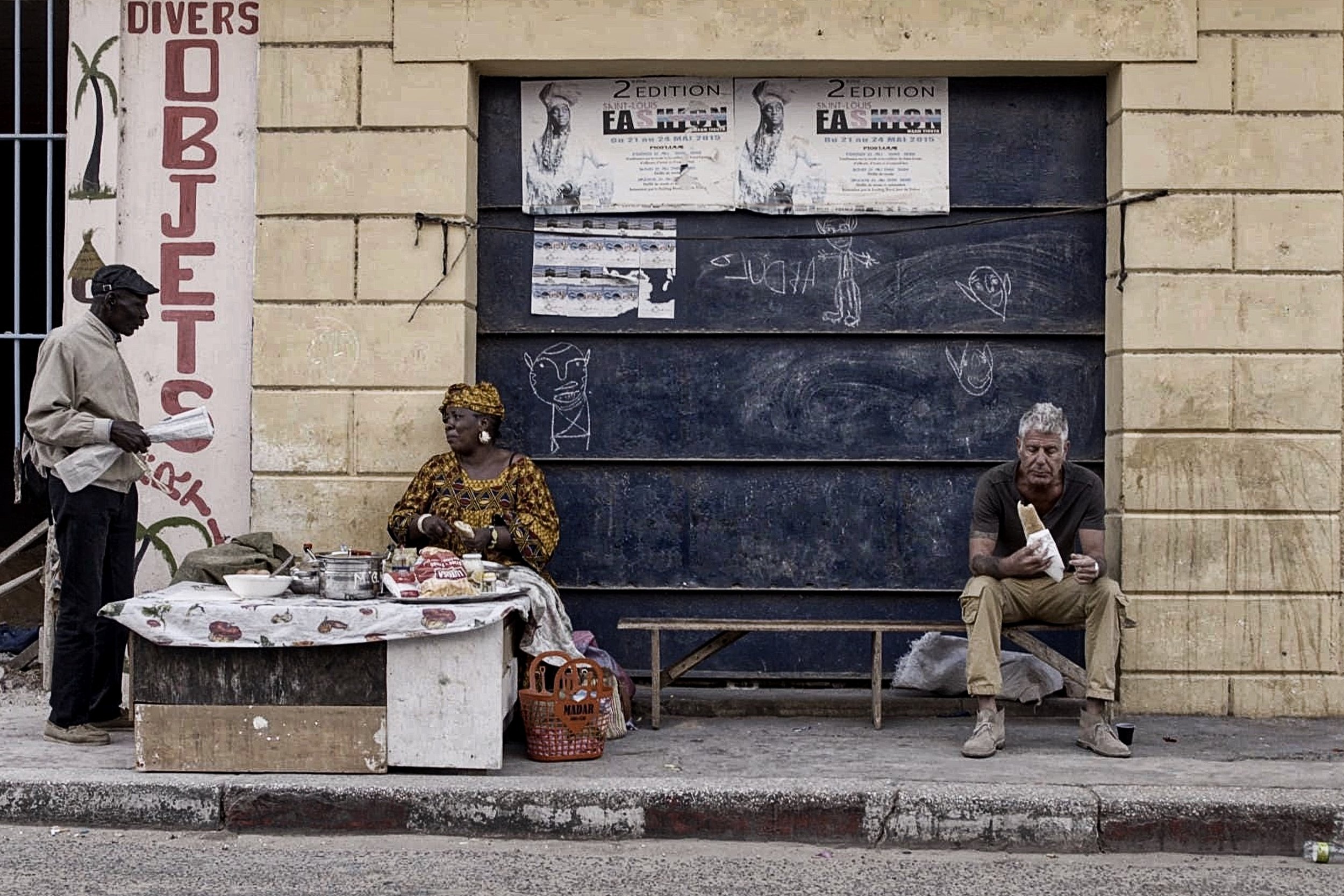
Bourdain in Senegal

October 26, 2024

“A rebuke to those who’d paint a whole continent as a monolith of despair, or Islam as something to be feared.” This was Tony Bourdain in Senegal, in the fall of 2015.o be feared.” This was Tony Bourdain in Senegal, in the fall of 2015.

Senegal.

In Tony Bourdain’s words, “A rebuke to those who’d paint a whole continent as a monolith of despair, or Islam as something to be feared, Senegal turns simple-minded assumptions and prejudice on their heads at every turn.”

More than a few people who followed Bourdain on his travels over the years — including some of those in this group, quite possibly — may have been surprised by how taken Bourdain was with the West African country of Senegal, which he visited just once in his many years on the road, in the fall of 2015.

The essay he penned for the social media platform Medium, the day before Senegal premiered on CNN’s Parts Unknown in May 2016, left little doubt, however.

Bourdain had set foot in Africa before, a vast continent with more than 50 countries, in Congo for Parts Unknown’s debut season, followed in short order by Morocco, South Africa, and Tanzania in 2014, Madagascar in 2015, and Ethiopia a year later.

He would go on to visit Nigeria and—famously, in his final season of Parts Unknown, which aired posthumously in 2018—Kenya with Kamau Bell.

Years earlier, for Travel Channel’s No Reservations, Bourdain wound his way through Ghana, Namibia, and Liberia, ending with Mozambique in No Reservations’ last season, titled — somewhat portentously — The Final Tour.

Senegal, though, was different, as he made clear in his essay for Medium.

“So let this episode in Senegal, an African nation which is over 90% Muslim, serve as both rebuke and example. It is a country that proudly elected as their first president after independence a Christian — because they felt, in their best judgment, that regardless of his faith, he was the best person for the job.

“It is a country that defies stereotypes and expectations at every turn. Emerging from French colonial times as a functioning multi-cultural, multi-lingual, extraordinarily tolerant society, it has managed to avoid coups, tribal wars, dictatorships and most of the ills that afflicted so many of its neighbours. It remains an absolutely enchanting place to visit, with delicious food, absolutely extraordinarily beautiful music, and a relatively free and easy attitude towards intermarriage, mixed race, intertribal relationships and foreign visitors. It has a powerful and proud tradition of hospitality that endures to this day.”

This was in 2015.

Remarkably, the same is still true today, nearly 10 years later, despite everything that’s happened in the outside world in the years since.

And is still happening, as Bourdain himself would have been quick to point out.

The fascinating thing to me, as a frequent visitor of that vast continent, is that all 54 countries are different. That may seem like a trite thing to say, condescending even, but then you must understand that most — virtually all — Africans see themselves that way, as the residents and citizens of strikingly different countries, with separate cultures and separate languages. I have heard it said that while South Africa — possibly the most westernized of African countries, certainly in the big cities of Durban, Johannesburg and Cape Town, has 11 official languages, in fact, the country of 64 million people is thought by some to be home to 86 different native languages. To homogenize the entire continent in a single word — Africa — is the height of condescension, but that’s what colonial thinking does to one.

Tony Bourdain got that.

That’s why he was openly welcomed wherever he went on the continent — that, and his love for good music in all its forms. And African cultures have indelibly close ties to music in all its forms. The Sahara Desert and the Sahel hinterlands — possibly a vast, seemingly empty wasteland to you and me — are home to some of the most respected, well-attended music festivals on the planet. And here’s the fun part. Those music festivals are about 95% local and only 5%, if that, touristy.

Bourdain got that, too.

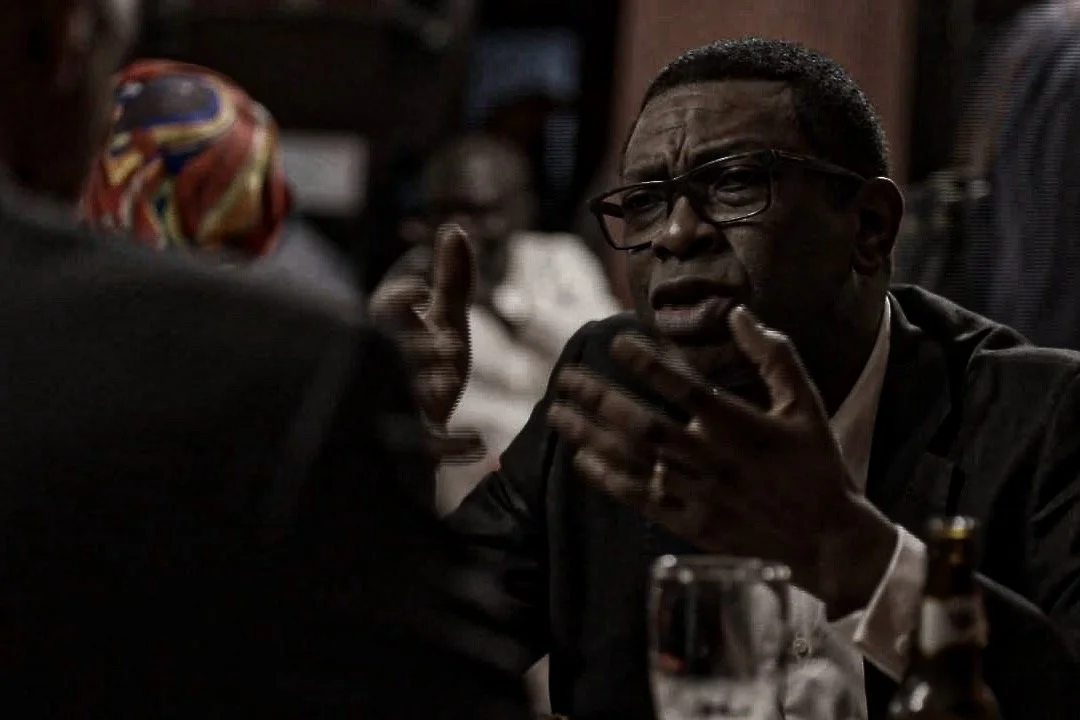
And so, in Senegal, he sits down and breaks bread with Senegal’s native-born Youssou N’Dour, not just sharing quality time with N’Dour but thanks to CNN’s Parts Unknown and Zero Point Zero Production’s cameras allowing us, the viewers, to share quality time not just with a remarkable singer and musician but a poet-philosopher, a political activist, an active humanist, who is Christian, secular and Muslim all rolled into one.

A truly remarkable person. Peter Gabriel is a frequent musical collaborator of N’Dour’s, and he’s not alone among Western musicians of note. Gabriel will tell you he’s the pupil and N’Dour the mentor, not the other way around.

It’s worth noting, too, that N’Dour performed his anthemic 7 Seconds, featured in all its gorgeous fullness in the Senegal episode, in 2005’s Live 8 concert in an extended duet with Dido, who was born in Kensington, London and hails from a background as different from N’Dour’s as is humanly possible.

Think on this: Live 8 — sobering and deeply moving to look back at today, given the fractious state of world affairs today— was performed live, and I’m not making this up, from London, Paris, Rome, Philadelphia, Barrie (Ontario, Canada, my home country), Chiba (Japan), Johannesburg, Moscow, Cornwall and Edinburgh. Think about that: good music brings the world together for a common cause.

Tony Bourdain got that, too.

“So what’s the future?” he asks N’Dour, about midway through what, with the benefit of 10 years’ hindsight, is one of my favourite Bourdain sets.

The two met in Dakar’s Bazoof restaurant over plates of mafe, a Senegalese stew of beef thickened with ground peanuts. To hear Bourdain tell it, “There are similar preparations throughout West Africa, but the Senegalese version is particularly great. Sear the beef; cook the onion, garlic, peppers, and carrots; deglaze with ground peanuts and broth, bringing up all that good stuff from the pan; then simmer until tender and awesome. Serve hot over rice.”

“The future?” N’Dour replies, perhaps surprised by the question.

Bourdain: “Yes, the future. Twenty years from now, where will Senegal be?”

N’Dour: “What I hope is, in 20 years, Senegal is going to be the place for great and big contributions of what we call Islam.”

Bourdain: “Do you think there's any danger of the kind of radical Islam that we see taking hold in many places in Africa?”

N’Dour: “All these people who are using the religion, the Muslim religion, to do bad things — I think Senegal sets (a good) example. This country I love, my country has many different models of the religion. This country, you know — you are here. I'm doing my local bissap “ — a drink made from a hibiscus flower known as the Roselle; the sepals of the hibiscus, when infused in hot water, leave a pink, red, magenta or dark shade of water — “and you are here, with your beer, in a country that is 95 percent Muslim.”

Bourdain: “Right.”

N’Dour: “And I think this example can help all the world.”

Bourdain: “I hope so. Inshallah.”

By the end, Bourdain is profoundly moved by this country of 18 million. Shaken to his core. What better way to close this, then, than with his own words,.

“Senegal is one of the best arguments for travel I can think of. Because the more we see of the world, actually meet who we are talking about — or think we are talking about — the more we take a walk, however briefly, in other people’s shoes, see how other people live, people who are supposedly so different than us, and find ourselves — as so often and so inevitably happens — recipients of random acts of hospitality and kindness from total strangers, then the better we shall be.

“And the happier. Knowledge — exposure — to ‘the other’ is not a contaminant.

“It enriches us. It makes — or should make us — more humble.

“Senegal. It’s someplace that everyone, given the chance, should go.”

Inshallah.

Supplementary reading:

https://explorepartsunknown.com/senegal/senegal-women-equality/

https://explorepartsunknown.com/senegal/senegal-episode-facts/

https://eatlikebourdain.com/anthony-bourdain-in-senegal/

CNN


Tags: Anthony Bourdain, Senegal, Parts Uknown, CNN, Medium, No Reservations, Travel Channel, Islam, Muslim, Christian, Dakar, colonial times, France, democracy, Zero Point Zero, Youssou N'Dour, 7 Seconds, Neneh Cherry, Dido, Live8, Peter Gabriel, humanism, secular, bissap, mafe, hibiscus, women equality, Eat Like Bourdain, Inshallah

CNN

Bourdain in Ethiopia

September 10, 2024

“This stuffing of food in your fellow diners’ face is called gursha, and that’s what you do to show your affection and respect. Try this at the Waffle House some time and prepare for awkwardness.” Tony Bourdain in Ethiopia, in 2015.

“Admit it. You hear the name Ethiopia, and you think of starving children with distended bellies. You just think famine and despair are so awful you frankly do not want to even think about it anymore.

“But take a look, Addis Ababa, capital city of Ethiopia. A cool, high-altitude urban center that will both confirm and confound expectations. Fueled largely by direct foreign investment and a returning Ethiopian Diaspora eager to be part of the new growth, things are changing in Addis. It is one of the fastest growing economies in the world.”

The music. The food. Diaspora. Returning to one’s roots. The value of friendship. The importance of family.

These are the things Tony Bourdain chose to focus on in his Parts Unknown episode Ethiopia, which first aired on CNN in October, 2015. The famous — or perhaps that should be infamous — famine of 1983-’85, Bob Geldof and Live Aid rate just a brief mention, not because Bourdain chose to ignore it but because, he implies, others have done it before him, and better. Geldof, for one.

Instead, there’s the music: Mahmoud Ahmed, performing as Mehamud Ahmed, on Embeba Gora, Bemem Sebeb Litlash and others; Hailu Mergia, with Musicawi Silt, from the album Tche Belew; Thomas Gobena, aka Thomas T. Gobena, with Brothers, from the album The John Prester Sessions; and Abegasu Shiota, with Wonchi Breeze, as performed by Shiota and bandmates Misale Legesse, Girum Mezmur, Yared Tefera, Misale Legesse, and too many othersa to mention here.

If I’ve been overly specific with the song names and tracks — Bourdain and Parts Unknown background composer Mike Ruffino also found room for a Western standard, Sha-la-la, performed by his writer/composer friend Josh Homme and Mark Lanegan of Queens of the Stone Age — it’s because music plays such an important role in Ethiopia, and because, thanks to our modern-day age of technology and global access to world music at the touch of a button, any song, anywhere, is yours for the asking. Bourdain was at his best when combining specificity — attention to cultural detail — with existential bigger-picture questions: Who are we? Where do we come from? Where are we going? It’s one of the reasons Bourdain is still with us, why we’re still watching his shows and talking about him today.

And there’s Africa. The lure and pull of that amazing, enthralling, contradictory and maddeningly complex continent, with its 54 countries and 3,000 tribes and languages with roots that underpin many of the world’s major language families, drew Bourdain in as it has countless others, myself included. Ethiopia finds Bourdain in a relaxed, joyous frame of mind, but also quietly reflective. Africa is the birthplace of humankind — noted anthropologist and paleontologist Mary Leakey more-or-less settled that issue on July 17, 1959, with her discovery of the fossil remains of Zinjanthropus boisei, one of humankind’s earliest known ancestors, later nicknamed “East Africa Man,” aka “Nutcracker Man,” at Olduvai Gorge in the Serengeti plains of Tanzania, a stone’s throw down the Great Rift Valley from southwestern Ethiopia. Bourdain finds himself profoundly moved by Ethiopia, and not for the first time in that part of Africa, and is momentarily caught at a loss for words — which, as any avid viewer of Parts Unknown knows, was rare indeed.

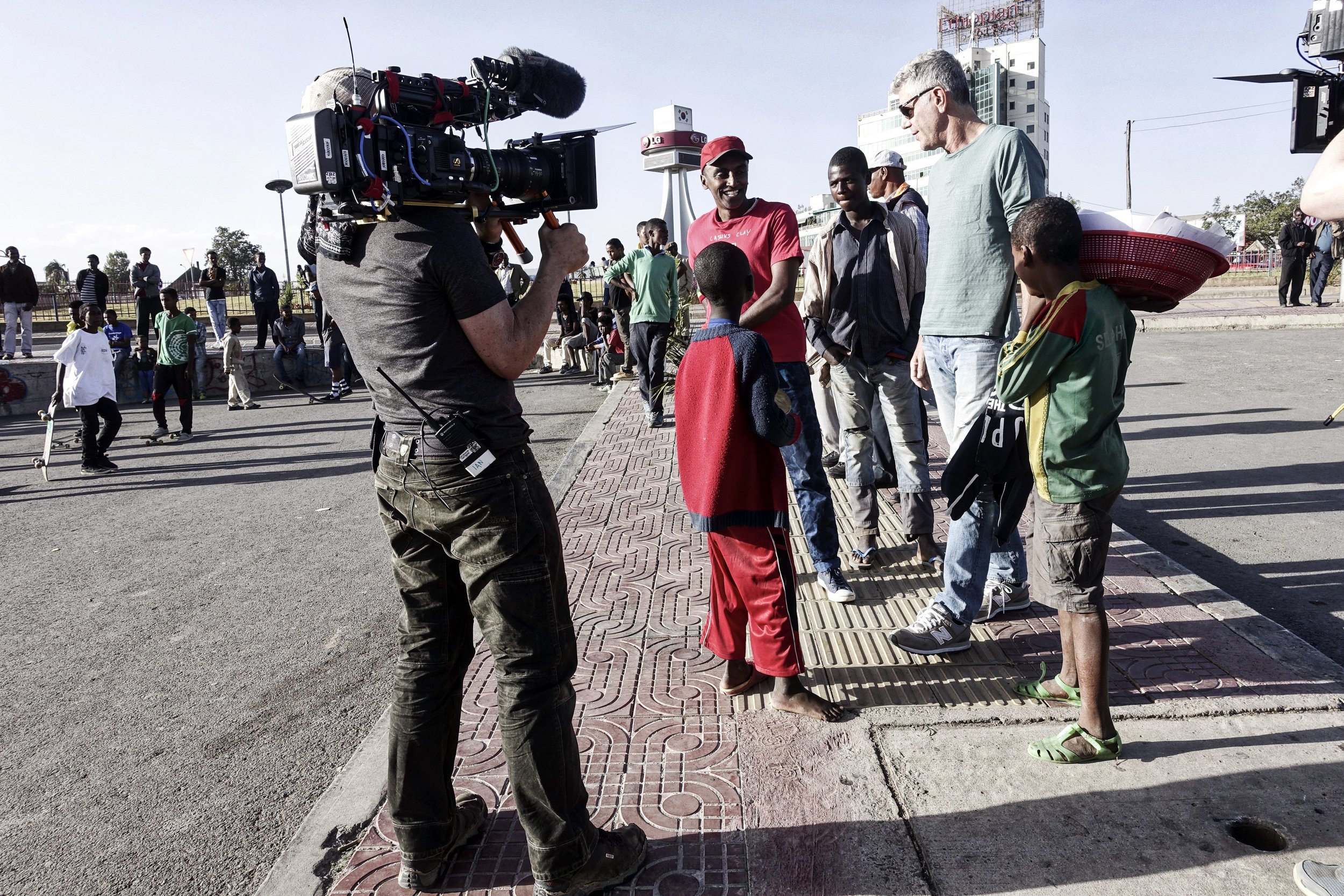
Bourdain’s friend, companion and spirit guide on his Ethiopian expedition is Ethiopian-born, Swedish-raised, Harlem NY chef Marcus Samuelsson — birth name Kassahun Tsegie —whose family fled Ethiopia in the turmoil of Ethiopia’s 1974 civil war, a blood-soaked conflagration that saw then-emperor Haile Selassie deposed by a motley crew of Soviet-backed Marxist-Leninist rebels in a coup d’état that vaulted an ambitious young army officer and reluctant bureaucrat Mengistu Haile Mariam to power, a self-righteous dude and diehard Communist who would go down as one of history’s more notable bad guys, if not an out-and-out nut job. Selassie died in 1975 of “natural causes,” according to the official record, though evidence later emerged that he was strangled on orders of Mengistu’s military government; Mengistu’s apparatchiks no doubt irritated by Selassie’s presence and his continuing insistence on staying alive.

Samuelsson, who first became interested in cooking through his maternal grandmother in Sweden, would go on to become the executive chef of Aquavit, the Scandinavian fusion restaurant in midtown Manhattan, at the ripe old age of 24.

He was voted New York’s finest chef in 2003 by the James Beard Foundation and would go on to pen the African-inspired cookbook The Soul of a New Cuisine: A Discovery of the Foods and Flavors of Africa in 2006.

You might say Samuelsson comes by his culinary roots honestly, as did Bourdain. They both put in the labor and long hours necessary to get where they did in the cooking world.

You might also say that New York as a town was big enough for the two of them: They became fast friends.

Samuelsson’s literary efforts didn’t end with Soul of a New Cuisine: the Wall Street Journal wrote of his 2013 memoir Yes, Chef (co-written with journalist Veronica Chambers): “Plenty of celebrity chefs have a compelling story to tell, but none of them can top [this] one.”

(Bourdain, from somewhere Up There, might lay claim to equal time on that one but, truth is, that wouldn’t be his style.)

A shout-out is due here for Parts Unknown director-producer and cameraman Morgan Fallon, who took on all three duties for Ethiopia. His official bio — not to mention his Instagram and Twitter accounts — note he was nominated ten times over the years for an Emmy but didn’t win as often as he could have — should have. Would it be overcooking things to say that makes him the Stanley Kubrick of cameramen? (Kubrick, let the record note, never won an Oscar for directing, though he did win one for special effects, for 2001: A Space Odyssey — an insult, really, that smacks of condescension more than anything else.)

Ethiopia is about food and family and life itself, but little can top the final few minutes when Samuelsson, trailed by Bourdain, is reunited with his frail, elderly biological father, Tsegie, in the Ethiopian village where Samuelsson was born.

Their reunion is especially poignant because Samuelsson’s mother died in a tuberculosis epidemic when he was just three years old. As recalled in Parts Unknown, Samuelsson and his older sister Fantaye were separated from their family in the tumult and chaos of the 1974 civil war, and were adopted by Swedish geologist Lennart Samuelsson and his wife Anne-Marie and raised in Göteborg, Sweden (Gothenburg to you and me) before Samuelsson’s cooking apprenticeship in Switzerland, Austria and, in 1994, the US.

It’s a remarkable story of sacrifice and success, and refutes this idea of today’s populists that immigration is a scam.

“So, how does it feel to be back?” Bourdain asks Samuelsson at Ethiopia’s end. “I have to tell you, if I can be honest, you seem conflicted.”

“Yes,” Samuelsson says quietly. “There are a thousand thoughts going through my head. I feel a little guilty that I got out.”

Bourdain: “If you stayed, what do you think you would be doing right now?”

“I would have been a farmer or dealt with some type of cattle.”

“I’m pretty sure you would be a shit farmer,” Bourdain says, with a wry smile. “You’d be the best-dressed goddamn farmer, though, that’s for sure. Where is home for you, man? What do you think?”

“That’s the eternal question for me, you know,” Samuelsson replies. “I feel at home in New York. I feel very much at home when I am in Africa. But I also feel out of place, and coming to this very place, Abru Gundana, it gives me a lot of humility, but I can’t say it’s home. I can’t say it’s home.”

As for his happiest moment in Africa, when Bourdain presses him:

“Happiest moment, I think, is … the village. For me, when the whole village comes together — music, food, culture bringing everybody together. Eating together, being together — that is by far the happiest to me.”

That’s a hell of a way to end.

Supplementary reading:

     https://medium.com/@Bourdain/ethiopia-98c2bf948d90

     https://explorepartsunknown.com/ethiopia/on-my-african-mother/

     https://eatlikebourdain.com/?s=ethiopia

CNN


Tags: Anthony Bourdain, Marcus Samuelsson, Ethiopia, Parts Unknown, Morgan Fallon, Mike Ruffino, Gothenburg, Sweden, Aquavit, Bourdain, Tony Bourdain, CNN, Eat Like Bourdain, Haile Selasse, Mengistu Haile Mariam, Stanley Kubrick, Yes Chef, The Soul of a New Cuisine, Kassahun Tsegie, James Beard Foundation, Veronica Chambers, Mahmoud Ahmed, Hailu Mergia, Thomas Gobena, Abegasu Shiota, Josh Homme, Mark Lanegan, Queens of the Stone Age

CNN

Bourdain in Madagascar

July 20, 2024

“He was a poet of life.” Filmmaker Dareen Aronofsky on Anthony Bourdain, after the two visited Madagascar and then Bhutan for CNN’s Parts Unknown.

Over the years, Anthony Bourdain allowed a great many extraordinary landscapes — his words — only to have them fade into a blur outside his windows. “I’ve looked, maybe seen, maybe noticed, then gone,” he intones in his opening voiceover for Madagascar, the fifth-season episode of CNN’s Parts Unknown that first aired in May 2015.

“We all carry different experiences inside us. We see things differently, don’t we?”

Madagascar, the world’s fourth largest island by area, left an indelible impression on Bourdain’s psyche, and the result is plain to see in Parts Unknown. The journey which Bourdain undertook with avant-garde filmmaker Darren Aronofsky (Pi, Requiem for a Dream, Black Swan, and others) caught him in an unusually pensive, reflective mood, even by his standards. The break-up of his first marriage affected him deeply, and Madagascar, an island of almost unparalleled beauty — and scene of almost apocalyptic environmental ruin — will remind long-time Bourdain followers of his 2011 visit to Haiti for No Reservations, which he undertook during a cholera outbreak shortly after an earthquake killed 3,000 people in a single day, and with a hurricane looming on the horizon. A moment toward the end of Madagascar, in which Bourdain and Aronofsky are surrounded by hungry children while sampling a smorgasbord of local food delicacies, has uncomfortable parallels with a similar moment in that No Reservations episode in Haiti, where Bourdain broke bread and talked social injustice with Sean Penn, who was running a local aid project at the time.

“Madagascar,” Bourdain continues in his opening monologue, “exotic, unspoiled paradise, or microcosm for the end of times?”

Real life is no Disney cartoon. This much we knew, of course, but this Madagascar really breaks it down.

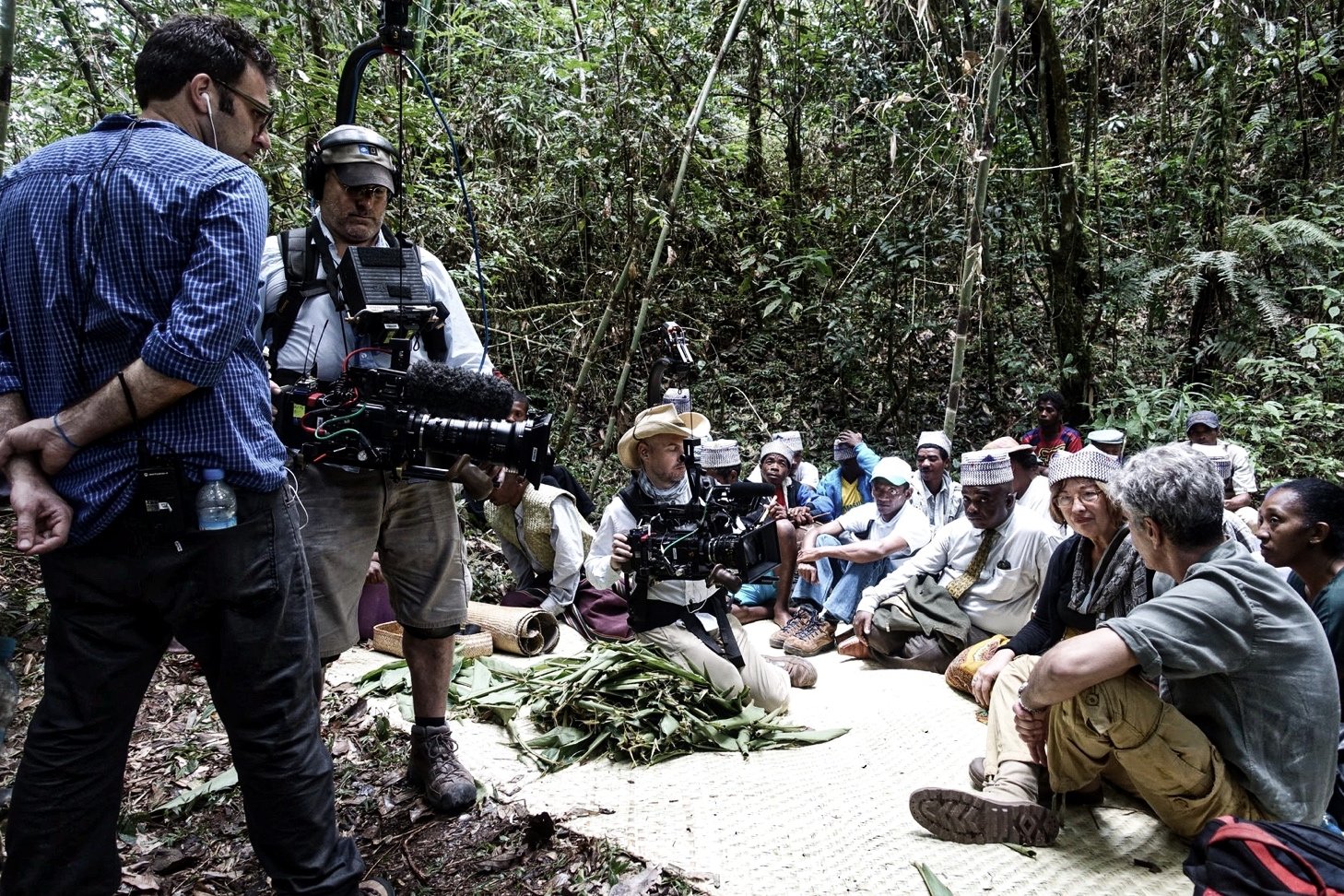
Over the years, there have been any number of reasons to watch Parts Unknown, even a decade after its making, but Madagascar is unique in that it provides viewers a glimpse into the process of making one of these episodes — a look, if you will, of how the sausage is made.

That’s in no small part because Bourdain wanted the episode to reflect Aronofsky’s signature style of filmmaking — surrealism, rooted in social consciousness. Visually striking but also emotionally involving. Entertaining and reflective by turns.

In an essay Bourdain penned for CNN’s Field Notes at the time, he shared some of the deepest thoughts of his entire 12-season odyssey with Parts Unknown.

“Travel is not always comfortable,” he wrote, “even when the scenery is at its most beautiful. Look out the window, get too close, and the reality of the situation — the world you will soon be leaving behind — intrudes.

“On Parts Unknown … we make choices all of the time. Choices about what I will show you of what I saw and experienced during my limited time in a destination, and choices about what I won’t. It’s my show. I decide where we go. I decide what we do when we get there. And I decide what we show you when we edit down 60 to 80 hours of footage to 42 minutes.

“That is a manipulative process. And not, inherently anyway, a bad one. I want you, the viewer, to feel the way about a place the way I want you to feel. I want you to look at it and see it from my point of view, if at all possible. Or at least consider other points of view.

“But it is, almost always, one point of view—or one lens through which you see: mine.”

At the time time, people often asked Bourdain what it would be like to accompany him on a film shoot.

“Now you will see. We look at Madagascar, in many ways, through Darren’s fresh set of eyes. It’s a useful reminder, worth having, that what you see on the show is not the only angle. That we are looking at the world out my window, but that there are other windows — that maybe I’ve omitted or shaded something, if only to present myself in a more flattering light.”

Aronofsky approached Bourdain interestingly, not the other way around.

Bourdain was “thrilled, honoured and delighted” — again, his words — to draw the attention of an acclaimed filmmaker whose work he admired, but he had one proviso.

“My only request was that he shoot some footage—with whatever device he wanted to use. And that, at some point, he give us his version of at least a portion of the show for which we have already seen my version.

“So, in Act 6, you will get an example of what may or may not be missing from the shows we make. An ugly, uncomfortable reminder that it’s not just pretty pictures and neat, hopeful sum-ups. It does not, I’m pretty sure, portray me in the best light. Or any of us, for that matter. But there it is. I thought it was important.”

When Bourdain passed on 8 June 2018 — years ago now, though it still feels like yesterday — Aronofsky was among those CNN approached to pen a eulogy of sorts. The two would later travel together to the mountain kingdom of Bhutan for a Parts Unknown episode.

Aronofsky’s words, written just four days after Bourdain’s passing, resonate to this day.

“I was asked to share some thoughts on my time with Tony in Madagascar and Bhutan,” he began. “I’ve been staring at a blank page for days. His death is incomprehensible. I don’t know how to process him being gone.

“I do remember how easily words flowed from him. He made it seem so effortless. He was a poet of life. So I’ll let that inspire whatever flows now.”

And, at the end:

“You turned a light on what it means to be a human right now, right here on planet Earth.

“Thank you for letting me tag along and witness a master storyteller shape the unexpected into the relatable and unforgettable.

“I will never forget how passionate you were about life and this world. You loved love, cinema, food, artists, people, idiosyncrasies, pain, relief, martial arts, chefs, music, the Lower East Side. You loved the whole damn world (even the parts you despised). And the whole world loved you.”

Bourdain was seemingly incapable of producing an underwhelming hour of television, even with the passing of time, but Madagascar, for me, is on a whole other level. Now seems as good a time as any to revisit it.

Supplementary reading:

    https://explorepartsunknown.com/bhutan/anthony-bourdain-darren-aronofsky/

    https://www.foodrepublic.com/2015/05/18/what-its-like-to-film-anthony-bourdains-parts-unknown-in-madagascar/

CNN


Tags: Anthony Bourdain, Parts Uknown, Tom Vitale, Zach Zamboni, CNN, Madagascar, Darren Aronofsky, Haiti, Sean Penn, Zero Point Zero Production, environmentalism, conservation, lemurs, Bhutan, Food Republic
Prev / Next

Journal

"Forget whatever should be forgotten, so that you can remember what should be remembered."


Featured Posts

Featured
1. Mauro González:Netflix.jpg
August 10, 2026
One Hundred Years of Solitude revisited
August 10, 2026
Read more →
August 10, 2026
africa_0107.png
July 30, 2026
At Loliondo with Corbett Bishop
July 30, 2026
Read more →
July 30, 2026
squarespace1.png
July 11, 2026
Hippos: Reality Bites
July 11, 2026
Read more →
July 11, 2026
©  serengeti watch.jpg
June 29, 2026
Mayhem in the Mara
June 29, 2026
Read more →
June 29, 2026
DSC_1667.png
June 18, 2026
Tarangire Tracks
June 18, 2026
Read more →
June 18, 2026
1.bourdain.png
June 8, 2026
Remembering Bourdain
June 8, 2026
Read more →
June 8, 2026
DSC_0269 7.28.18 AM.JPEG
June 3, 2026
Letter from Tsavo
June 3, 2026
Read more →
June 3, 2026
maasai1 2.jpeg
May 21, 2026
“It’s Like Killing Culture"
May 21, 2026
Read more →
May 21, 2026
1.Screenshot 2026-05-07 at 2.44.32 AM.png
May 7, 2026
A Centenary for the Ages
May 7, 2026
Read more →
May 7, 2026
Screenshot 2026-05-07 at 4.29.13 PM 2.jpeg
May 7, 2026
David Attenborough Curiosities
May 7, 2026
Read more →
May 7, 2026