• Camera Natura
  • Journal
  • Fotografica Africa
  • The Ghosts of Tsavo
  • Maasai Enkai
  • Menu

Strachan Photography

  • Camera Natura
  • Journal
  • Fotografica Africa
  • The Ghosts of Tsavo
  • Maasai Enkai

Netflix/Silverback Films

Our Planet II 2.4

June 28, 2023

Our Planet II’s closing note, and David Attenborough’s plea for us to do more to save the natural world

There is a jarring, emotionally wrenching moment toward the end of Our Planet II’s fourth and final hour that is bound to upset most, if not all, viewers.

It is doubly jarring because  — spoiler alert — what happens is not, on the face of it, the direct result of human impact on the world’s wildlife migrations, a recurring theme throughout the series. One could be forgiven for thinking it belongs in a different program, one with a less lofty goal than what Our Planet purports to be.

In the end, this final hour of Our Planet II, The Freedom to Move, feels hurried and rushed, and not at the level of the other episodes in the program. It does have its moments, though.

And the important, overriding message remains the same.

Through our actions as a species, we are despoiling the home we live in, and it will take an act of real will and perseverance to put nature back into the natural world. Restoring the natural balance to our increasingly troubled world will not come easily, and it remains to be seen whether we have the collective ambition and ability to do the right thing.

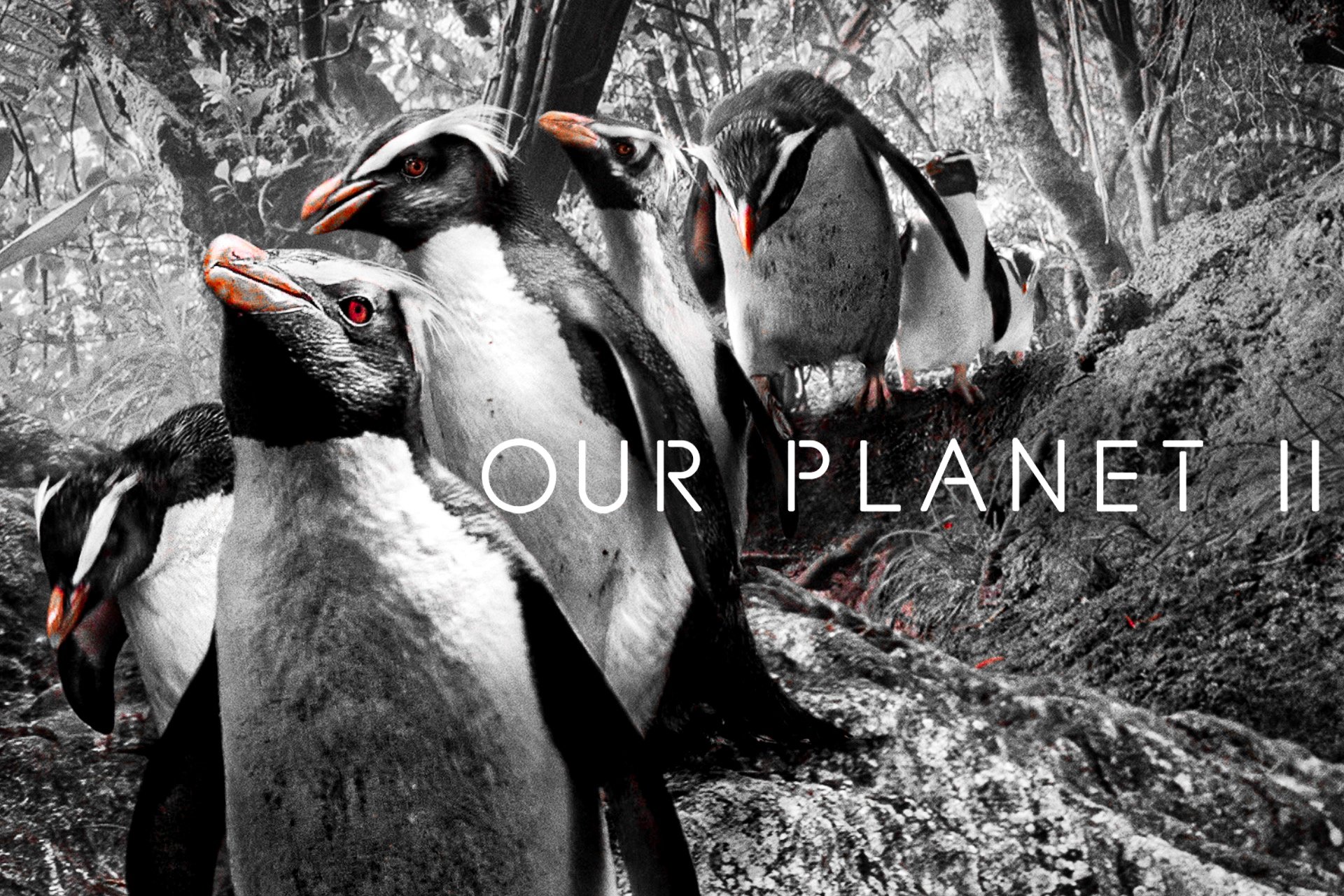
Once again, the hour focuses on three months in the planetary cycle, in this case, the months of January through March, when large groups of animals from the equatorial south begin their arduous, annual trek north. Gentoo penguins in Antarctica are shown feeding their chicks in the brief southern summer, so they can grow strong enough to undergo their first voyage to the sea, where leopard seals, known for their voracious appetites, lie in wait. Human detritus is in evidence even here, in the most remote corner of the Earth. Penguin parents do not have it easy at the best of times, and these are not the best of times.

Snow geese from Loess Bluffs, Missouri, take to the skies in large numbers — the first time this mass migration has been filmed from above, using drones — while far away, on the other side of the continent,  pronghorn antelope from southern Wyoming make their way through mountain passes and fenced-in ranchlands to the relative comfort and safety of Grand Teton National Park.

Army ants in the Amazon Rainforest enter their migratory phase in which the queen and her supersized larvae swarm over long distances in the dark of night. In another first, Our Planet’s film crew captured the nighttime migration using infrared lighting, and the results are both eerie and eye-filling.

Freedom to Move’s pièce de résistance is the annual grey whale migration from the warm but food-depleted waters off Baja California to the rich feeding grounds of Alaska’s Bering Sea, where king crab, Bristol Bay salmon, and innumerable groundfish coexist in a complex but little understood web of life. The grey whale migration alone was more than a year in the making, and it’s clear there’s enough here to warrant an entire series in its own right.

The whale migrations are tougher than at any time in recorded memory, as the whales, including mothers and their young calves, navigate some of the busiest shipping lanes in the world, and pods of predatory orcas lie in wait off Monterey Bay. The year of filming witnessed the lowest number of calves born in Baja since 1994, and the overall number of migrating whales was down 40% from previous years.

As always, though, it is David Attenborough’s distinctive, evocative voice that lingers long afterward, and gives Our Planet its sense of purpose.

“For many animals, the instinct to move is overwhelming, despite the dangers,” Attenborough reminds us at the end, as if viewers need another reminder of what’s at stake in the race against extinction. “We have … changed the planet, cutting off ancestral routes, and impacting even the most remote corners of the globe. There is hope. We know more about these journeys than ever before. And with our help, many animals are now overcoming the challenges of our modern world.”

But are they? For a healthy and connected planet, we must preserve, as Attenborough puts it, the freedom to move.

Netflix/Silverback Films


Tags: Our Planet II, Our Planet, Netflix, David Attenborough, nature programs, grey whales, pronghorn antelope, gentoo penguins, salmon, animal migrations, Bering Sea, Bristol Bay, Alaska, Loess Bluffs, Missouri, Baja California

Netflix/Silverback Films

Our Planet II 2.3

June 23, 2023

Our Planet II’s eye-filling, emotionally grueling third hour hints, if only briefly, at a better, more humane future

There are any number of emotionally wrenching moments in The Next Generation, Our Planet II’s third and most profound hour in the series so far. Those moments include a sea of red crabs on remote Christmas Island fleeing their suddenly cannibalistic mothers; a year-old puma in the rugged steppes of Patagonia, the southernmost tip of the Americas, struggling to survive on his own after leaving the safety of his family; and a mass migration of hatchling olive ridley turtles on Escobilia Beach, Mexico making their inaugural pilgrimage to the sea — a pilgrimage which fewer than 50% will survive.

It is two sequences, though, toward the end of the episode, that lend the entire series its perspective, for good and bad. In the first, elevated by some truly astonishing cinematography, a flock of some 400 demoiselle cranes, native to Mongolia and northeast China, embark on one of the most grueling migrations known to science, as they cross the Himalayan mountains to reach their wintering grounds in India — a journey in which many die from exhaustion, hunger and predation from golden eagles.

There are safer, less arduous ways to cross the world’s most imposing mountain range as the cranes, flying with their distinctive heads and necks straight forward and their feet and legs trailing behind, reach altitudes as high as 8,000 meters — Mt. Everest is 8,800 meters — but their traditional migratory route has been hard-wired by 45 million of years of evolutionary biology. When the cranes first started migrating, the Himalayas did not yet exist.

As a species., the demoiselle crane is not endangered — yet — but it is one of the animal species to which the United Nations Environment Programme Agreement on Conservation of African-Eurasian Migratory Waterbirds applies, and when one witnesses the sheer effort of their Himalayan ordeal, it’s easy to see why.

Our Planet II is full of cautionary flags about what we’re doing to the

environment, but the demoiselle crane’s story has a unique and uplifting twist.

Villagers in Khichan, in Rajasthan state in northwestern India, feed and protect the cranes on their annual migration, in a ritual that has made these annual bird congregations a renowned, headline-making spectacle. Fifteen thousand cranes now visit Khichan every year. It is a rare example of people working together to make the world a better place for their natural brethren, a signpost to a better, more humane, more sustainable future.

It is the final sequence in the hour, though, in which Our Planet II’s makers follow a family of wild Asian elephants on a two-year journey in Yunnan province, China from their drought-stricken tropical forest home deep into the heart of human habitation — during the 2020 Covid pandemic, no less — that is both harrowing and strangely heartening.

A newborn calf has to move with his herd virtually from birth, and his struggle is near unforgettable. In this changing world, David Attenborough reminds us, animals need our help more than ever. The family’s story made international headlines, and a fundraising campaign raised the financial resources to shepherd the elephants from the city of Kunming — pop. 6.6 million — back to their forest home, now recovered from the drought from two years earlier.

Today’s nature programs tend to be manipulative and somewhat cynical in their headlong rush for viewers. The Next Generation ends with a cliffhanger, which seems unnecessary for a high-minded Attenborough drama, but there is a larger, more meaningful purpose at work here than there is in the usual tooth-’n-claws rollercoaster rides. Our Planet II is worth seeing in its entirety, but at the end of it all, it will be these quiet, uplifting moments that stay in the memory.

Next: a look at the final hour, Freedom to Roam.

Netflix/Silverback Films


Tags: Our Planet II, David Attenborough, nature programs, Netflix, forest elephants, red crabs, pumas, demoiselle cranes, animal migrations, Yunnan-Fu, Kunming, China, Patagonia, mountain lion, Christmas Island, Himalayas, United Nations Environment Programme, Agreement on Conservation of African-Eurasian Migratory Waterbirds

Pixabay

Our Planet II 2.2

June 21, 2023

Our Planet II’s second hour looks at the life of bees — and polar bears — and tells us more about a changing climate

Our planet, David Attenborough reminds us in the opening moments of Following the Sun, Our Planet II’s second-of-four hour-long episodes, is solar powered.

It takes eight minutes for the sun’s rays to reach the Earth’s surface. Due to our planet’s tilt, they don’t reach its surface evenly, however. The solar energy arrives unevenly at different times of the year, depending on where it falls. And therein lies the key — if there is a key to be found — to understanding the changing climate, perhaps enough to delay and possibly even reverse the effects of what’s looking more like a climate emergency with each passing day.

Our Planet II’s second act focuses on the summer months, which in the Northern Hemisphere signal a wave of wildlife migrations, from wildebeest searching for grass on the plains of East Africa to snow geese taking to the skies in search of breeding grounds across the far reaches of northern Canada.

This is the time of year when honey bees are at their most active — to make just half a kg of honey, a colony of bees must fly 90,000 km — and pollinate more than a million flowers.

In just one hive, as many as 60,000 bees can work together as one superorganism. A healthy queen can lay an egg every 30 seconds; another 40,000 bees may be developing in this one hive alone.

There isn’t enough room for them all, so the hive inevitably splits. When their numbers reach critical mass, they begin to swarm. They must find a new home.

To a bee, home is a tree hole with the right size, height, and angle to the sun. No sun — no life.

Bees can only move like this when the sun’s energy provides them with enough food to rebuild their colony from its beginnings — and where there are suitable homing grounds, in which to find a suitable home.

The world is changing, and today’s nature programs — at least, those programs with a burning need to impart some valuable, useful message rather than just family entertainment — can be hard to watch at times.

Survival is hard at the best of times, and our mere presence, let alone what we have done to the planet already, has made the challenge of survival that much harder.

There’s a wrenching sequence late in Following the Sun, where a polar bear mother is leading her two cubs up a sheer rock face after a long swim over open ocean where once there would have been floes of ice on which to rest. One of the cubs, the stronger and larger of the two, follows its mother easily enough, but the second, smaller cub, weakened from a long, overextended swim, is falling behind. A wrong turn, a foot slip, could mean a 15-meter fall onto the rocks below. Panicking, he begins to cry out plaintively and heads in the wrong direction. His survival depends on staying close to his mother — if he can’t keep up, she will be forced to abandon him. Spoiler alert: He makes it.

The message is plain, though, for all but the most stone-hearted viewers: With a long journey ahead, and another long swim, he may not make it. With summer sea ice melting earlier than we’ve ever known, polar bears must spend more of their year swimming.

For animals used to traveling across ice, these changes may well prove to be too great.

Life often finds a way — that is the way of the natural world. Animals adapt; the most adaptable survive.

The climate is changing, though. The future, today more than at any point in recorded history, looks increasingly uncertain.

Next: a look at episode 3, The Next Generation

Netflix/Silverback Films


Tags: Our Planet II, Following the Sun, David Attenborough, nature programs, Netflix, Arctic, bees, pollination, polar bears, solar energy, climate change, climate crisis, animal migrations

Netflix/Silverback Films

Our Planet II 2.1

June 19, 2023

The lives of desperate seabirds in an ocean of plastic

For all the moments of grace and majesty in the opening hour of Our Planet II — and there are several, from the tiny murrelet chick on Vancouver Island so small it trips over twigs on its trek toward the shore to the Kalahari lions working together to take down a cape buffalo five times their size — one sequence stands out.

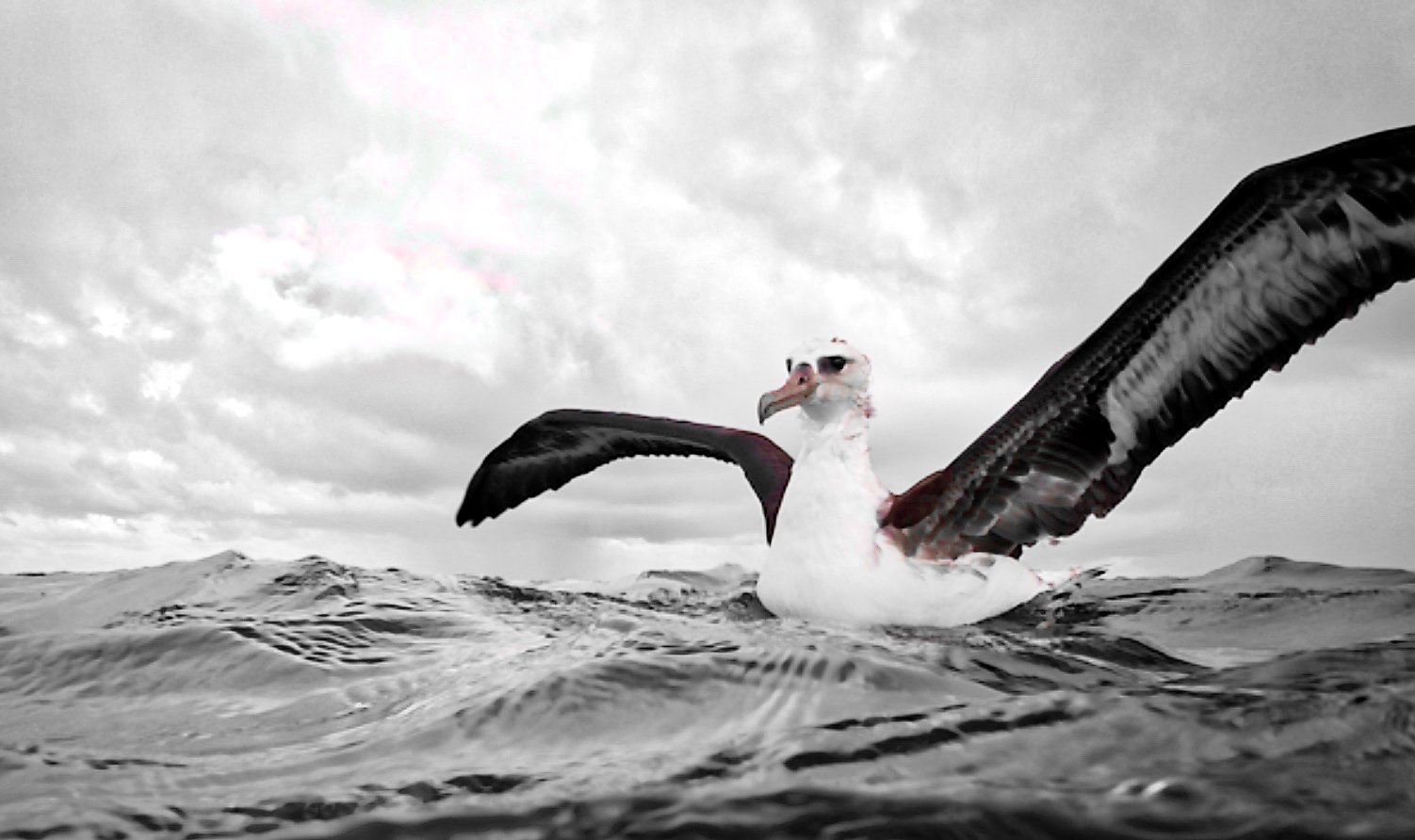
The lonely vigil of a scruffy, disheveled albatross chick waiting days on end on the remote Pacific island of Laysan for its mother to return from the sea with life-giving food is likely to leave an indelible impression on anyone who sees it. Survival against terrible odds is a recurring theme in World on the Move, the first hour of Netflix’s four-episode follow-up to 2019’s Our Planet, hosted and narrated with familiar urgency by David Attenborough. Even if the albatross chick should survive its early-life fight against slow starvation, dangers await. When it finally learns to fly on its own, ungainly and awkward on its maiden flight across the sea — more hop-and-jump than actual flying — swarms of tiger sharks, thousands of them, exact a deadly toll on albatross chicks that haven’t learned the life skills yet needed to survive at sea.

The real challenge, though — and the message that drives Our Planet II in its entirety — is that humans have made the chick’s fight for survival all the more daunting. “There is now so much plastic in our oceans that it reaches the most remote islands on Earth,” Attenborough says. Pictures say more than words, though, and the accompanying visuals — of the tiny chick dry-heaving, opening its beak wide, and struggling to regurgitate plastic crud its mother has mistaken for food — are impossible to ignore. Or forget.

Plastic, the detritus of our all-consuming lifestyle in a world driven by the insatiable pursuit of financial profit at any cost — is destroying the planet, piece by gaudy,

brightly colored piece.

We know this, of course, but it’s quite another to see it with our own eyes, in such wrenching, heartfelt detail.

These Attenborough-voiced programs are not a dirge, though. Without the moments of beauty and grace and dignity, there would be little reason to watch. Our Planet is a cautionary tale, but there is reason for hope, rooted in nature’s resilience and humankind’s collective potential for course correction.

World on the Move focuses on the migratory patterns of insects, birds, and land animals as they embark on often life-threatening journeys to feed themselves and their newborns, mate and breed, and find new homes. It’s a retelling of Homer’s Odyssey, featuring lions, walruses, and polar bears, among countless others, and it’s a marvel to witness. The cinematography is astounding, some of the finest of the entire Planet Earth canon, and is reason alone to watch. Cutting-edge drone technology allowed the size of the migrating megaherd of buffalos in the show-opening sequence to be counted for the first time — and revealed the herd to be more than 5,000 strong.

A sequence following a swarm of locusts in Ethiopia, filmed during the 2020 pandemic, shows locusts crossing entire continents in a wave of destruction … stopped only by ever-more-deadly pesticides.

The circle of life is fast becoming a doom loop, which is important to know if we are to have any hope of overcoming obstacles of our own making. Our Planet is vibrant, urgent — and disarming in its simplicity. It’s nature programming at its most earnest. And timely.

Next: a look at episode 2, Following the Sun.

Netflix/Silverback Films


Tags: Our Planet II, David Attenborough, nature programs, Netflix, albatross, Laysan, Pacific islands, plastic pollution, Our Planet, Planet Earth, Silverback Films, Alastair Fothergill, animal migrations

Netflix/Silverback Films

Our Planet II 2.0

June 17, 2023

Netflix’s follow-up to 2019’s Our Planet marks one of Sir David Attenborough’s finest hours

“The dangerous temptation of wildlife films,” Doug Peacock wrote in Grizzly Years: In Search of the American Wilderness, “is that they can lull us into thinking we can get by without the original models — that we might not need animals in the flesh.”

Our Planet, Netflix’s ambitious, eye-opening paean to the wild world, now back in a four-episode second iteration, was always going to be different from the David Attenborough-hosted nature series we’ve become used to seeing.

All the classic signatures are there — Sir David’s emotional, evocative narration; the wonder, the astonishing, at-times jaw-dropping cinematography — but this time, the emphasis was going to be about the changing world and how we humans are forcing many of those changes, just by our presence.

It’s a fine line to walk. As Attenborough himself once said, in a profile on the CBS newsmagazine 60 Minutes, about his early programs, no one wants to be told the Earth is going to hell and it’s all our fault.

Our Planet II opens with a hunt: lions in Botswana’s Kalahari down a cape buffalo from one of the largest known herds of buffalo on the planet.

From the air — visually, one of the big differences between Our Planet II and the original is that the latest edition relies heavily on drone technology, which has advanced dramatically in just five years — the sight is stunning … there could be thousands of buffalo down there. Literally. It’s a full-on mass migration, and that’s unique to that part of Africa. Buffalo normally gather in herds of 20 or so, and stake their claim to a particular territory. They move around, but not like this. This is unique.

The world is changing, Attenborough tells us in his narration, and wildlife must change with it if it is to survive.

We must change, too, whether we like it or not.

We, too, may soon bear witness to human mass migrations on a sweeping scale.

In some ways, we are already seeing it, with the migrant crossings across the Mediterranean. Just last week, hundreds of refugees, many of them from drought-stricken countries in sub-Saharan Africa seeking a better life in southern Europe, drowned at sea, so many that one NGO official described the Mediterranean as a ‘mass graveyard’ — this after an overcrowded boat carrying as many as 750 refugees capsized off the coast of Greece. Most of the victims drowned; at last count, little more than 100 survivors were plucked out of the ocean.

Without saying so in so many words — Attenborough makes no mention of climate refugees per se — Our Planet draws parallels between the natural world forced to co-exist with a world of our own making and an uncertain future for all life on Earth, and not just wildlife.

Over the coming days and weeks, I’ll review each episode of Our Planet II in sequence, with anecdotes from behind the scenes. The entire season is now streaming on Netflix, but there are moments here so wrenching and powerful they need to be absorbed slowly, over time, with time left between hours to think and reflect. This is not binge-viewing. Quite the opposite. The four hours stand alone by themselves, each on its own, and that is the way they need to be seen.

Much has been made of Netflix’s eclectic, high-profile series, some of which have become staples of popular culture, from Stranger Things to Squid Game and Lupin, but for me, the Our Planet series is the most important, the most meaningful, and the biggest reason for being. It’s not just a prestige documentary — it’s a living testament to life on Earth, and what remains of it.

Next: an in-depth look at episode 1, World on the Move.

Netflix/Silverback Films


Tags: David Attenborough, Alastair Fothergill, Our Planet, Our Planet II, mass migration, animal migrations, human migrations, climate refugees, Netflix, Silverback Films, Life on Earth, humanity, nature programs
Prev / Next

Journal

"Forget whatever should be forgotten, so that you can remember what should be remembered."


Featured Posts

Featured
DSC-Ishanga fully grown. Image(s) courtesy of the David Sheldrick Wildlife Trust-DeNoiseAI-raw-DeNoiseAI-raw.jpg
August 27, 2026
Summon the Heroes
August 27, 2026
Read more →
August 27, 2026
1. Mauro González:Netflix.jpg
August 10, 2026
One Hundred Years of Solitude revisited
August 10, 2026
Read more →
August 10, 2026
africa_0107.png
July 30, 2026
At Loliondo with Corbett Bishop
July 30, 2026
Read more →
July 30, 2026
squarespace1.png
July 11, 2026
Hippos: Reality Bites
July 11, 2026
Read more →
July 11, 2026
©  serengeti watch.jpg
June 29, 2026
Mayhem in the Mara
June 29, 2026
Read more →
June 29, 2026
DSC_1667.png
June 18, 2026
Tarangire Tracks
June 18, 2026
Read more →
June 18, 2026
1.bourdain.png
June 8, 2026
Remembering Bourdain
June 8, 2026
Read more →
June 8, 2026
DSC_0269 7.28.18 AM.JPEG
June 3, 2026
Letter from Tsavo
June 3, 2026
Read more →
June 3, 2026
maasai1 2.jpeg
May 21, 2026
“It’s Like Killing Culture"
May 21, 2026
Read more →
May 21, 2026
1.Screenshot 2026-05-07 at 2.44.32 AM.png
May 7, 2026
A Centenary for the Ages
May 7, 2026
Read more →
May 7, 2026