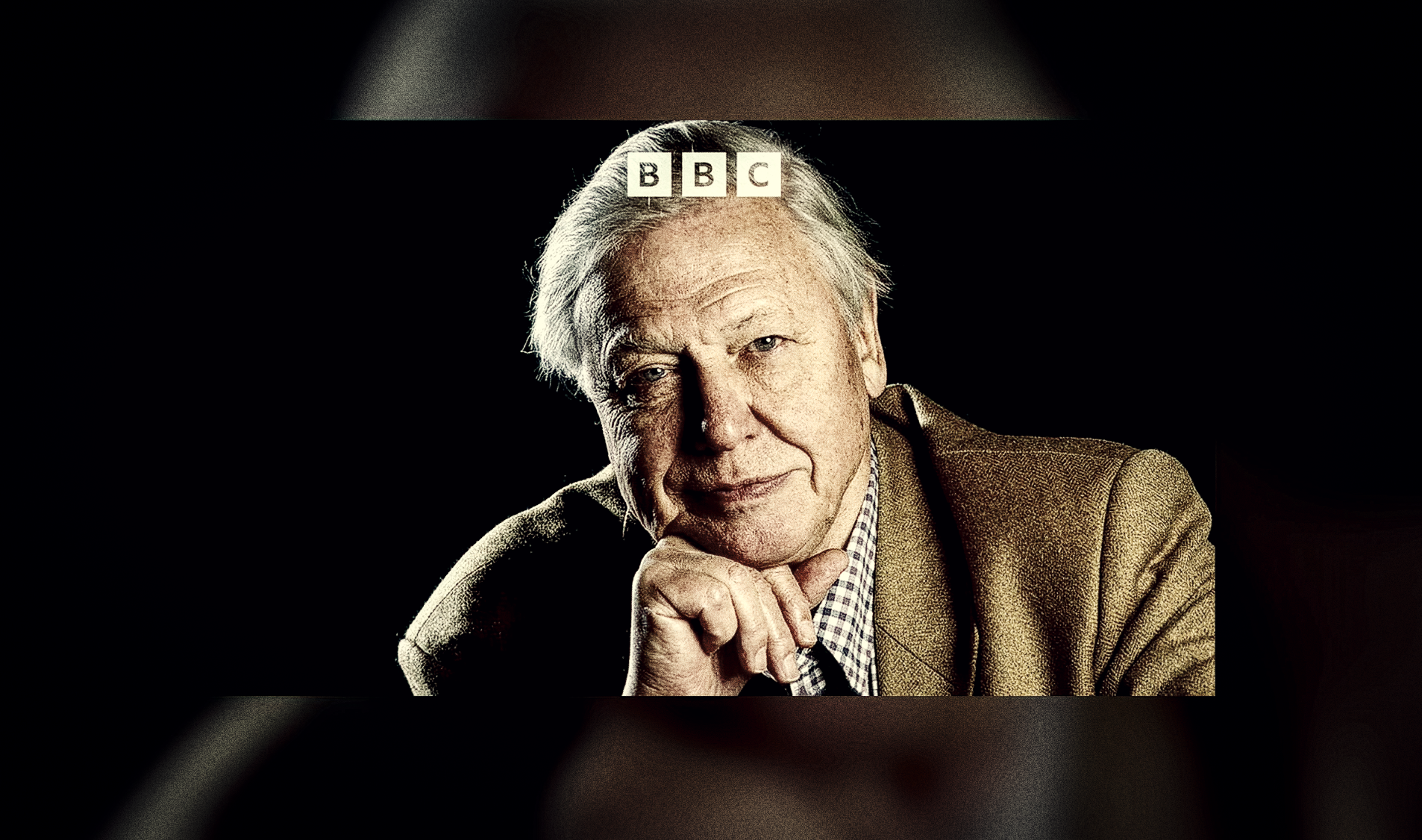
As David Attenborough turns 100, our planet faces an uncertain future. It was ever thus — but he’d be the first to tell you that’s no reason to give up. Not now. Now, we need hope, and action, more than ever.
Just so.
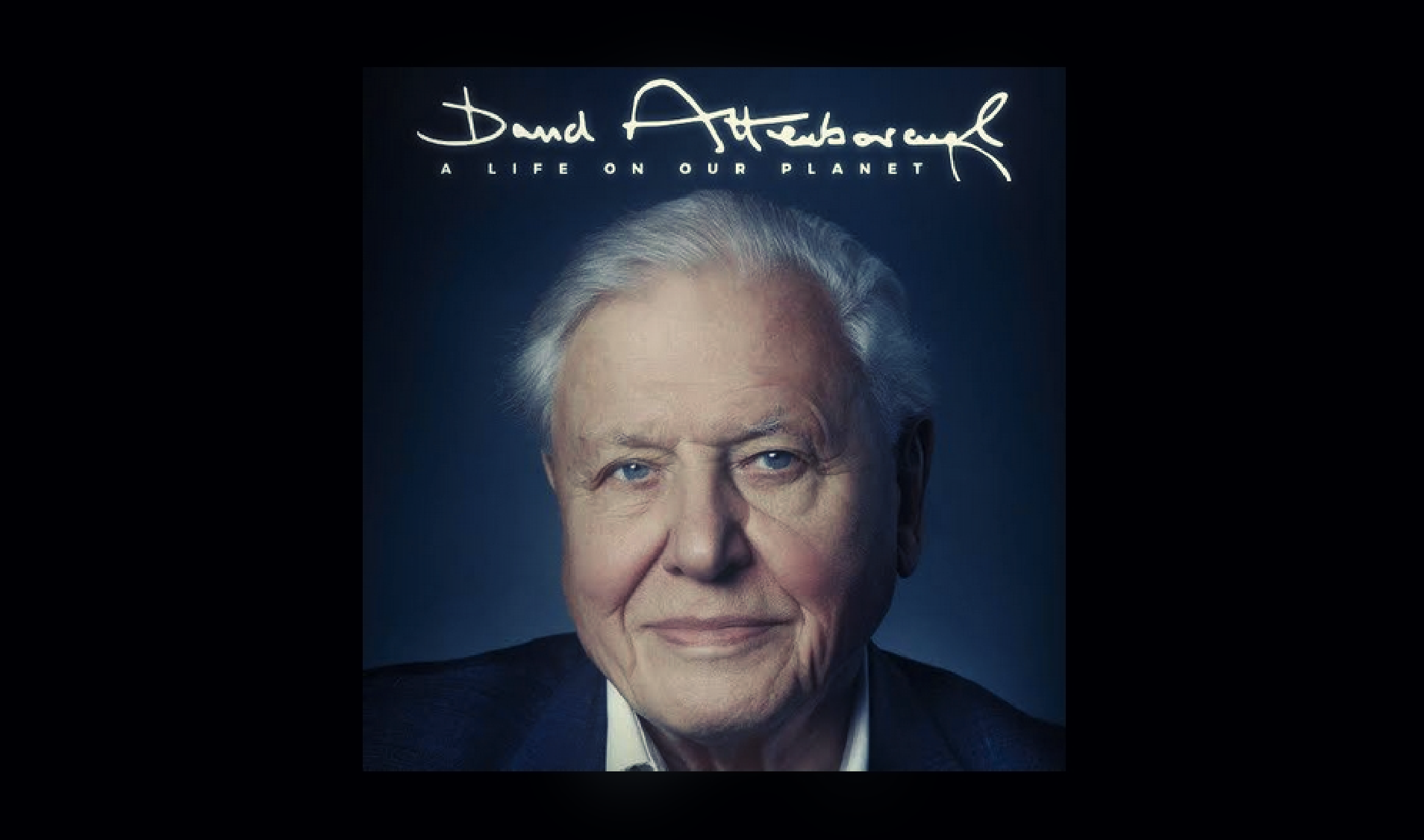
“I have had the most extraordinary life,” David Attenborough said in his self-described witness statement for filmmaker Jonnie Hughes’ A Life on Our Planet, recorded in May 2018, on the occasion of the natural historian's 92nd birthday. “It’s only now that I appreciate just how extraordinary.”
He could not have known it then, but even something as seemingly simple and straightforward as a documentary film based on his life of exploring natural history and sharing what he found with an eager, appreciative global audience, would find itself being buffeted by the the capricious whims of fate. A Life on Our Planet was supposed to be released in theatres in April 2020, a week in advance of Earth Day.
And then COVID-19 happened.
Uncertainty reigned. In an eerie reflection of Attenborough’s lifelong concern with the environment, burgeoning world population, rising levels of carbon dioxide in the atmosphere, and the human-made forces threatening to tear apart what's left of the wilderness, there is not a single life on the planet that COVID did not touch in some way.
Mass vaccination campaigns and hybrid immunity reduced the severity of cases over time, even as the virus evolved to become more contagious but less severe. It could just as easily have gone the other way.
Today, the emergency phase may have been consigned to recent memory — but the virus itself continues to be circulate globally and is still being monitored.
As it was, A Life on Our Planet finally saw light of day in theatres in September of the COVID year; a month later, it made its streaming debut on Netflix.
There is a special irony that A Life on Our Planet opens in Chernobyl, as it was in 2018, in Pripyat inside Chernobyl’s Exclusion Zone, a ghost city frozen in time, 40 years after the 1986 disaster.
Ruined schools and apartment blocks are overgrown with trees; a rusting Ferris wheel, a symbol of the abandoned, silent urbanscape, lies at the heart of the abandoned city, both sentinel and silent reminder.
Wolves and other wildlife roam through the forest — for them, life goes on. Hidden secrets remain: do not think the radiation has somehow miraculously vanished. Long-lived isotopes like plutonium-239 will remain for thousands more years, though it is believed some areas will be safe for human habitation in another 300 years, give or take, as isotopes like Caesium-137 and Strontium-90 decay.
A handful of areas are safe for short-term visits — Attenborough survived it after all — but other areas will remain contaminated for 20,000 years, possibly more.
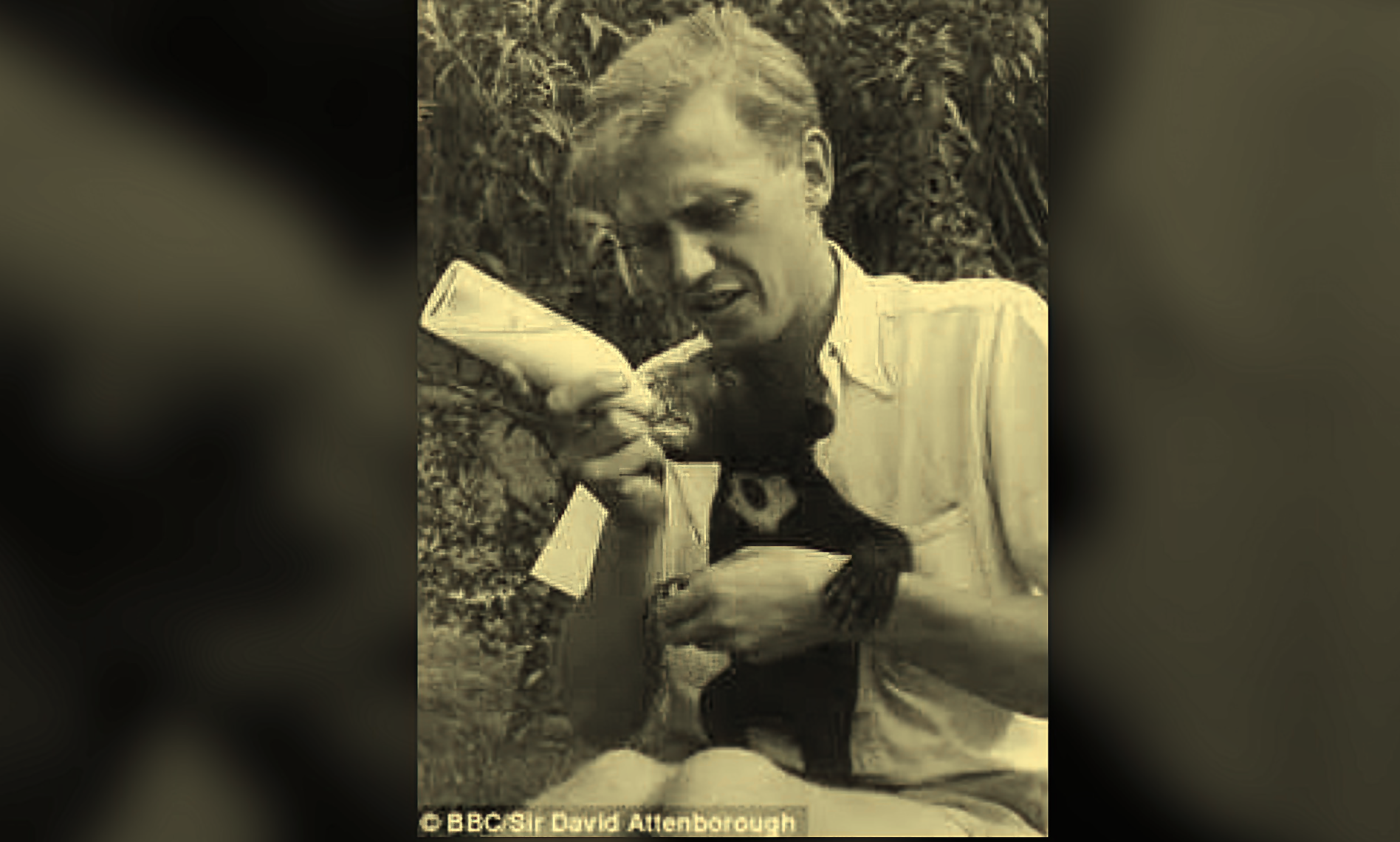
©BBC/David Attenborough
Chernobyl’s lessons have not been learned, though. War in Ukraine has seen to that…
Today, as Attenborough turns 100, he will have time enough to once again reflect on a life lived, and the world's prospects for a safe, green future. That future looks bleak indeed, right now, on 8 May 2026.
I didn’t intend this piece to be a hagiography. There will be plenty enough of those … and by better scribes — and deeper thinkers — than I. After all, there have been few public figures more admired and appreciated than this soft-spoken man born in Isleworth, West London, on 8 May 1926.
Still, even so, his life bears closer scrutiny, just the same.
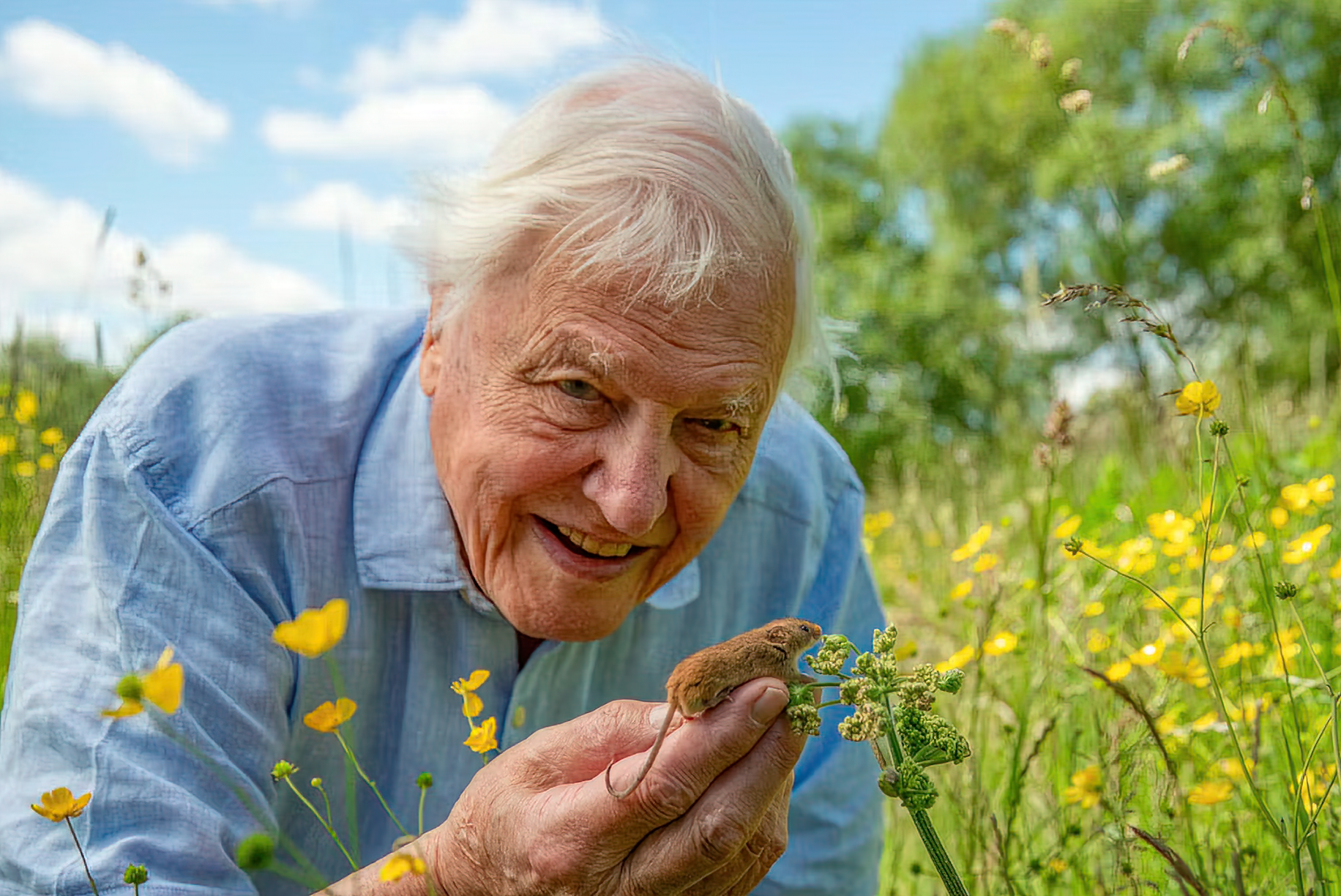
Over the course of a lifetime he has given voice to those creatures unable to speak for themselves. He has touched people on a global scale precisely because because he is neither strident nor a shouter. He is soft-spoken on the screen, a whisperer, a gentle advocate for nature. with nothing to sell but his passion for the natural world.
His enthusiasm for nature is real, genuine, authentic, palpable, without the cynicism and condescension that makes so many other environmental messengers appear insufferable by comparison.
The “Attenborough Voice" is calm, soothing — never shrill or hectoring. Intimate. Singular. Unmistakable. Distinctive. His voice is a comforting presence for millions, even as the world around us appears to be unravelling.
He has that rare, unique ability to bridge the divide between science and entertainment. He speaks to everyone, not just a select few.
As a storyteller he is unmatched.
His work in television has been described as “reality TV for realists” but in truth there is do much more to it than that.
He is marked by his seeming humility. He comes across as gentle and kind; his focus is on the subject and never himself. It’s never about him. It has never been about him.
During these later stages of his career, he has become more outspoken on issues to do with climate change, overpopulation, biodiversity loss, and the damage we are doing to ourselves.
He has stayed this course, even as his critics — and they are legion — insist that he came to these realizations too late, that he could have done so much more, put his platform — and the massive global following that platform accrued — to better use.
The naysayers fail to see that he achieved what no others before him had done, which was to make people care about nature, and care passionately, whereas before they might not have given it a second thought.
He worries now. He worries terribly. For his entire life he has been a champion for the planet, and for the wild beings that inhabit it. A beacon of hope for millions.
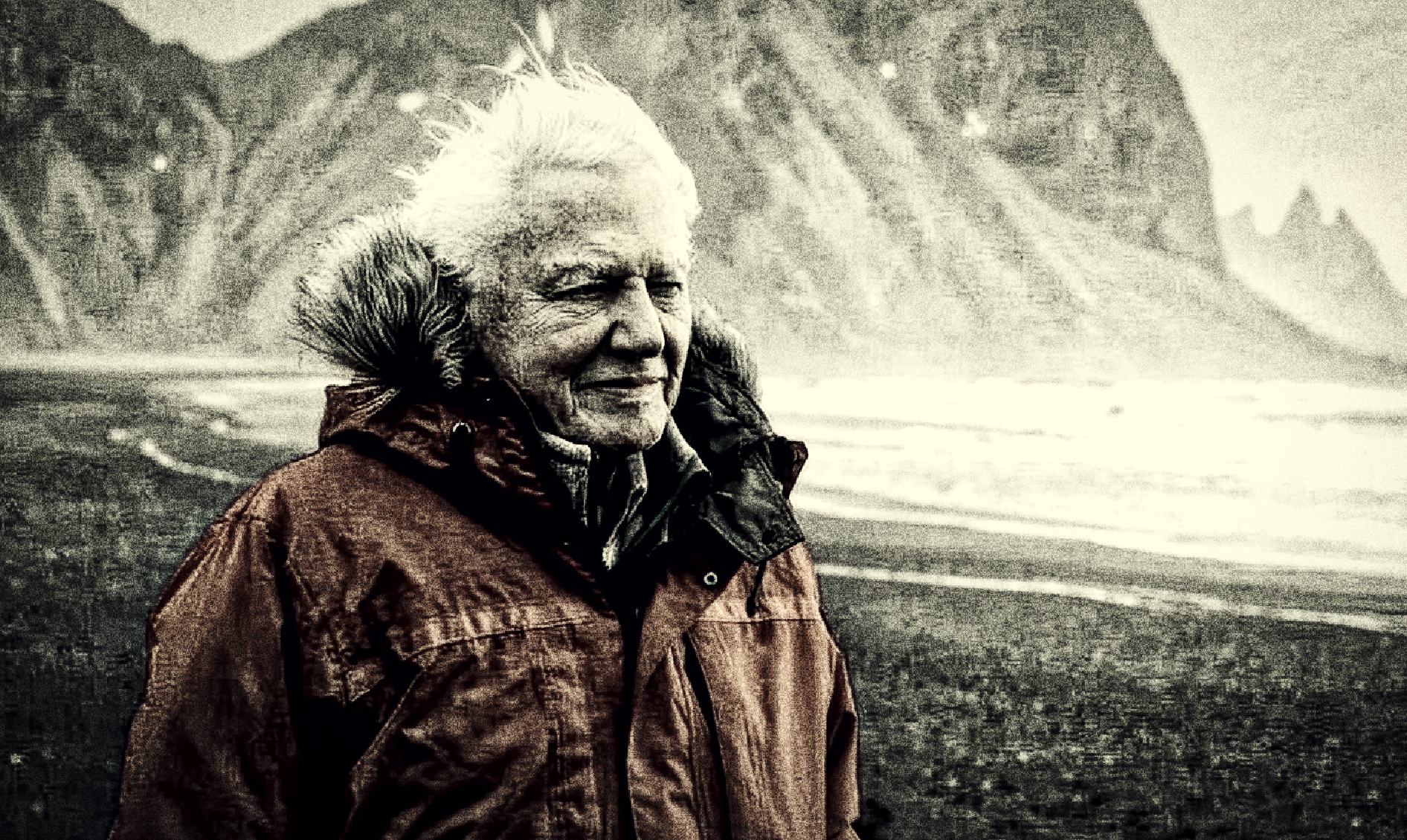
©BBC Studios/Alex Board
His focus, starting with Coelacanth in 1952 and working through to A Secret Garden in 2026, has been to inspire others to action.
It has not always been easy, though, and he has not been immune to self-doubt.
In a private, personal admission to his good friend Jane Goodall — as later recounted by Goodall herself — Attenborough admitted to feeling increasingly overwhelmed by the state of the planet. He felt a growing despair for the future. He wondered if he had done enough.
Goodall told him that he judged himself too harshly, She told him that his singular achievement was in uniting the planet through his passion, giving untold millions a cause they could believe in, a cause rooted in hope, as she herself tried to do with her book Reason for Hope, and her Roots & Shoots advocacy program for young people.
The secret, she told him, was — and still is — in spurring others to action.
Jane Goodall passed in October of this past year, and the world feels her loss keenly. We live in the world, and the world is thus.
If I have strayed too close to hagiography, I am sorry. That was not my intention. Sometimes, though, we must simply accept the natural order of things. Do we live in the world thus, or this have we made the world?
The last word, as seems only fitting, belongs to Attenborough, from his witness statement in A Life on Our Planet:
“We have come as far as we have because we are the cleverest creatures to have ever lived on Earth … but if we are to continue to exist, we will require more than intelligence. We will require wisdom.
“We often talk of saving the planet, but the truth is that we must do these things to save ourselves.”
There was more.
“We live our comfortable lives in the shadow of a disaster of our own making. That disaster is being brought about by the very things that allow us to live our comfortable lives …
“We humans, alone on Earth, are powerful enough to create worlds, and then destroy them.
“The next few decades represent a final opportunity to build a stable home for ourselves and restore the rich, healthy and wonderful world that we inherited from our distant ancestors. All we require is the will.
“Our future on the planet, the only place as far as we know where life of any kind exists, is at stake.“
Just so.
©BBC-Passion Planet/Joe Loncraine
©Netflix