• Fotografica Africa
  • Stories
  • Menu

Strachan Photography

  • Fotografica Africa
  • Stories

CNN

Bourdain in Madagascar

July 20, 2024

“He was a poet of life.” Filmmaker Dareen Aronofsky on Anthony Bourdain, after the two visited Madagascar and then Bhutan for CNN’s Parts Unknown.

Over the years, Anthony Bourdain allowed a great many extraordinary landscapes — his words — only to have them fade into a blur outside his windows. “I’ve looked, maybe seen, maybe noticed, then gone,” he intones in his opening voiceover for Madagascar, the fifth-season episode of CNN’s Parts Unknown that first aired in May 2015.

“We all carry different experiences inside us. We see things differently, don’t we?”

Madagascar, the world’s fourth largest island by area, left an indelible impression on Bourdain’s psyche, and the result is plain to see in Parts Unknown. The journey which Bourdain undertook with avant-garde filmmaker Darren Aronofsky (Pi, Requiem for a Dream, Black Swan, and others) caught him in an unusually pensive, reflective mood, even by his standards. The break-up of his first marriage affected him deeply, and Madagascar, an island of almost unparalleled beauty — and scene of almost apocalyptic environmental ruin — will remind long-time Bourdain followers of his 2011 visit to Haiti for No Reservations, which he undertook during a cholera outbreak shortly after an earthquake killed 3,000 people in a single day, and with a hurricane looming on the horizon. A moment toward the end of Madagascar, in which Bourdain and Aronofsky are surrounded by hungry children while sampling a smorgasbord of local food delicacies, has uncomfortable parallels with a similar moment in that No Reservations episode in Haiti, where Bourdain broke bread and talked social injustice with Sean Penn, who was running a local aid project at the time.

“Madagascar,” Bourdain continues in his opening monologue, “exotic, unspoiled paradise, or microcosm for the end of times?”

Real life is no Disney cartoon. This much we knew, of course, but this Madagascar really breaks it down.

Over the years, there have been any number of reasons to watch Parts Unknown, even a decade after its making, but Madagascar is unique in that it provides viewers a glimpse into the process of making one of these episodes — a look, if you will, of how the sausage is made.

That’s in no small part because Bourdain wanted the episode to reflect Aronofsky’s signature style of filmmaking — surrealism, rooted in social consciousness. Visually striking but also emotionally involving. Entertaining and reflective by turns.

In an essay Bourdain penned for CNN’s Field Notes at the time, he shared some of the deepest thoughts of his entire 12-season odyssey with Parts Unknown.

“Travel is not always comfortable,” he wrote, “even when the scenery is at its most beautiful. Look out the window, get too close, and the reality of the situation — the world you will soon be leaving behind — intrudes.

“On Parts Unknown … we make choices all of the time. Choices about what I will show you of what I saw and experienced during my limited time in a destination, and choices about what I won’t. It’s my show. I decide where we go. I decide what we do when we get there. And I decide what we show you when we edit down 60 to 80 hours of footage to 42 minutes.

“That is a manipulative process. And not, inherently anyway, a bad one. I want you, the viewer, to feel the way about a place the way I want you to feel. I want you to look at it and see it from my point of view, if at all possible. Or at least consider other points of view.

“But it is, almost always, one point of view—or one lens through which you see: mine.”

At the time time, people often asked Bourdain what it would be like to accompany him on a film shoot.

“Now you will see. We look at Madagascar, in many ways, through Darren’s fresh set of eyes. It’s a useful reminder, worth having, that what you see on the show is not the only angle. That we are looking at the world out my window, but that there are other windows — that maybe I’ve omitted or shaded something, if only to present myself in a more flattering light.”

Aronofsky approached Bourdain interestingly, not the other way around.

Bourdain was “thrilled, honoured and delighted” — again, his words — to draw the attention of an acclaimed filmmaker whose work he admired, but he had one proviso.

“My only request was that he shoot some footage—with whatever device he wanted to use. And that, at some point, he give us his version of at least a portion of the show for which we have already seen my version.

“So, in Act 6, you will get an example of what may or may not be missing from the shows we make. An ugly, uncomfortable reminder that it’s not just pretty pictures and neat, hopeful sum-ups. It does not, I’m pretty sure, portray me in the best light. Or any of us, for that matter. But there it is. I thought it was important.”

When Bourdain passed on 8 June 2018 — years ago now, though it still feels like yesterday — Aronofsky was among those CNN approached to pen a eulogy of sorts. The two would later travel together to the mountain kingdom of Bhutan for a Parts Unknown episode.

Aronofsky’s words, written just four days after Bourdain’s passing, resonate to this day.

“I was asked to share some thoughts on my time with Tony in Madagascar and Bhutan,” he began. “I’ve been staring at a blank page for days. His death is incomprehensible. I don’t know how to process him being gone.

“I do remember how easily words flowed from him. He made it seem so effortless. He was a poet of life. So I’ll let that inspire whatever flows now.”

And, at the end:

“You turned a light on what it means to be a human right now, right here on planet Earth.

“Thank you for letting me tag along and witness a master storyteller shape the unexpected into the relatable and unforgettable.

“I will never forget how passionate you were about life and this world. You loved love, cinema, food, artists, people, idiosyncrasies, pain, relief, martial arts, chefs, music, the Lower East Side. You loved the whole damn world (even the parts you despised). And the whole world loved you.”

Bourdain was seemingly incapable of producing an underwhelming hour of television, even with the passing of time, but Madagascar, for me, is on a whole other level. Now seems as good a time as any to revisit it.

Supplementary reading:

    https://explorepartsunknown.com/bhutan/anthony-bourdain-darren-aronofsky/
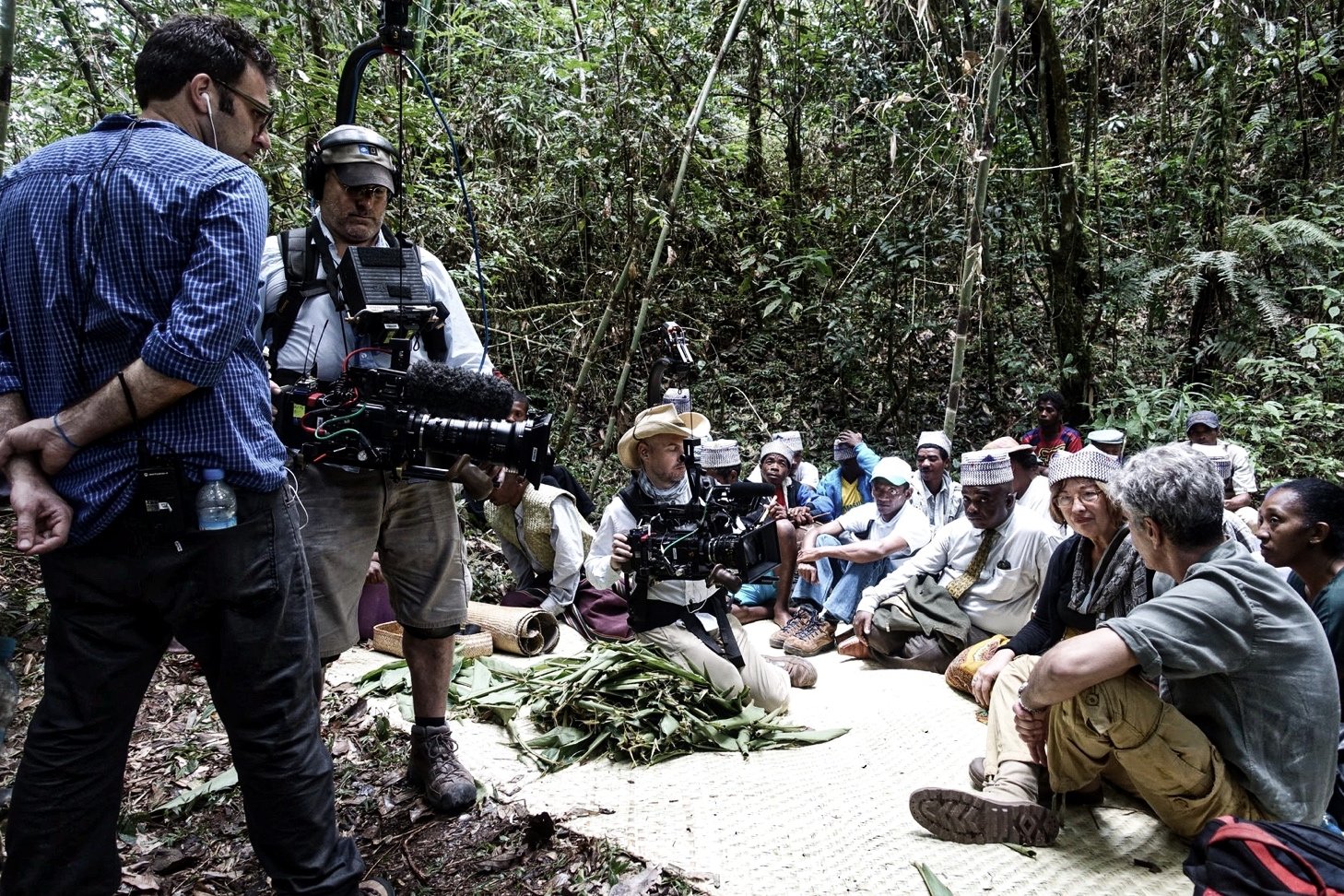
    https://www.foodrepublic.com/2015/05/18/what-its-like-to-film-anthony-bourdains-parts-unknown-in-madagascar/

CNN


Tags: Anthony Bourdain, Parts Uknown, Tom Vitale, Zach Zamboni, CNN, Madagascar, Darren Aronofsky, Haiti, Sean Penn, Zero Point Zero Production, environmentalism, conservation, lemurs, Bhutan, Food Republic

CNN

Bourdain in Tanzania

May 29, 2024

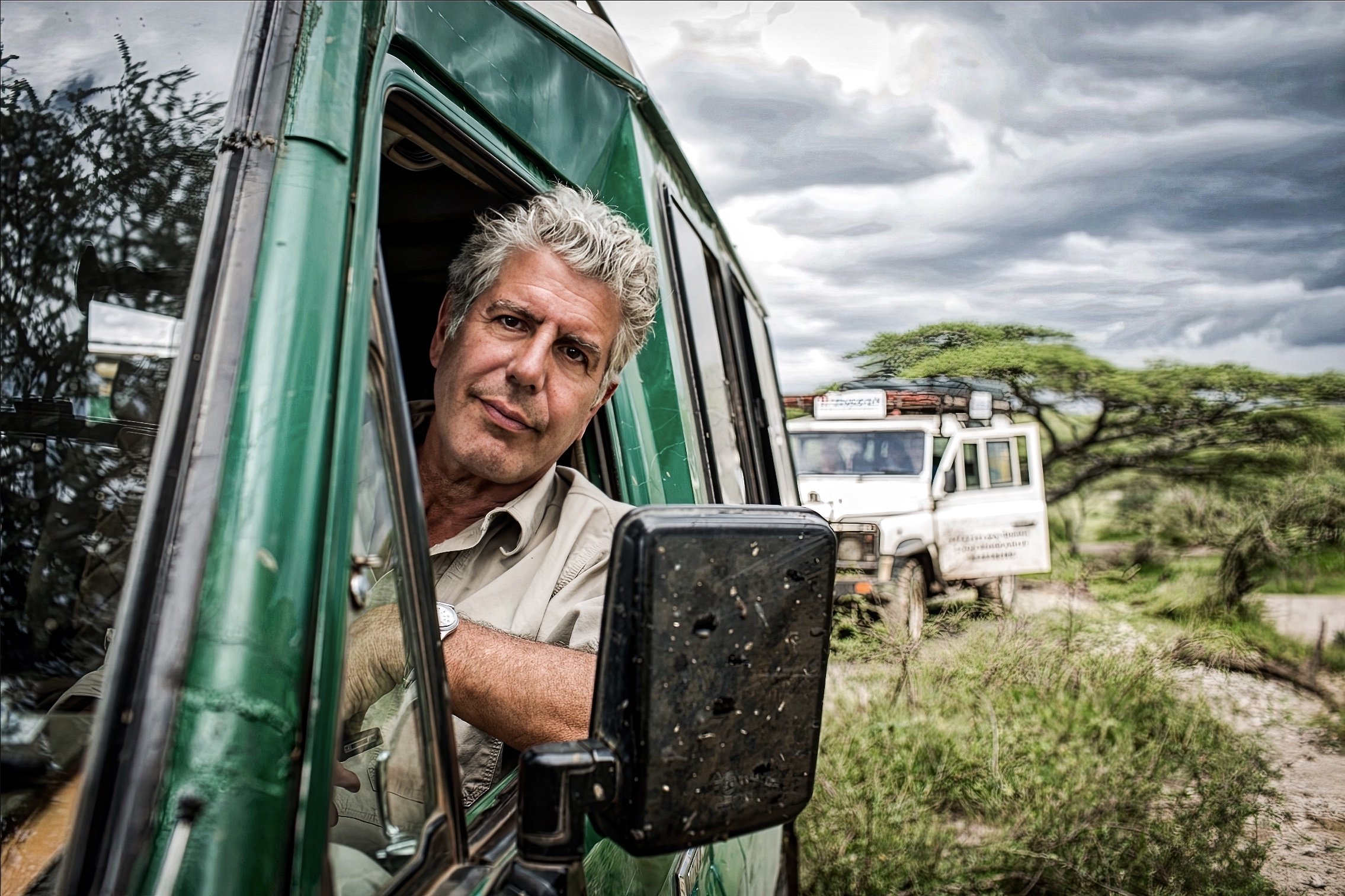
“I went looking for the dream of Africa. I woke up in Tanzania.” This was Anthony Bourdain on East Africa, in 2014. As with so many explorers before him, from David Livingstone to Sir Richard Francis Burton and Henry Morton Stanley, he found what he was looking for.

This one was personal for me.

I have been to Tanzania numerous times as a wildlife photographer, a wanderer curious about the birthplace of humankind, and an admirer of Anthony Bourdain’s work and life outlook.

Palaeoanthropologist Mary Leakey’s discovery in July 1959 — the year I was born — of the Laetoli footprints, 3.75 million-year-old fossilized hominid remains at Olduvai Gorge in the Serengeti plains of northern Tanzania, included a jaw bone of one of our earliest recorded ancestors, Zinjanthropus boisei — literally “East Africa man.”

The name was later revised to Australopithecus boisei, the australopithecines being the closest known relatives of modern humans and potentially the missing link between the hominid split from the apes of the mountain forests to Tanzania’s west and who we are today.

If nothing else, this is where humans learned to walk upright, on two legs. That’s a big deal!

It makes perfect sense that the lure of Africa — “I went looking for the dream of Africa. I woke up in Tanzania,” Bourdain said in Tanzania’s opening voiceover in a CNN Parts Unknown episode from 2014 — would prove irresistible to a philosopher traveller who, in four consecutive episodes in what would prove to be Parts Unknown’s arguably strongest season, lifted the veil on Paraguay, Vietnam, Tanzania and Iran over four weeks in October and November 2014.

As an admirer of Tony Bourdain’s work and life outlook — albeit as a latecomer to the Bourdain oeuvre — I was curious how he would approach Tanzania. What, if anything, would he get wrong?

Nothing, as it turned out.

It’s a strong episode, one of his finest, but possibly only someone close to it can truly understand just how much thought went into it, much of that thought not evident on the screen. This is not your typical touristy what’s a good place to stay and eat TV travelogue (“and now a word from our sponsors”). This was deeper. This was Bourdain.

For starters, take another look at the name Zinjanthropus. Zinj is the ancient Arabic word for the East African coast, and it was from here — Zanzibar, to be exact — that many of the early European expeditions were launched. It was from Zanzibar, in January 1866, that David Livingstone, of “Dr. Livingstone, I presume” fame and (mis)fortune, ventured into the heart of Africa, tasked by the Royal Geographical Society in London to map the country between Lake Nyasa and Lake Tanganyika to solve once and for all the dispute over the exact location of the source of the Nile. It was from Zanzibar, too, that Henry Morton Stanley ventured into the heart of Africa in March 1871 with no fewer than 192 porters by some accounts, to suss out what the hell had happened to Livingstone after Livingstone was reported missing and presumably lost to history.

This is the first thing that Bourdain and Parts Unknown’s producers got right: He begins his journey to the Serengeti plains and Ngorongoro highlands in Zanzibar, in the winding alleys of Stone Town, an old, stone-walled city redolent with the atmosphere and cultural influences of Islam, India, Asia and mainland Africa, a semi-autonomous island state just 30 miles off the African coast and birthplace of the Swahili language, an amalgamation of Bantu, Arabic, Portuguese, English and German “loanwords” and the unofficial national language of the entirety of East Africa. Little known fact:

Zanzibar is world famous — and rightly so — for its seafood; its fish market is one of the busiest, noisiest, most crowded, most active markets on the entire continent of Africa (54 countries, if anyone’s counting, depending on military coups, civil wars, regional splits and the redrawing of international borders). In Tanzania’s opening section, in the shadow of the actual stone house where Livingstone stayed on numerous occasions and where, as a commemorative plaque notes, “his body rested on its long journey home,” Bourdain goes potty for seafood, perhaps mindful that, as delectable as Zanzibar’s cuisine is, he won’t see anything like it once he ventures into Tanzania’s interior. In the Maasai tribal lands of Ngorongoro and Ol Doinyo Lengai, the Maasai “Mountain of God,” the food is pretty much as it has been since the 15th century, name: basic.

Fun fact: The hardest section by far of those early European explorations of the African interior from Zanzibar was the first 200 miles — basically, snake-infested, insect-ridden, hot-hot-hot, humid, virtually impenetrable swamp, home to virtually every tropical disease known to science and humankind, a stretch of African wilderness so gnarly and nasty and outright unfriendly to human habitation that many 19th-century expeditions simply gave up, turned around and tried to make it back to Zanzibar in one piece. Most weren’t able to manage even that.

So Bourdain, a 21st-century man living in the 21st century, does the prudent thing: He flies.

Another fun fact. The flight, by single-engine bush plane from Zanzibar to the safari outfitting town of Arusha in Tanzania’s northern district, is arguably one of the most stunning scenic flights in the world, because it takes you over the Maasai Steppe — itself no fun to cross in the 19th century as the local tribesmen were only too happy to waylay and shiskebob passing Europeans — and over the shoulder of Mt. Kilimanjaro, a mountain so vast that to fly right over its shoulder is a stunning, and sobering, sight in its own right. Landing in Arusha, Bourdain hops into a 4-by-4 on the long and winding road to Ngorongoro and from there, into the Serengeti plains.

Bourdain is acerbic, cynical, sharp as a tack and rarely at a loss for something to say — we know this. There’s something about the proximity of so many wild animals of so many different species, though — lions, elephants, hippos, giraffes, zebras and 1.5 million wildebeest (this, hard as it may be to believe, is actual fact) — that he’s stunned into a kind of silent reverie.

His host for this section of his expedition is not some cloying, overly chatty tour guide but Ingela Jansson, a Swedish field biologist with the Serengeti Lion Project (lionresearch.org). These are not zoo lions or circus lions but the real thing.

In my own travels through Africa’s wilderness regions, I’ve found that field biologists and conservationists working in the field, in places like the Ngorogorongo Conservation Area Authority (https://www.ncaa.go.tz) and Serengeti National Park make the most reliable and forthcoming hosts, should one be fortunate enough to meet them and convince them you’re not wasting their time — something Bourdain and his producers clearly got.

Bourdain spends time in a Maasai village, breaking bread to speak with the village chief and, in one poignant scene, appearing visibly shaken by being invited to participate in the killing, skinning, dismembering, cleaning, and cooking of a goat for the ceremonial meal provided to village guests of certain repute and status in Maasai society.

Bourdain also touches on the political tensions between the Maasai people and the national government in Tanzania’s capital, Dodoma. Official policy is to favour tourism and regional development over the rights of indigenous people who actually live on the land, a policy that, if anything, has become even more fraught today, in June 2024.

A young Massai moran running over the savanna both begins and ends the program, a kind of moral, philosophical and spiritual bookend.

The effect is pure Bourdain — visual and yet subtle and heartbreaking by turns. No, this is not your typical TV travel documentary.

I’ve penned a number of “look back” reviews of Parts Unknown for the group in recent weeks. If I seem to have been particularly inspired by this one, it’s in no small part because I wrote this while listening to the music of Mali guitarist and singer/songwriter Rokia Traoré — thank you, Spotify — and as anyone with even a passing familiarity with wild lions will tell you, music hath charms to soothe the savage breast.

I remember the first time I saw the chain of green, mist-laden volcanoes that, viewed from a distance, form the spine of the Ngorongoro highlands, a chain of sloping green hills that rise from the dusty plains of this part of East Africa, like a vision out of Jurassic Park, if dinosaurs rampaging across a jungle island were actual dinosaurs rampaging across a jungle island. I remember thinking, as Bourdain himself may have thought, in his own words, holy f**k, this is where it all began. It’s impossible to look at the misty hills of Ngorongoro and not think, something happened here.

Bourdain felt it, clearly. It’s one of the reasons why, for me, Tanzania represents some of his finest work.

The green hills of Africa came first in the development of humankind. Mesopotamia, the Mediterranean, ancient Egypt, the Levant, the original civilizations of Babylon and Persia and the violent turmoil that roils the Middle East to this day, all came later.

At the outset of Tanzania, I worried about how Bourdain might screw it up, especially considering the impossibly high standards he set in his other, earlier Parts Unknown programs. I feared it would prove something of a disappointment.

No worries there, as it turned out. Trust me when I say this — Bourdain nailed it bang-on. That’s who he was. That’s why we recognize him and respect him and honour him to this day.

Supplemental reading, in Bourdain’s own words:

    https://explorepartsunknown.com/tanzania/bourdains-field-notes-tanzania/

    https://explorepartsunknown.com/tanzania/bourdain-off-the-cuff-tanzania/

CNN


Tags: Bourdain, Tanzania, Anthony Bourdain, Parts Unknown, CNN, Tony Bourdain, TanzaniaZanzibar, Zanzibar, Swahili, Livingstone House, Ngorongoro, Serengeti, Serengeti Lion Project, Mary Leakey, Oluvai Gorge, Laetoli Footprints, Zinjanthropus boisei, Australopithecus boisei, early humankind, Arusha, Maasai, Masai, Ol Donyo Lengai, Ngorongoro Conservation Area Authority, lions, Royal Geographical Society, Dodoma, Jurassic Park, Rokia Traoré, conservation, indigenous

CNN

Bourdain in South Africa

March 13, 2024

Nelson Mandela was 95 and had taken ill when Anthony Bourdain visited South Africa’s largest city 11 years ago for CNN’s Parts Unknown. Mandela’s spiritual presence endures to this day, despite the country’s still uncertain future.

Undoubtedly, some Parts Unknown docs resonate more with viewers on a personal level than others. South Africa, which bowed on CNN in October 2013 toward the end of Parts Unknown’s sophomore season, strikes a chord in me since present-day South Africa is a state I know well. Like Anthony Bourdain, I have spent more time in Johannesburg than the more familiar—and more touristy—Cape Town.

Bourdain’s decision to focus on Joburg, or Jozi as many of the locals call it, is reflective of his swim-against-the-tide style and global worldview, though. There is probably no other travel documentary filmmaker on the planet who would have gone to South Africa and chosen to focus on … Johannesburg.

It’s apparent why, though, in South Africa’s opening moments. Yes, Nelson Mandela was incarcerated in a 2x2 meter jail cell on Robben Island Prison off the coast of Cape Town for 18 years (“Prison,” Mandela would later write, “far from breaking our spirits, made us more determined to continue with this battle until victory was won”). Mandela’s soul and raison d’être were rooted in the Johannesburg township of Soweto, though, and it was Soweto — and Johannesburg as a whole — that became symbolic of the anti-apartheid struggle as a whole. South Africa’s opening shot is of a bemused Bourdain scowling at a statue — still standing to this day — of Boer settlers with big guns fending off the hoards of “darkies” who don’t belong in the place where they were born and raised.

Bourdain: “They don’t look friendly. Who are those … anyway? Some ugly Dutch guys, it looks like, with guns. I’m guessing friendly to the current (apartheid) power. They look like they’re going to, or coming from, oppressing a black man. First order of business, man. When I take my country back, first order of business is to take that [deleted] down. Am I right or what? I’m kind of amazed (it’s still there). Tear that [deleted] down.”

Food has its moments in South Africa — a delectable brai, a barbeque, prepared, served and consumed outdoors in the fresh air, naturally, with the emphasis on meat and sausage, naturally — but Bourdain always intended this to be an exquisitely personal geo-global political and sociological show, which is why it was made for CNN and not the Food Network. Enough with the statue of ugly Dutch guys with guns, Bourdain quickly turns to the subject that really interests him: Mandela and how the people of South Africa have navigated the post-apartheid years, not always successfully but with an enduring hope and human resilience.

Bourdain again:

“In July 2013, when I went to South Africa, 95-year-old Nelson Mandela was critically ill. And the country he freed from white minority rule was already in mourning.

And already fearful of what the future might be without him. … So a good friend of mine, a really great travel writer, said something. The more I travel, the less I know. I feel that paerticualrly strongly here in South Africa, a place I came in a state of near total ignorance, loaded with preconceptions.”

Moments later, watching soccer over beers in a shebeen — “the perfect place to watch a game, talk about a game, drink yourself silly over the results of a game, or just have a very fine local-style meal … There are a lot of places like this; I mean, this used to be the garage or the carport, right?” — Bourdain is beginning to get it, though he knows it’s going to take a lot more than a flying visit and a TV program to get to the bottom of what really makes South Africa tick.

“In what was once a garage are now six tables. A lawn-turned-lounge out back. Closed on Sundays if Grandma’s visiting. These kinds of bars were born during apartheid times when black South Africans not allowed to own businesses in white areas adapted and improvised. They did their own thing. Created these little micro, under-the-official-radar restaurants known around here as eat houses.”

Generally speaking, Bourdain asks his hosts moments later, “Are these good times in South Africa? Bad times? Transitional times?”

1994 was the peak of good times in South Africa, he’s told.

“Then, now with other politics, you know,” Bourdain is told, “other parties fighting, it’s quite tense now.”

That was in 2013. Today, in 2024, that much hasn’t changed really.

Bourdain: “The ANC (African National Congress, Mandela’s founding party) is not universally loved anymore. In recent years, they’ve been criticized for inaction, corruption, and cronyism. And opposition parties are gaining strength.”

Toward the end of the program, after the brai, after the gunning down of an eland, the world’s largest antelope — a scene I could have done without, and Bourdain too, judging from his momentary qualms — Bourdain takes a moment to reflect, in only the way he knows how.

“What did I know about South Africa before I came here? Exactly nothing, as it turns out. But I think, based on what I've seen, that if the world can get it right here, a country with a past like South Africa's if they can figure out how to make it work here for everybody. absorb all the people flooding in from all over Africa, continue to make Mandela's dream a reality, maybe there's hope for the rest of us.”

There it is. In the end, that’s what Bourdain was all about. Hope. It’s why so many of us continue to follow TV travels to this day.

CNN


Tags: Anthony Bourdain, Bourdain, Nelson Mandela, Johannesburg, Joburg, Jozi, Soweto, ANC, African National Congress, Cape Town, Parts Unknown, CNN, South Africa, SA, apartheid, brai

CNN

Bourdain in Congo

February 04, 2024

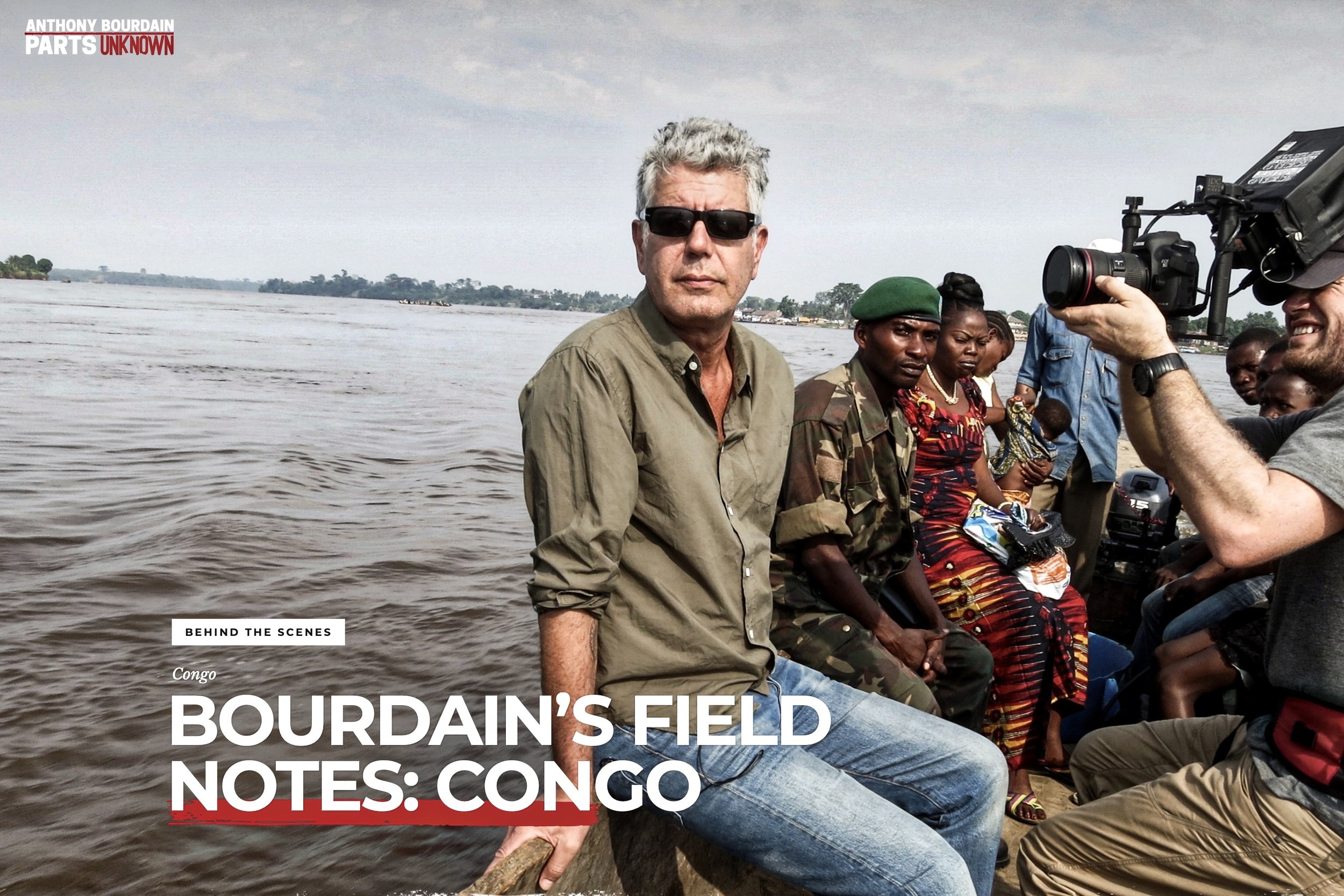
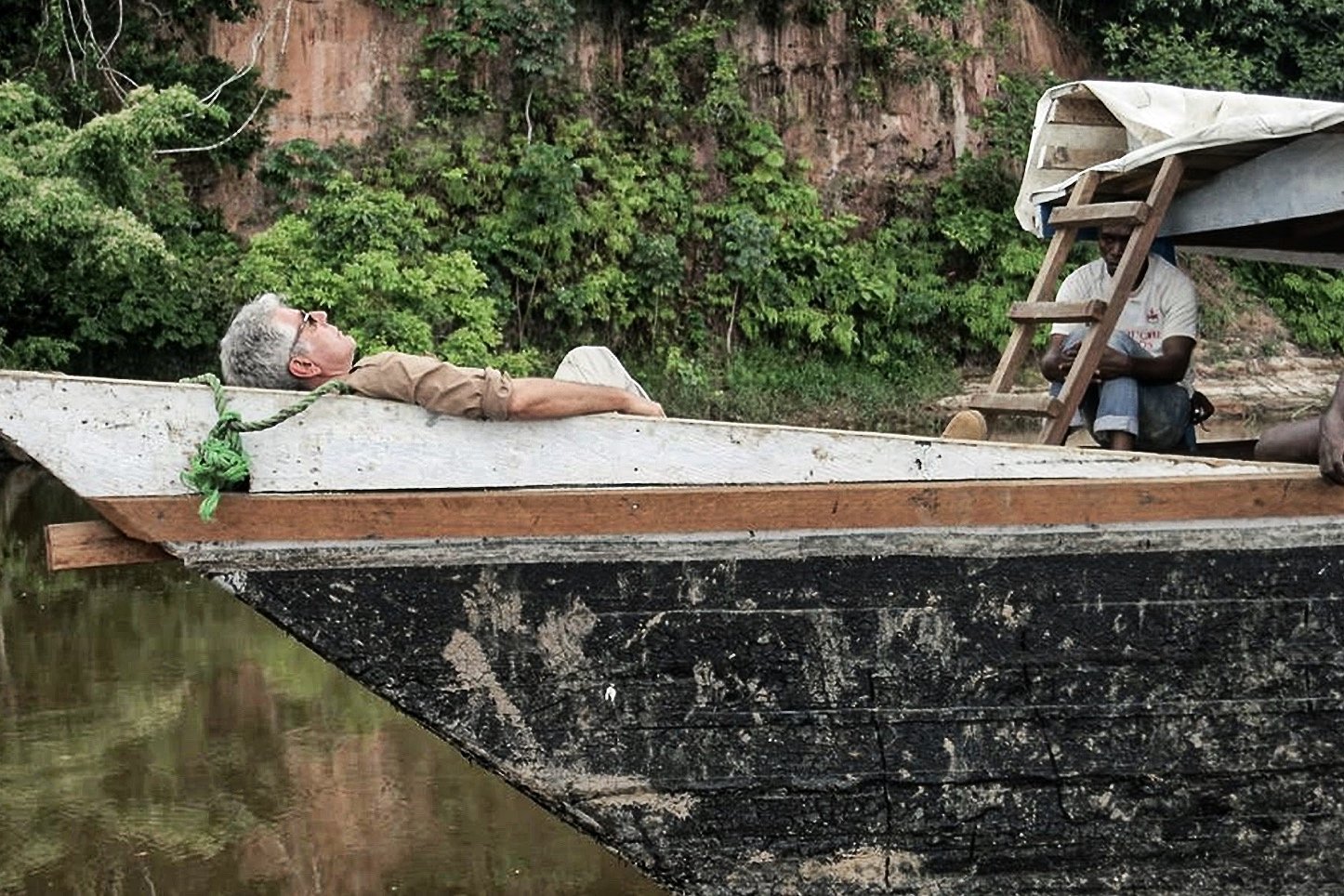
In which intrepid explorer and restless wanderer Anthony Bourdain channelled his inner Joseph Conrad and (nearly) went full-on Kurtz on the Congo River.

The demarcation line between Rwanda and the Democratic Republic of Congo (DMC), or just plain “Congo” to seasoned travellers like the late Tony Bourdain, is easy to spot, if not that easy to navigate, according to more than a few present-day explorers, including writer Thurston Clarke in his compelling travelogue Equator.

The meticulous, painstakingly maintained road comes to a sudden end, and you’re suddenly driving through a pool of mud and brackish, brown floodwaters. Welcome to Congo. Please don’t neglect to notice the border guards in jungle fatigues and sporting AK-47s — they may want a gratuity. It’s just the polite thing to do. You’re in somebody else’s country, after all. Be patient and courteous. Oh, and gratuities are best paid in USD, preferably in mint condition bills. Ben Franklins will do.

Bourdain wanted to go down the river —yes, that river — ever since he first read Joseph Conrad’s Heart of Darkness. Francis Coppola’s landmark film Apocalypse Now — Bourdain was a noted admirer — came later, long before A Cook’s Tour set Bourdain on his true path.

In 2013, following Bourdain’s jump to CNN from the Travel Channel — bugger budgets, more prestige and, most importantly to Bourdain, a more serious geopolitical and philosophical worldview — he finally got his wish.

True, it almost killed him, but, as another noted writer-philosopher put it, what does not kill you makes you stronger.

Fun fact: As serious and bracing as the Parts Unknown episode Congo is — the final episode of Parts Unknown’s debut season — it’s nothing compared to what really happened behind the scenes when Bourdain channelled his inner Col. Kurtz a little too closely and mayhem ensued. Bourdain, feeling the effects of late-night heat, humidity, swirling insects and one shot too many on an empty stomach, suddenly got the urge to whip up an impromptu coq au vin for himself and the crew. He insisted every member of his inner circle, including — especially including — his terrified director/producer Tom Vitale, who did as he was told, to kill their own chicken. Vitale botched the job, as he feared he would, and suffered a near full-on nervous breakdown as a result.

The rumble in the jungle takes up a full chapter in Tom Vitale’s confessional In the Weeds, and the real story, believe it or not, is every bit as harrowing as what we see on the screen today.

You don’t say no to the boss late at night in the middle of the jungle, on an untrustworthy boat where some hapless fool has neglected/forgotten/never intended to put down the anchor and the boat is now drifting aimlessly Christ knows where down a  snake and crocodile infested river noted for the sheer number of people who go down the river and never return, not to mention the fact that the generator, never much good in the first place, keeps kicking out and Bourdain, wielding a huge knife and cursing everyone and everything in the middle of the Congo night — well, let’s just say this isn’t like sipping piña coladas on a tropical beach somewhere, say, La Playuela Cabo Rojo in Puerto Rico.

Coq au vin might not sound that ambitious — it’s simply chicken braised with wine, preferably a red Burgundy, with lardons, mushrooms and garlic.

The Congo poses its own unique set of challenges though, especially late at night, surrounded by venomous snakes, spiders and giant jungle moths with poison for blood and the fixer/head-of-expedition security is shouting at the top of his lungs, telling people not to swat away the giant moths because God only knows what might get under your skin if you do that — and, oh, did we mention, the hapless director/producer is on the verge of a nervous breakdown.

Welcome to CNN, the most trusted name in news. Travel Channel was never like this.

“Casually attired in a khaki shirt, Clark boots and his trademark Persol sunglasses, Tony made trekking through war-torn Congo look effortless,” Vitale opens the chapter Heart of Darkness with.

By the end, Vitale has changed his tune.

“Like many travellers who find themselves in a moral inferno, we’d begun in search of Tony’s childhood heart of darkness adventure fantasy.

“What we’d found was something different… maybe Tony could still say something that would justify why we’d risked life, limb, and sanity to go to the middle of the freakin’ Congo. I needed to know if it meant something to Tony. That I wasn’t disposable. I wanted to know if it had all been worth it. Or if he thought it hadn’t.”

Bourdain touches on that in his voice-over.

“Nine days of threats of imprisonment, confiscation of footage, and what was the most chaotic, difficult, yet amazing trip of my life,” he begins.

Then, the coq au vin:

“Our chickens are thin, scraggly, and tough. In order to make anything any kind of edible, I'm probably going to have to stew the crap out of ‘em."

“You want to eat?” he tells his crew at one point.  “You gotta kill your own chicken, and pluck it, too.”

And then, the bugs.

“Crush the wrong one of these moths while swatting at your face and you will blow up like a balloon,” Bourdain says. “Seriously.”

On realizing his childhood dreams:

“It is written that I should be loyal to the nightmare of my choice. I think I understand what that means now.”

And finally, when it dawns on him that this may have been a very bad idea:

“They'll find us ten years later, naked in the bush with a necklace of Spam cans.”

And finally, in his field notes at the very end, blessed perspective:

“At the time that my crew and I drove across the border into Goma, there were nearly 30 different rebel groups and militias — many of them aligned with the Congo’s neighbouring countries, fighting it out across the country.

“One of them, M23 [short for March 23 Movement] were fighting amongst themselves only 10 miles away.

“The official armed forces of the Congo, the FARDC, were said to be on their way — an outcome generally considered to be a worst-case scenario, as they are widely regarded as professionals in the business of extortion, murder, mass rape, and robbery, rather than simply amateurs.”

Perspective!

“We were, during our shoot, extremely fortunate. Relative to most, we had a luxuriously unmolested, violence-free time.

“We were extorted, detained, and threatened daily. But such is life in the Congo.”

Bottom line:

“The Congo is a place where everything is fine. Until it isn’t.”

Enjoy the show!

The view, this one anyway, looks so much better from the comfort and safety of the couch.

CNN


Tags: Anthony Bourdain, Parts Unknown, CNN, Tom Vitale, In the Weeds, Democratic Republic of Congo, DRC, Congo, Goma, Rwanda, coq au vin, piña coladas, red Burgundy, Congo River, Apocalypse Now, Francis Ford Coppola, Col. Kurtz, Joseph Conrad, Heart of Darkness, M23, FARDC, Thurston Clarke, Equator, A Cook's Tour

Bourdain in Maroc

January 18, 2024

Remembering Tony Bourdain rock the casbah in Tangier Morocco, the “City of Stories,” for CNN’s Parts Unknown.

At a talk a few years back at a book fair near where I live, the respected world traveller Paul Theroux — who broke bread with Anthony Bourdain over Hawaiian rice flavoured with pineapple, coconut and golden raisins in a Parts Unknown outing for CNN two years later — said that anyone else’s experiences of the South Pacific, as Theroux recounted in his first-person testimonial The Happy Isles of Oceania, would not be the same as his, should they decide to go.

That’s the whole point of writing prestige literature, Theroux said.

It’s not about the place; it’s about the person inside.

I was reminded of that the other night while re-watching Bourdain’s Parts Unknown episode on Tangier, Morocco, in which Bourdain waxes poetic about the experiences of several of his literary heroes, among them William S. Burroughs, in “the City of Stories,” as Tangier is often known.

Tangier was founded in the 5th century BC. It’s a crossroad of cultures, ruled at various intervals over time by Phoenicians, Romans, Carthaginians, Spaniards, the English — oh god, the English! — and Arabs, including a several-year spell as an “international city” in the early 1950s (think Rick’s Cafe Americain from Casablanca, if Casablanca had been governed at the time by the UN).

As described by Bourdain, Tangier is a state of mind, full of cultural enclaves and layers, where a waiter may welcome you in Spanish, a member of the local constabulary may address you in inflected French, and where voices cry out in Arabic over streets that have borne witness to decades of literary hangers-on, from William S. Burroughs and Paul Bowles to Alexandre Dumas and Mark Twain, all cast in the luminous sea light of the Mediterranean and  Gibraltar, with Spain and modern Europe just a short ferry ride away.

I’ve been to Tangier myself, years ago, and I can’t still quite wrap my head around the experience, even something as banal as whether I loved it or hated it.

Theroux had a point because my Tangier was most decidedly not Bourdain’s Tangier, or at least the Tangier that Bourdain describes — aptly and well, with the heartfelt conviction that Bourdain brought to virtually every place he experienced throughout Parts Unknown’s 12 seasons. (Looking back on it now, can it really have been 12 seasons?)

I never cared for Burroughs’ writing, for one — Naked Lunch, which Burroughs wrote in 1959, the year I was born, was unreadable. (No, I didn’t try to read it then; that would’ve been some neat trick.

I tackled it years later as a young man).

Bourdain would no doubt dismiss me with one of his signature scoffs and an irritated wave of the hand.

I’m a great admirer of Paul Bowles, though. The Sheltering Sky, for me, is a masterpiece of modern prose. It played a large role — though by no means the only role — in nurturing in me a lifelong fascination with the Sahara.

And therein lies the rub. Tangier is a city of mystery and intangibles, where no two people are likely to experience it the same way.

During his stay for Parts Unknown, Bourdain sampled the British tea at Café Tingis (one teabag per person, and another for the pot, how very English, do they give the teabags pet names?); the tagine (a traditional Moroccan stew of vegetables and meat of fish) at Saveur de Poisson on Escalier Waller; the Moroccan mint tea at Café Baba on Rue Zaitouni and the Moroccan tomato salad at le Restaurant Andalus; and last but not least, the Moroccan goat cheese, or jben, at Grand Socco at Place du 9 Avril 1947, a town square named for the date of a speech given by King Mohamed V.

I, on the other hand, downed a bottle of lukewarm Coke on a hot late afternoon one year in May, while working worked my way through a paper plate of soggy fries.

It did have its compensations, though. I kept the bottle, tiny, made of seemingly inch-thick glass, in the classic old glass style of Coca-Cola bottles, with the Coke logo printed in Arabic. I’ve stored it on a shelf near my workspace all these years. (Fun fact which likely won’t surprise you: Coca-Cola, written in Arabic, is instantly recognizable as saying Coca-Cola, even to someone as unfamiliar with cursive Arabic script as I am.)

Chances are, you will never see Tangier for yourself. If you do, though, remember Theroux’s counsel about all places in all parts of the world: your experience won’t be the same as mine, or anyone else’s. Everyone sees things differently.

I’ll say this, though. What Bourdain had to say, and what he saw and experienced of Tangier in his own words for CNN is an out-of-body experience in its own right. Hadha sahih.

Further reading:

https://explorepartsunknown.com/morocco/bourdains-field-notes-morocco/


Tags: Anthony Bourdain, Paul Theroux, Parts Unknown, CNN, Tangier, Tangiers, Morocco, Maroc, Café Americain, Casablanca, William S. Burroughs, Naked Lunch, Paul Bowles, The Sheltering Sky, Alexandre Dumas, Mark Twain, Café Tingis, Saveur de Poisson, Restaurant Andalus, Café Baba, Rue Zaitoni, jben, goat cheese, Grand Socco at Place du 9 Avril 1947, Coca-Cola, Coke, Sahara, Sahara desert
Prev / Next

Stories

"Forget whatever should be forgotten, so that you can remember what should be remembered."


Featured Posts

Featured
Screenshot 2026-05-02 at 3.51.35 PM.png
May 2, 2026
The Red Elephants of Tsavo
May 2, 2026
May 2, 2026
vintage lion1.jpg
May 2, 2026
The Lions of 'Starv-o'
May 2, 2026
May 2, 2026
b.art1.png
Apr 17, 2025
Bourdain in Nigeria
Apr 17, 2025
Apr 17, 2025
1.Dispatches Screen Shot 2024-10-15 at 4.17.26 PM.jpeg
Oct 26, 2024
Bourdain in Senegal
Oct 26, 2024
Oct 26, 2024
1.dispatches ethiopia art.jpeg
Sep 10, 2024
Bourdain in Ethiopia
Sep 10, 2024
Sep 10, 2024
dispatches1.bourdain madagascar.jpeg
Jul 20, 2024
Bourdain in Madagascar
Jul 20, 2024
Jul 20, 2024
dispatches2.jpeg
May 29, 2024
Bourdain in Tanzania
May 29, 2024
May 29, 2024
bourdain 1200x675.jpeg
Mar 13, 2024
Bourdain in South Africa
Mar 13, 2024
Mar 13, 2024
dispatches congo PIC.jpeg
Feb 4, 2024
Bourdain in Congo
Feb 4, 2024
Feb 4, 2024
bourdain tangier 5x7.jpeg
Jan 18, 2024
Bourdain in Maroc
Jan 18, 2024
Jan 18, 2024